The fire element and the nature of Wands
Wands (also called Rods, Staves or Batons in older decks) belong to the element of fire. In the Golden Dawn system that shaped the Rider-Waite-Smith deck, fire is will and the first impulse. In the Qabalistic scheme of the Tetragrammaton, Wands take the letter Yod: the point where everything begins, before anything has a shape. So this suit does not describe objects or feelings. It describes motion. Desire, ambition, courage, sexuality, inspiration, reputation, competition.
The fire signs are Aries, Leo and Sagittarius. Aries gives the suit its ignition and impatience, Leo its warmth, pride and need to be seen, Sagittarius its horizon, faith and restlessness. In the old theory of the four temperaments, fire is choleric: quick, hot, eager to act and quick to flare. Seasons depend on the school. In humoral theory fire and yellow bile belong to summer, high sun and noon. In the most common tarot timing system, though, Wands mean spring, because every staff on the cards is sprouting fresh leaves.
Look closely at the wands Pamela Colman Smith drew. They are not dead sticks. They are living branches with buds and leaves, wood that is still growing. That is how to read the suit: as energy in the middle of growing, which needs fuel or it burns out. On the court cards you will find salamanders, the alchemical spirits of fire, and behind the Page and Knight a desert with pyramids, a landscape of heat and dry air.
In practice Wands answer the question “what do I want, and how much fire do I have to go after it?” Cups speak of the heart, Swords of the mind, Pentacles of the body and money. Wands speak of the will. This is the suit of people who start things, lead, create and hate waiting.
All 14 Wands card meanings
Tap a thumbnail to jump to a card
A
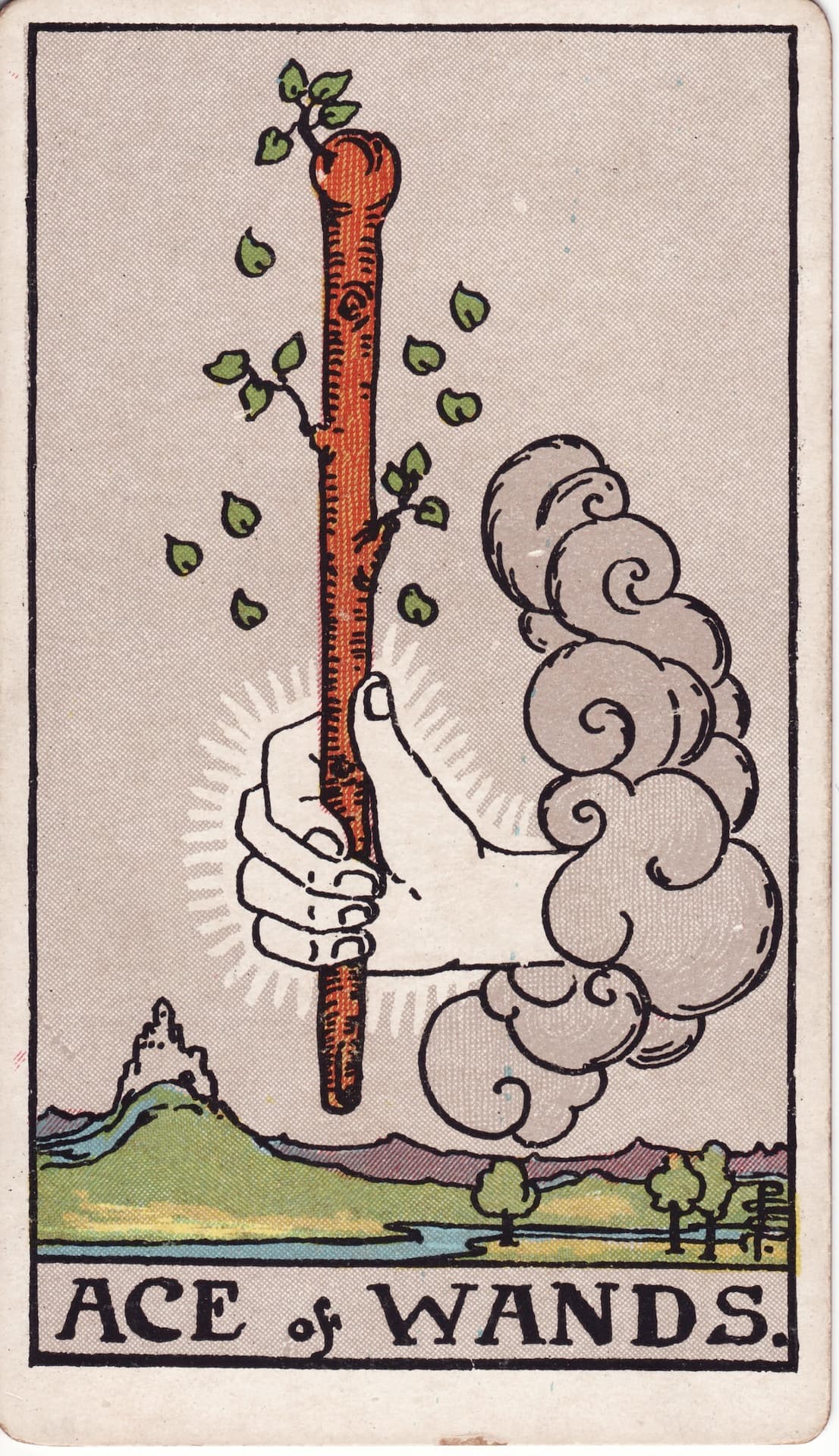
Ace of Wands
A hand reaches from a cloud holding a living branch that sheds leaves, with a castle on a hill in the distance. This is the pure spark: a new idea, a surge of energy, a creative or sexual impulse. In love it promises a hot start, at work a project or offer. Reversed, the enthusiasm fizzles before launch or the start is delayed.
II
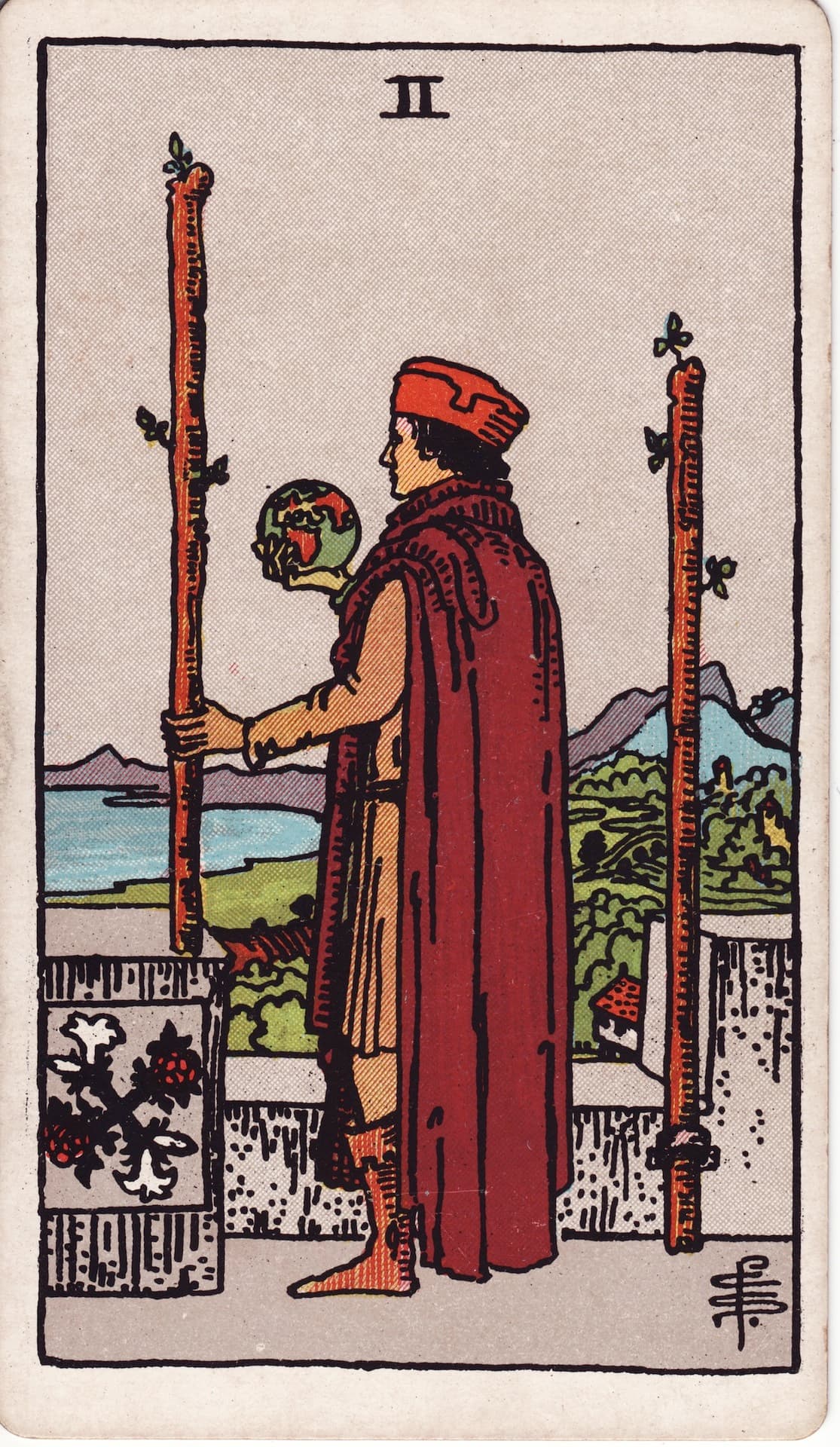
Two of Wands
A man stands on castle battlements holding a globe, one staff fixed to the wall, the other in his hand. This is planning: you have a base and are weighing how far to reach. At work it points to expansion or relocation, in love to a pull between the relationship and your own plans. Reversed, it shows fear of leaving the familiar and plans that stay on paper.
III
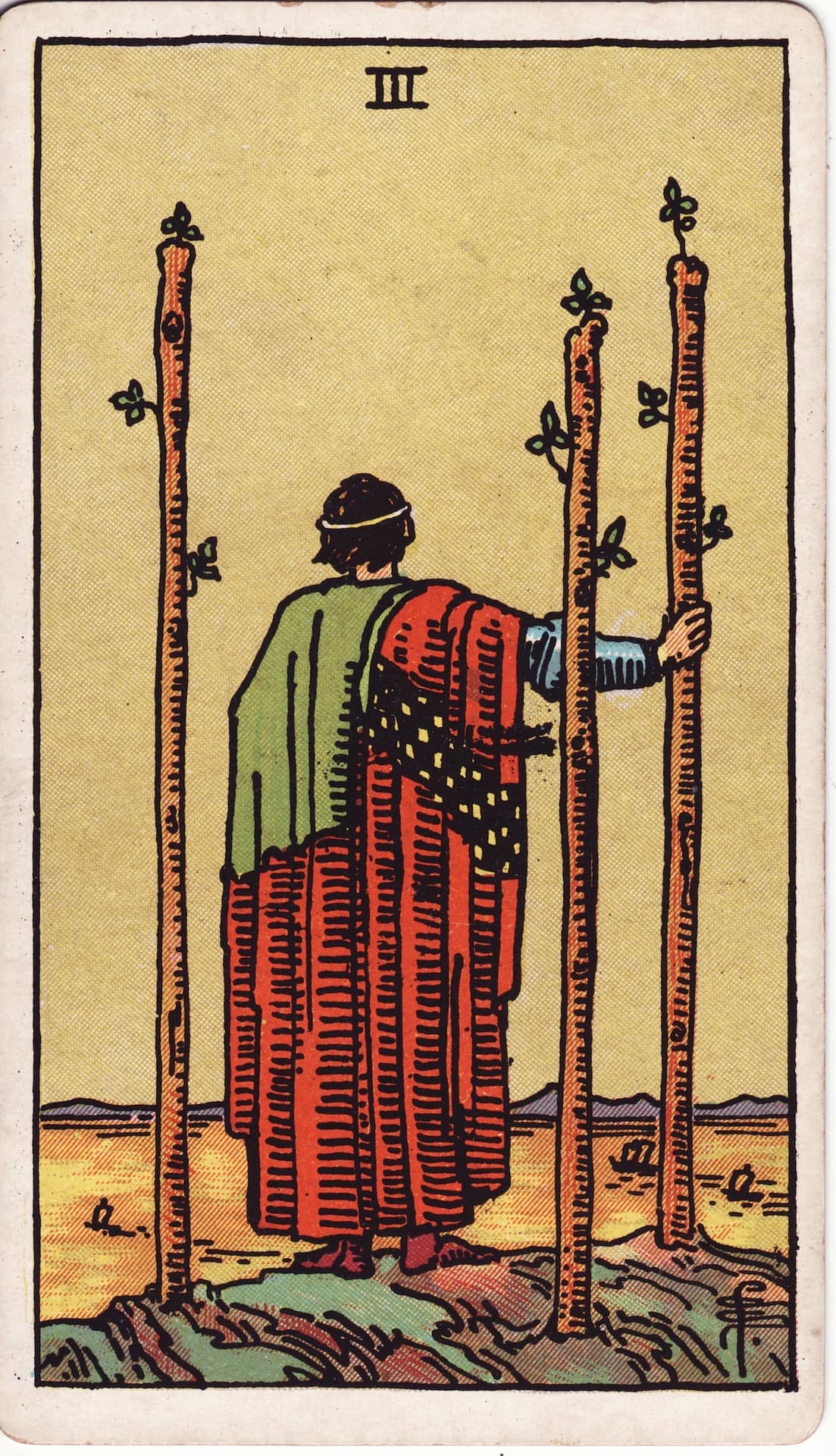
Three of Wands
A figure seen from behind stands on a cliff watching ships cross a golden sea. First results are in and a wider horizon opens: travel, trade, long-distance collaboration. In love it can mean a long-distance bond or waiting for someone to move, at work returns starting to come in. Reversed, expect delays and the frustration of ships that sail slower than hoped.
IV
Four of Wands
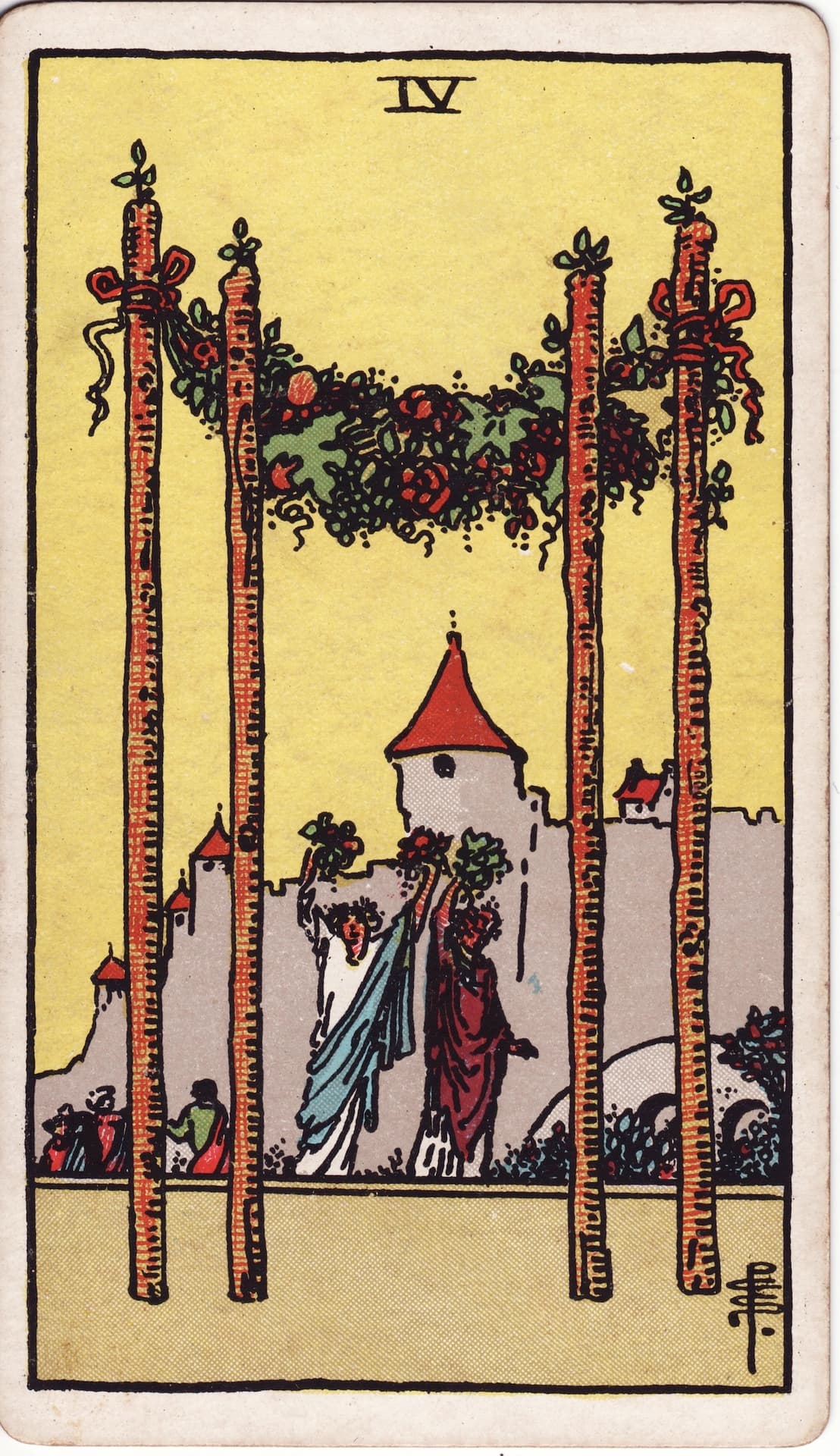
Four staves tied with a garland form a gateway, behind which two figures raise bouquets before a castle. This is celebration, homecoming, a finished stage and community. In love it often signals an engagement, a wedding or moving in together, at work a project wrapped up well. Reversed, the joy remains but the foundations wobble or the celebration is postponed.
V
Five of Wands
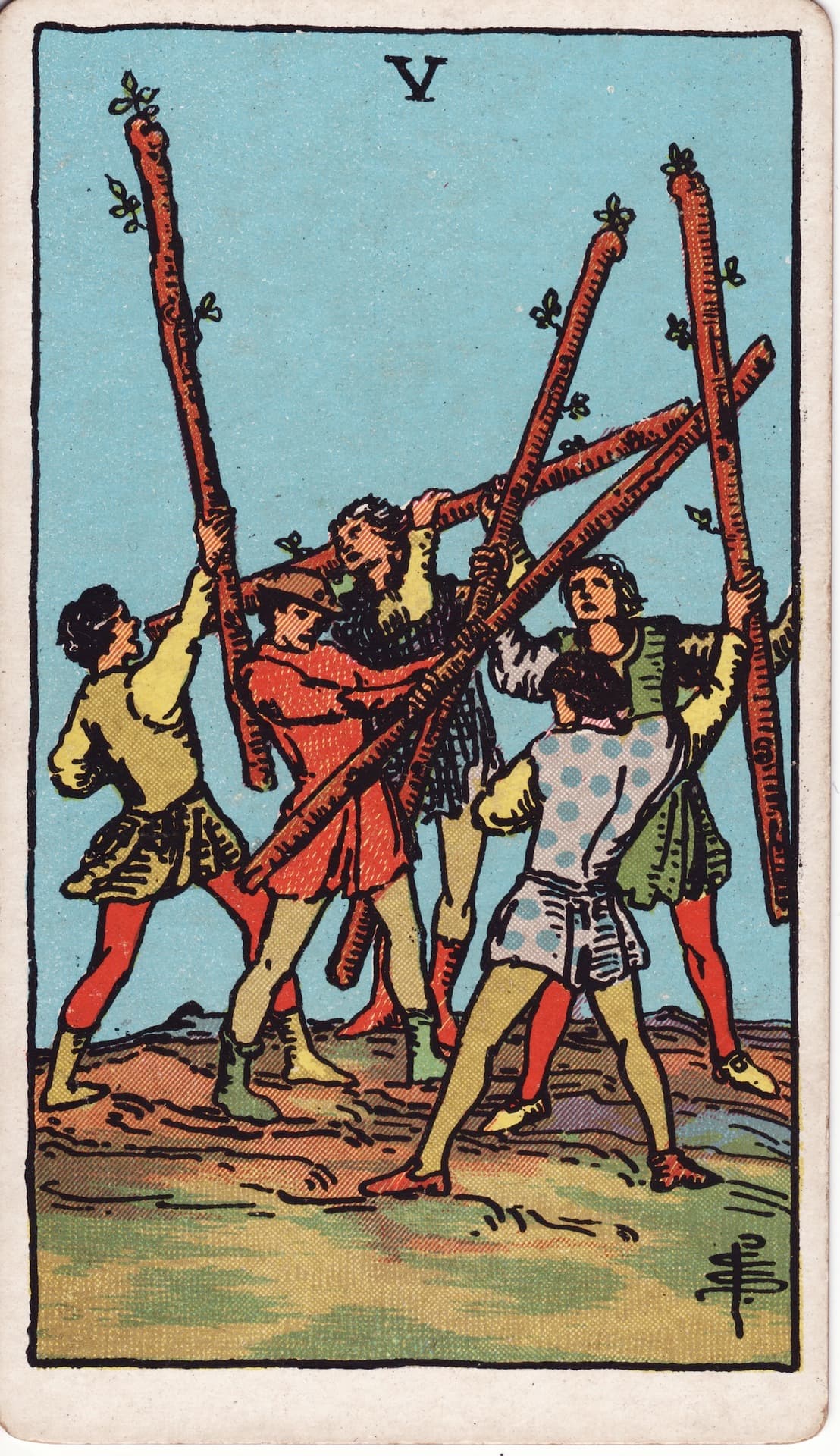
Five young men swing their staves, yet no one is hurt; it looks more like practice than battle. The card describes competition, friction and a brainstorm where everyone talks at once. At work it is rivalry in the team or the market, in love bickering, tension, sometimes a rival. Reversed, it shows avoiding a conflict that will come back, or a dispute winding down.
VI
Six of Wands
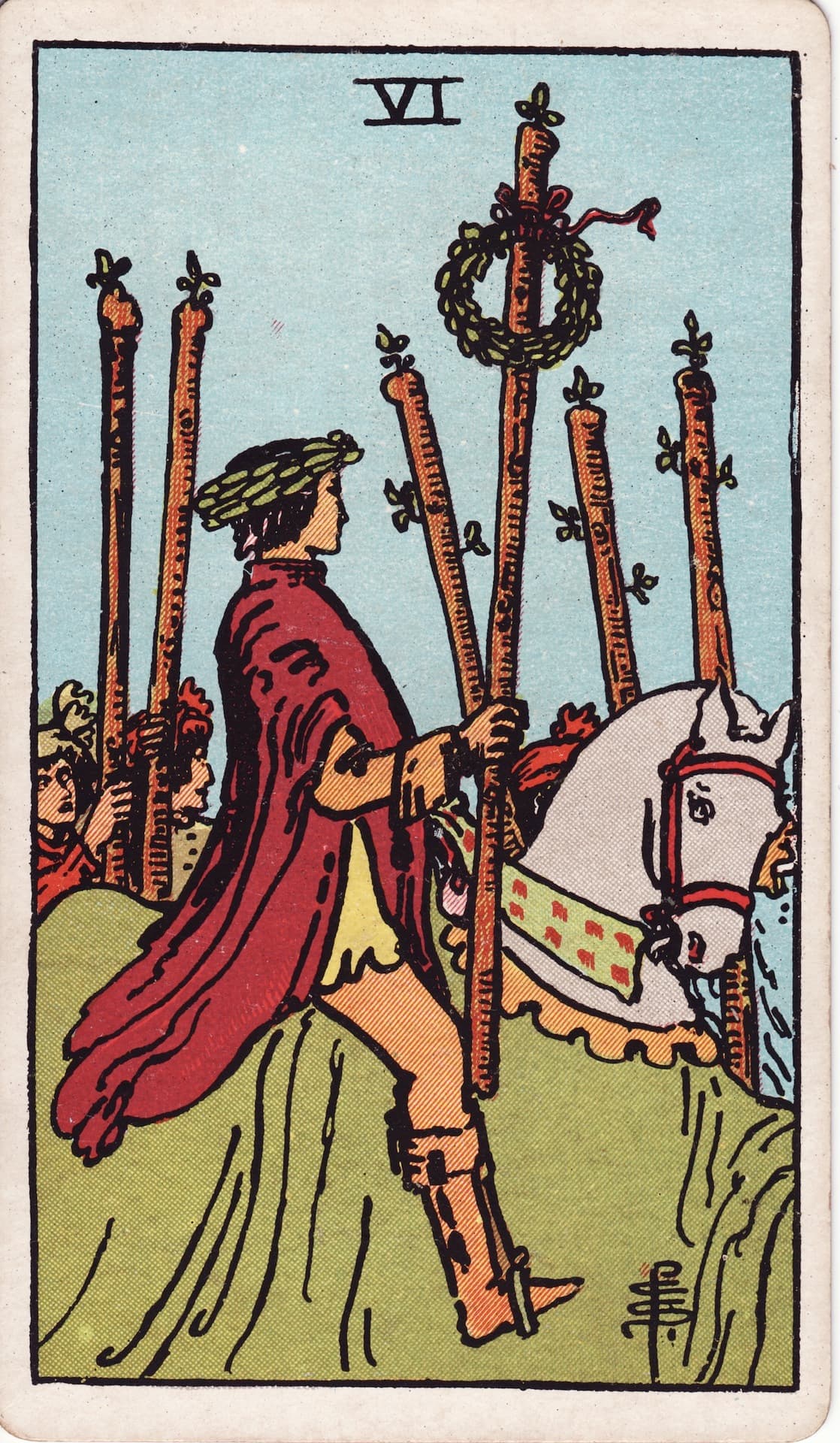
A rider crowned with laurel sits on a white horse, a second wreath tied to his staff, a crowd walking beside him. This is victory, recognition and good news that others can see. At work a promotion, an award, a won contest, in love pride in a partner or a relationship going public. Reversed, it warns of arrogance, delayed success or credit that never arrives.
VII
Seven of Wands
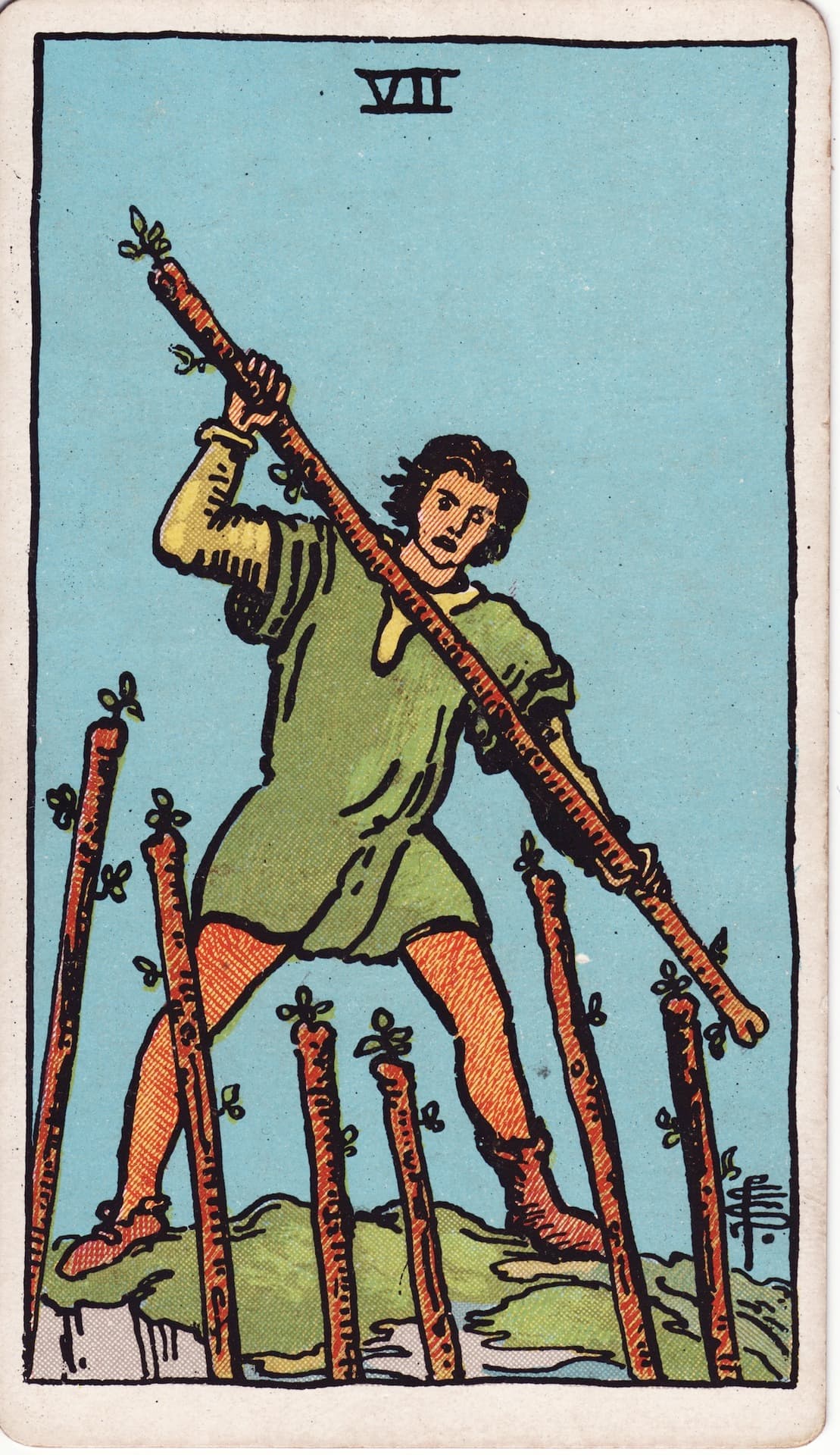
A man on a rise fends off six staves thrust up from below, wearing two mismatched shoes as if he had no time to get ready. You hold the better position but must defend it. At work it is a fight for your role or your point, in love protecting the relationship from outside interference. Reversed, it shows exhaustion from defending, feeling cornered or giving up too soon.
VIII
Eight of Wands
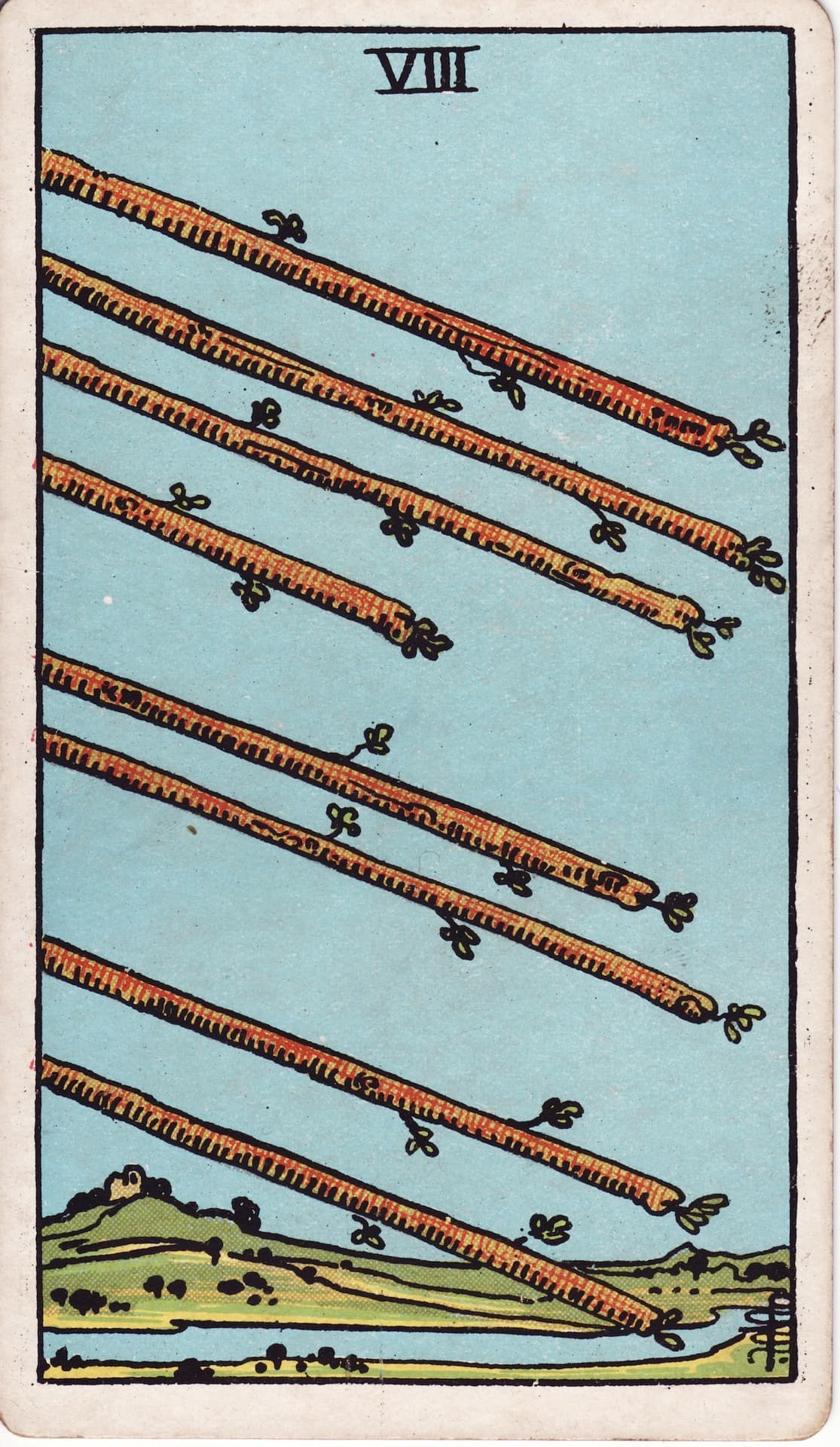
Eight staves fly diagonally through the sky over a quiet landscape, with no figure at all. This is pure motion: fast news, travel, things suddenly moving. In love it is traditionally “the arrows of love”, a sudden crush or a message from someone, at work decisions made within days. Reversed, it means delays, lost messages or chaos born of haste.
IX
Nine of Wands
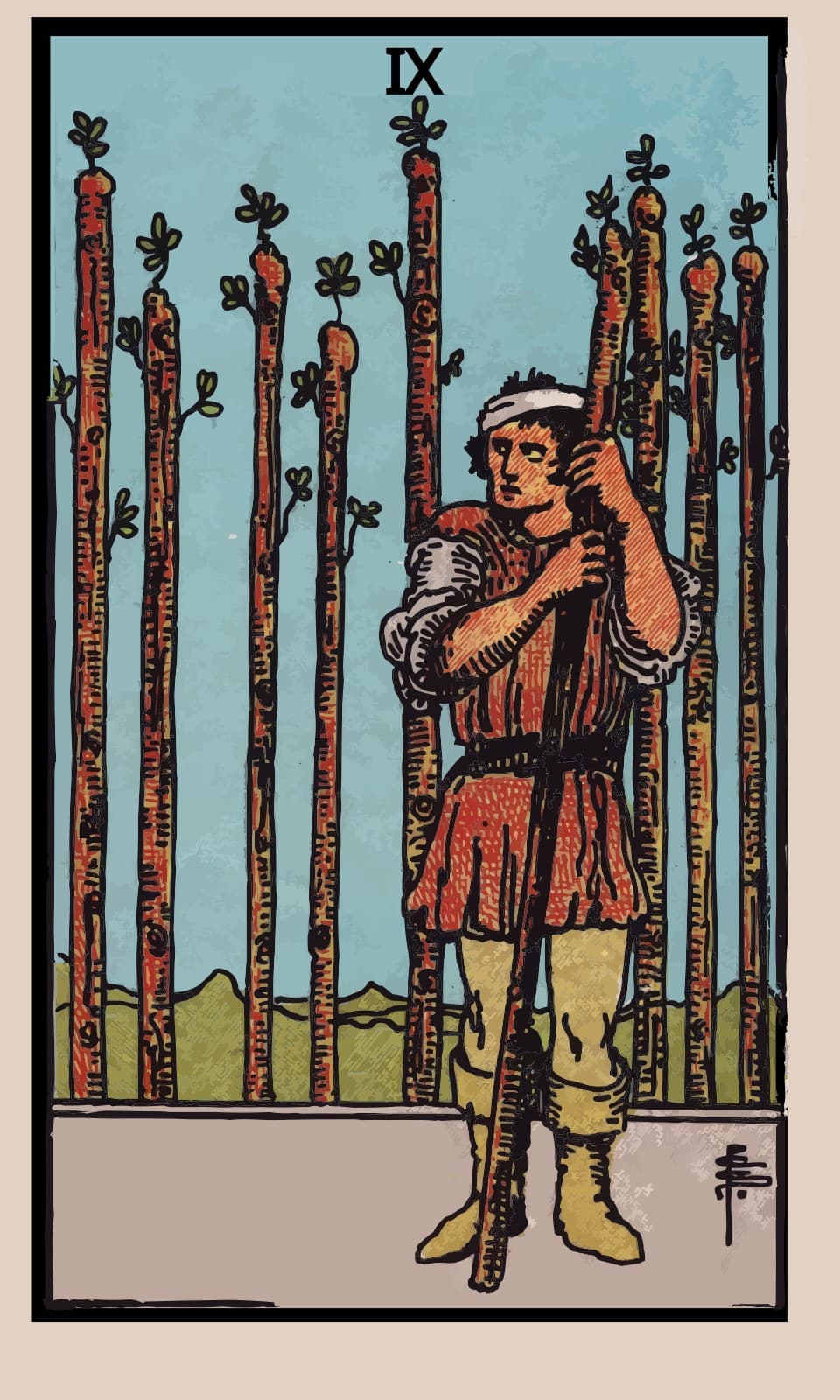
A wounded man with a bandaged head leans on his staff, eight more standing behind him like a palisade. This is resilience: many battles are behind you, the finish is close, but you stay on guard. In love it describes caution after being hurt, at work the last push before a project ends. Reversed, it points to exhaustion, suspicion of everyone or the urge to quit just short of the goal.
X
Ten of Wands
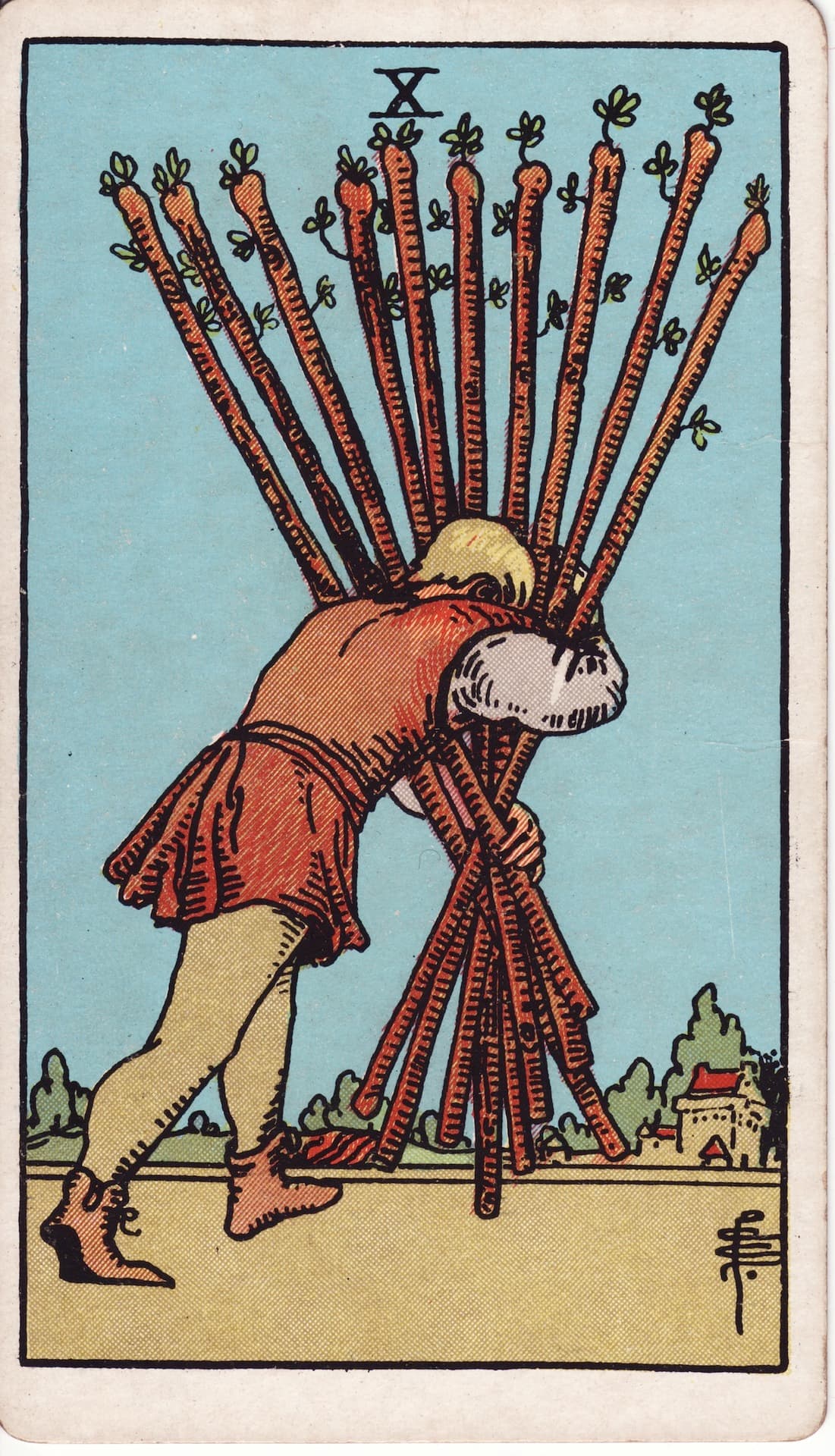
A man carries ten staves in his arms, bent so low he cannot see the road, though the town is already close. This is the weight of responsibility, overwork, success that has turned into duty. At work too many tasks on one head, in love a relationship carried by one partner. Reversed, it means putting the load down and delegating, or collapse if nothing changes.
P
Page of Wands
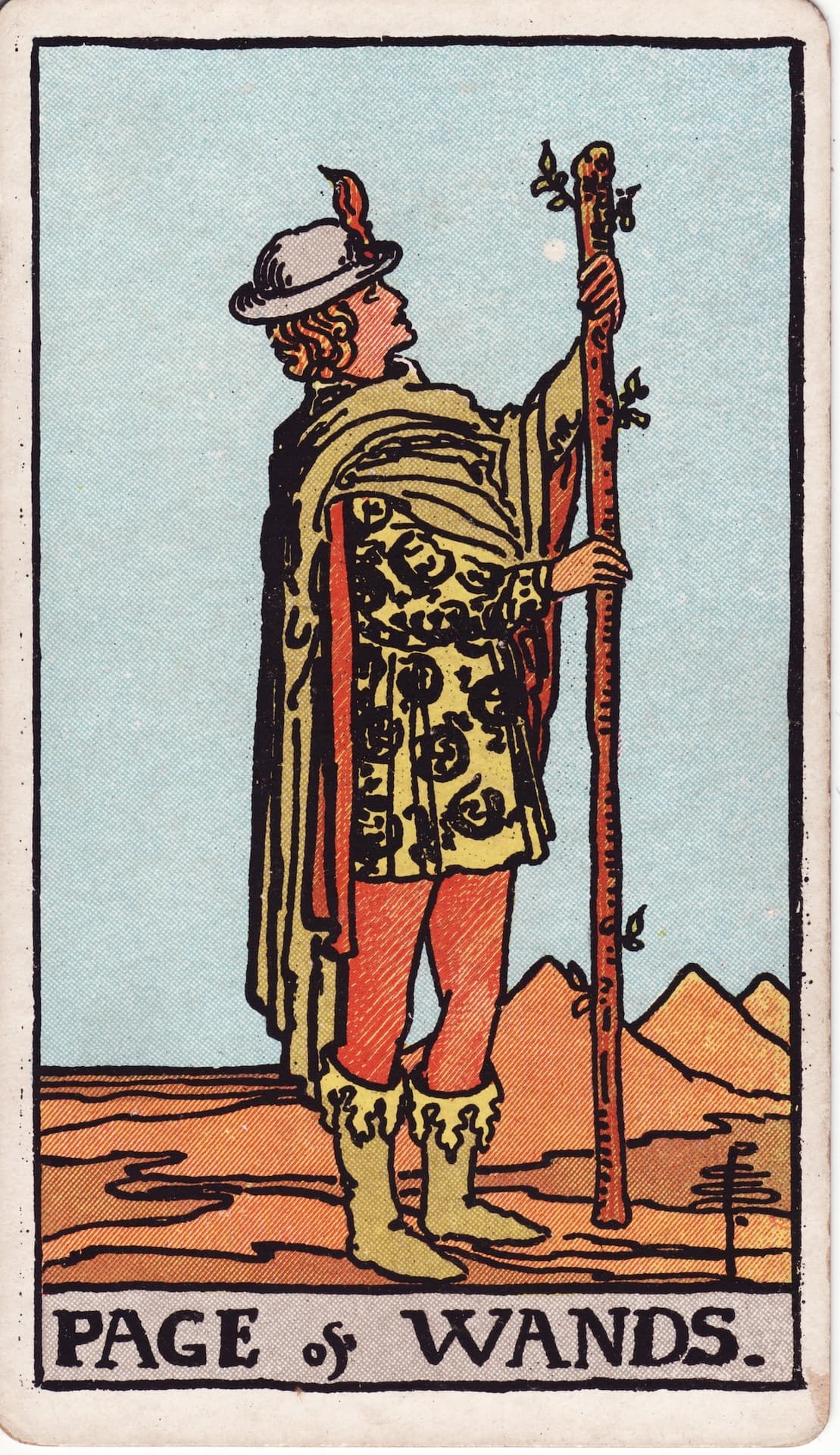
A young man in a tunic patterned with salamanders studies his staff against a desert with pyramids. This is enthusiasm, curiosity, good news, a first step into something new. In love it promises flirting or a bold confession, at work training, an internship, a fresh idea. Reversed, it shows short-lived enthusiasm, immaturity or bad news that arrives quickly.
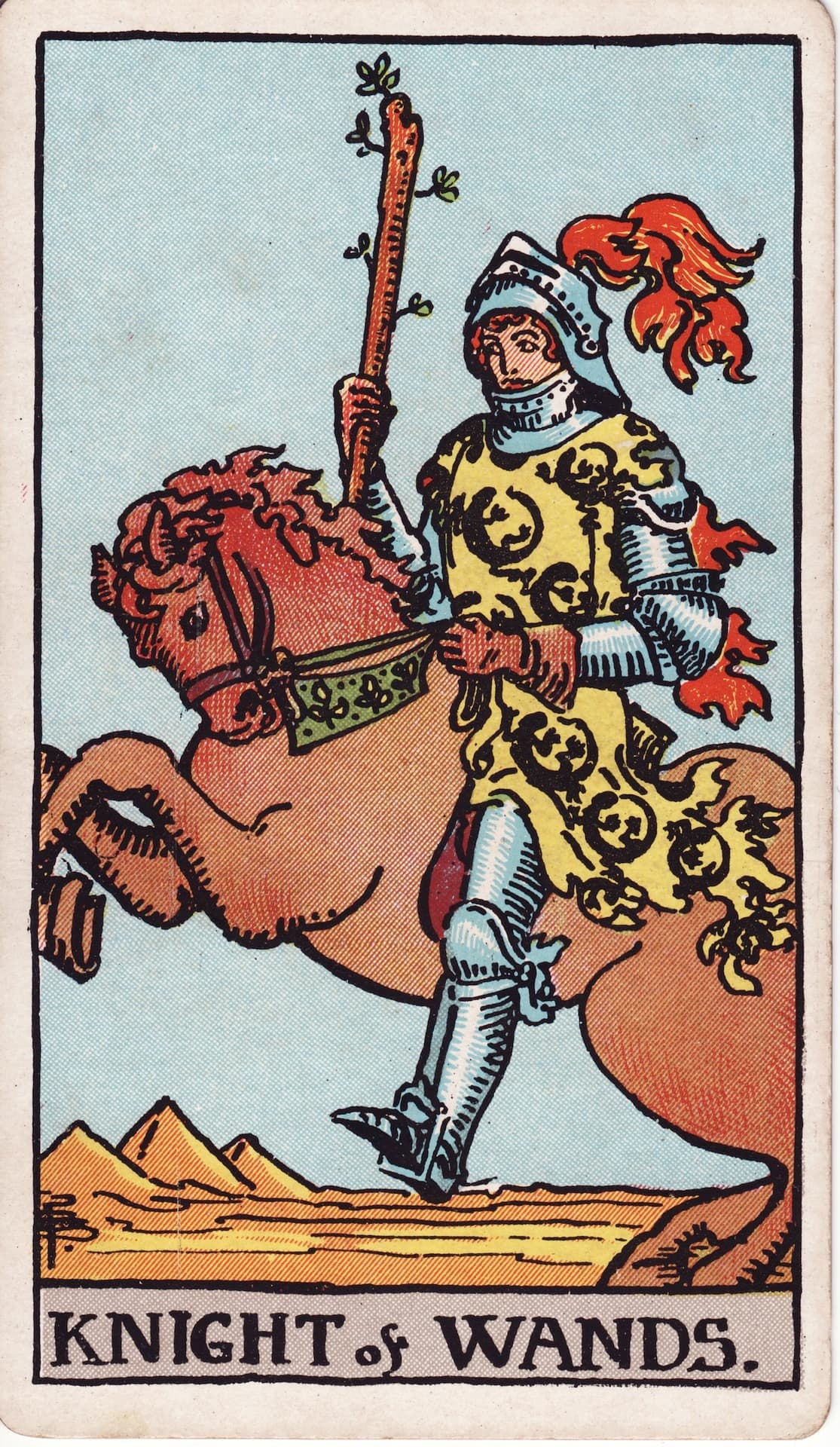
Kn
Knight of Wands
A knight in a salamander tunic reins in a horse rearing on a desert road. This is momentum, courage, a move, a change, action without long deliberation. In love it is a passionate, impulsive person or a romance that ignites overnight, at work a bold move. Reversed, it warns of recklessness, impatience and dropping things halfway.
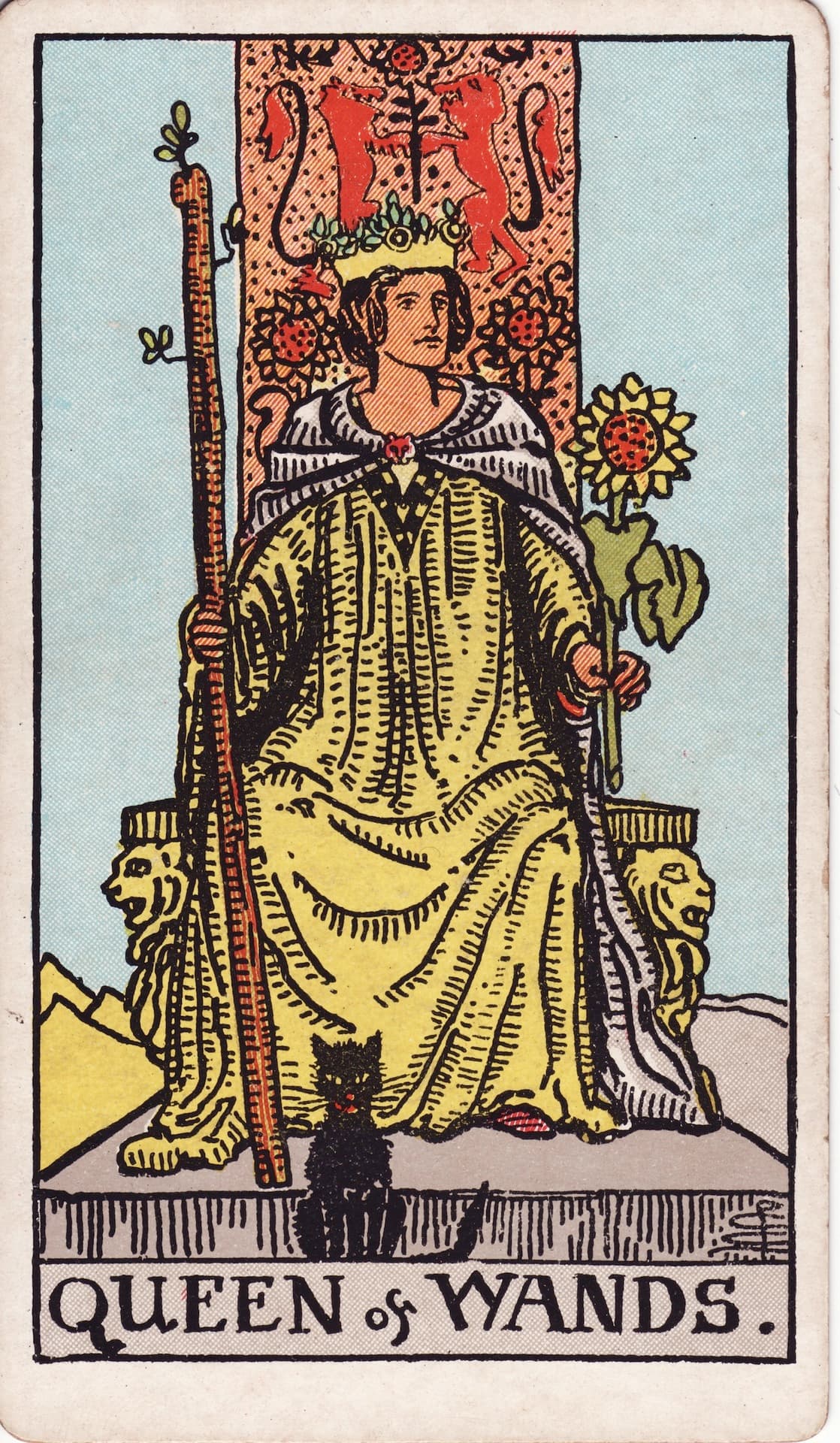
Q
Queen of Wands
The Queen sits on a lion throne holding a sunflower, a black cat at her feet. This is confidence, warmth, magnetism and independence joined with intuition. In love it signals someone attractive and loyal, or an invitation to step fully into your own light, at work a charismatic leader. Reversed, it speaks of jealousy, burnout or a need to control.
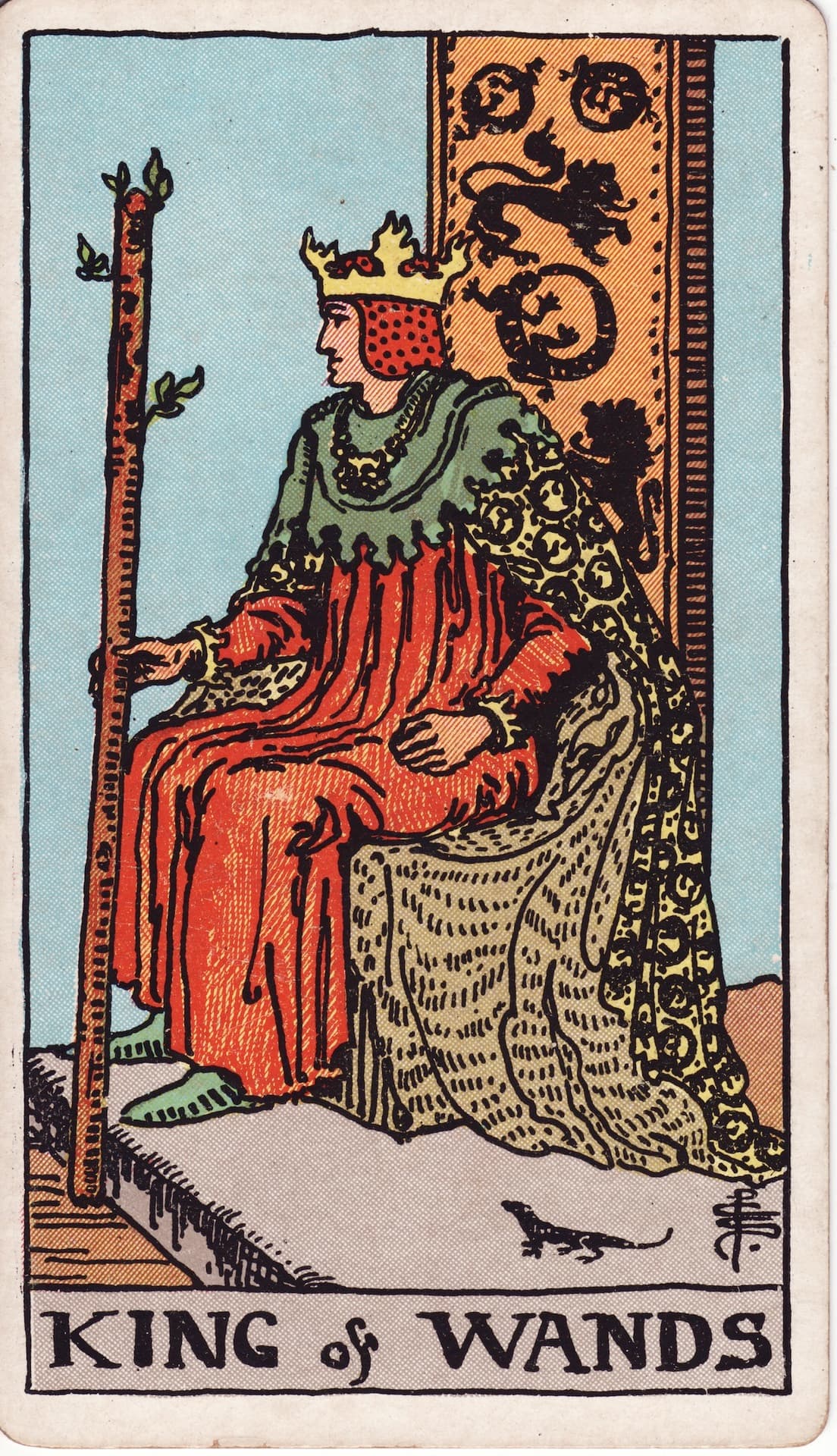
K
King of Wands
The King sits on a throne carved with lions and salamanders, and a live salamander crawls at his feet, the fire that does not consume itself. This is the visionary, the leader and entrepreneur who can rally people to a plan. In love it is a partner who takes the lead, at work a boss or your own business. Reversed, it points to domineering behaviour, arrogance or a short fuse.
Ace to Ten: the story of a single flame
The numbered Minor Arcana tell a story, and in Wands it is the story of an idea. It is born as a spark, gets a plan, fights for space, wins, defends what it won and finally turns into a burden. Once you know the arc, you can read a card you have forgotten simply by knowing where it stands in the story.
The arc tracks Pythagorean numerology closely. One is beginning and raw potential, five is crisis and change, nine is maturity and completion, and ten (1 + 0) returns to one at a higher level. The Ten of Wands is both an ending and the promise of a new Ace, as long as some of those staves get put down.
- Ace: the spark, life saying yes. Nothing has happened yet, but the fire is lit.
- Two: the plan. A figure on the battlements holds a globe and weighs how far to reach.
- Three: first results. The ships have sailed and the horizon opens.
- Four: the first celebration, a stable home for the fire, a finished stage.
- Five: competition and friction. Fire meets other fires.
- Six: victory and public recognition.
- Seven: defending the position you just won.
- Eight: acceleration, messages, things moving on their own.
- Nine: the last watch, tired and alert just before the finish line.
- Ten: fire turned into duty, too much carried by one person.
The Golden Dawn decans of the Wands
The Golden Dawn gave each card from Two to Ten one decan: a ten-degree slice of a zodiac sign ruled by a planet. The Wands run through the three fire signs in order. The card titles from this system, best known today from the Thoth deck, explain Pamela Colman Smith’s pictures remarkably well. Aces have no decan: the Ace of Wands is the “Root of the Powers of Fire”, the whole element in seed form.
Decans give you two things in a reading. First, timing. The Two of Wands can point to the last ten days of March, the Six to early August, the Ten to mid December, just before the solstice. Second, character. Saturn in Leo on the Five is a limit placed on pride, which is why the fight has no clear winner. The Moon in Sagittarius on the Nine is strength that runs on instinct and habit rather than enthusiasm. Saturn in Sagittarius on the Ten is weight laid on an optimism that promised too much.
- Aries (2, 3, 4 of Wands): the Two is Mars in Aries, “Lord of Dominion”; the Three is Sun in Aries, “Lord of Established Strength”; the Four is Venus in Aries, “Lord of Perfected Work”. Launch, expansion and the first joy of results.
- Leo (5, 6, 7 of Wands): the Five is Saturn in Leo, “Lord of Strife”; the Six is Jupiter in Leo, “Lord of Victory”; the Seven is Mars in Leo, “Lord of Valour”. Ego, rivalry and pride at their best and worst.
- Sagittarius (8, 9, 10 of Wands): the Eight is Mercury in Sagittarius, “Lord of Swiftness”; the Nine is Moon in Sagittarius, “Lord of Great Strength”; the Ten is Saturn in Sagittarius, “Lord of Oppression”. Movement, stamina and the cost of oversized visions.
Wands court cards: people or energies?
The Page, Knight, Queen and King are the trickiest part of any suit because they can be a specific person, your own attitude or a situation with a certain temperature. Most readers look at the position first. In a “partner”, “other people” or “outside obstacle” position, a court card is usually someone. In an “advice” or “you” position, it describes a way of acting you already use or need to adopt.
In the Golden Dawn each court card is an element within an element. The Page of Wands is earth of fire: enthusiasm looking for a concrete form. The Knight is fire of fire, pure momentum. The Queen is water of fire: warmth, magnetism and instinct. The King is air of fire: vision, strategy and words that rally people. One footnote: in the original Golden Dawn scheme fire of fire was the mounted King and air belonged to the Prince in a chariot. Waite renamed the ranks, which is why books disagree.
As people, Wands courts are fiery characters. Often Aries, Leo or Sagittarius, but more often just built that way. The Page is an eager young person, or anyone at any age starting something from scratch. The Knight is the adventurer, the salesperson, the athlete, the one who shows up fast and leaves just as fast. The Queen is magnetic and independent, the person who warms the whole room, and the black cat at her feet hints that her intuition is not for show. The King is the leader and founder, someone who sees the whole board and gets people to follow.
As energies, the courts tell you how to approach the matter. The Page says learn and experiment, the Knight says act now, the Queen says attract instead of chase, the King says take command and think long term.
Wands in love readings
In love questions Wands speak of desire, chemistry and initiative. This is the suit of crushes, flirting and the spark you cannot fake. Cups describe what someone feels. Wands describe what someone wants and whether they plan to do anything about it. For “will they reach out?”, one Wands card often says more than three Cups, because Wands are action.
Fire alone rarely lasts. If a love spread is all Wands and no Cups, the connection has plenty of heat and not much tended intimacy. The passion is real, it just has not turned into tenderness yet. For the emotional side of relationships, see the guide to the Suit of Cups.
- Knight of Wands as their feelings: strong interest and obvious attraction, staying power unknown. The Knight arrives fast and can gallop off just as fast.
- Four of Wands as the outcome: celebrating together, an engagement, moving in, meeting the family.
- Two of Wands in an established relationship: one of you is already looking past the current setup. Rarely cheating, more often a choice between life as a couple and a plan that means leaving town.
- Five of Wands: arguments charged with plenty of sexual tension, or rivals competing for the same person.
- Ten of Wands: one partner is carrying the whole relationship and is starting to feel it.
Wands in career and money readings
For work this is one of the best suits to draw, provided the question is about action rather than security. Wands mean entrepreneurship, side projects, creative jobs, sales, marketing, sport, the stage, anything that needs initiative and visibility. Money shows up here as a result of movement, not saving. Savings, assets and steady income belong to the Suit of Pentacles.
With money questions, look at the neighbours. Wands with Pentacles is an idea turning into income. Wands with Swords is conflict, hard negotiation and rushed decisions. Wands with Cups is work you love that may not pay the bills yet.
- Ace of Wands: a new project, an offer, a business idea. Advice: start before the enthusiasm cools.
- Three of Wands: expansion, overseas clients, first returns on an investment. The ships are out, now you wait for them to come home.
- Six of Wands: a promotion, public praise, a won pitch, great reviews.
- Seven of Wands: you have to defend your ground. Competitors are close, but you hold the high ground.
- Eight of Wands: the answer comes fast. An email, a call, a decision within days, not months.
- Ten of Wands: overwork. The success is real, the cost is too high, time to delegate.
What a spread full of Wands means
When two of three cards are Wands, or four or more turn up in a Celtic Cross, the situation is being driven by will and the heat of the moment. Things move fast, people react on impulse, and you have more influence than it seems. For new ventures that is good news. For questions that need patience, it is a signal not to force the pace.
Many readers count Wands timing in days and weeks. The missing element is just as telling. No water means neglected feelings, no earth means ideas without a budget or plan, no air means action without thought. Sometimes that gap is the most important thing in the whole reading.
If many of the Wands come up reversed, the fire is blocked or scattered: burnout, frustration, anger with nowhere to go, projects dropped halfway. The logic of those patterns is covered in the guide to reversed tarot cards.
Wands with the other suits and the Major Arcana
The elements interact through what the Golden Dawn called elemental dignities. Fire is strengthened by fire and friendly with air, which feeds it. It is opposed to water: one puts out the other or turns it to steam. Earth is neutral to fire, it can hold it like a hearth or smother it.
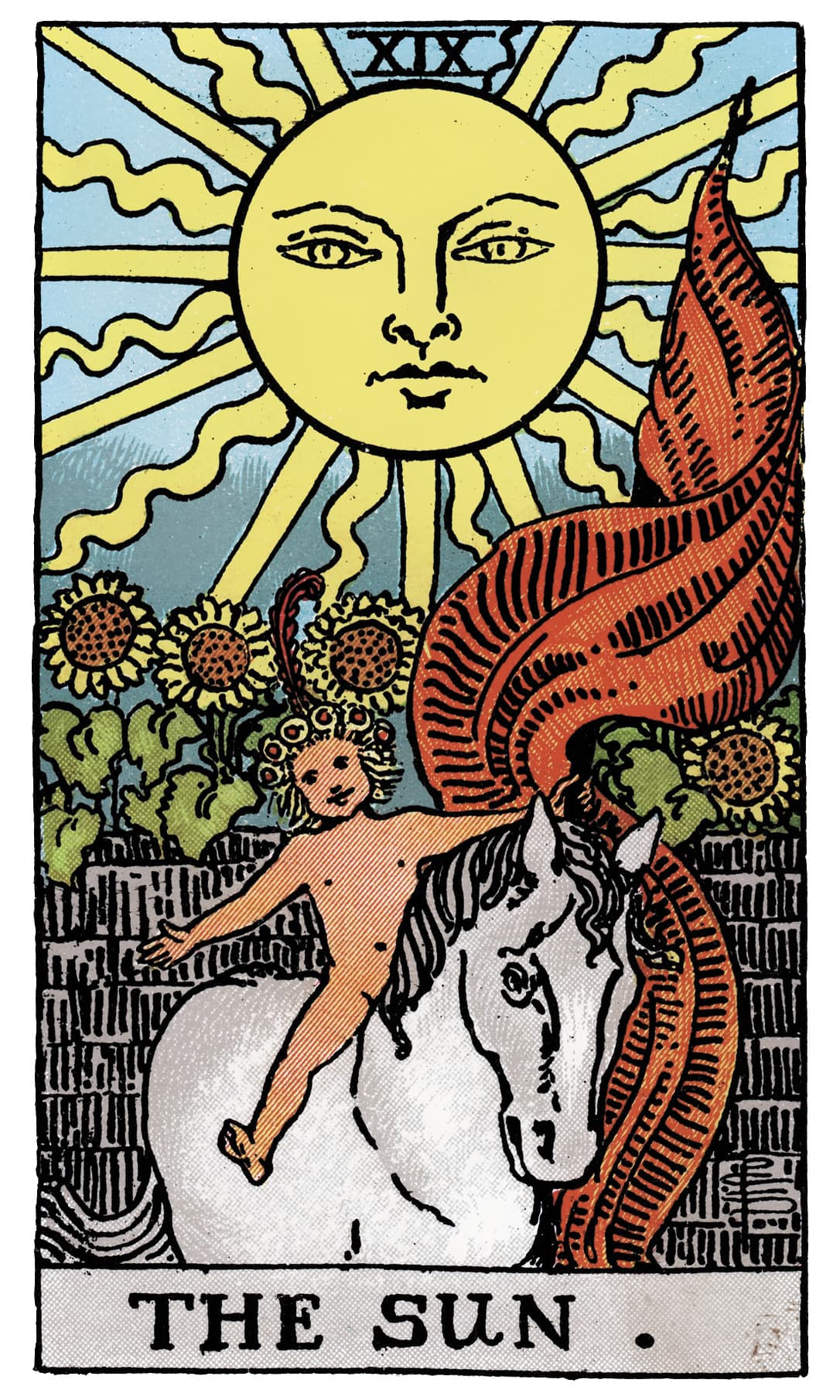
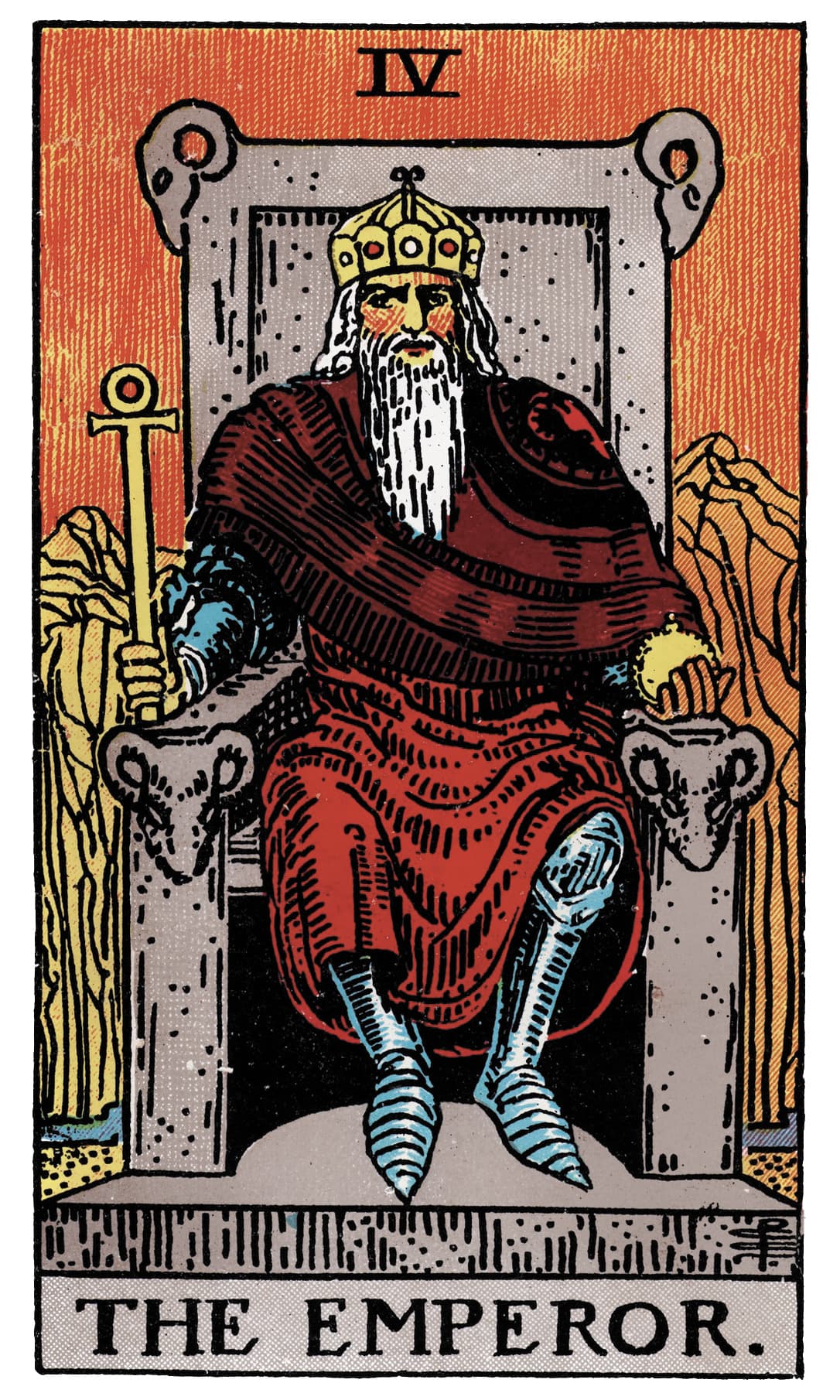
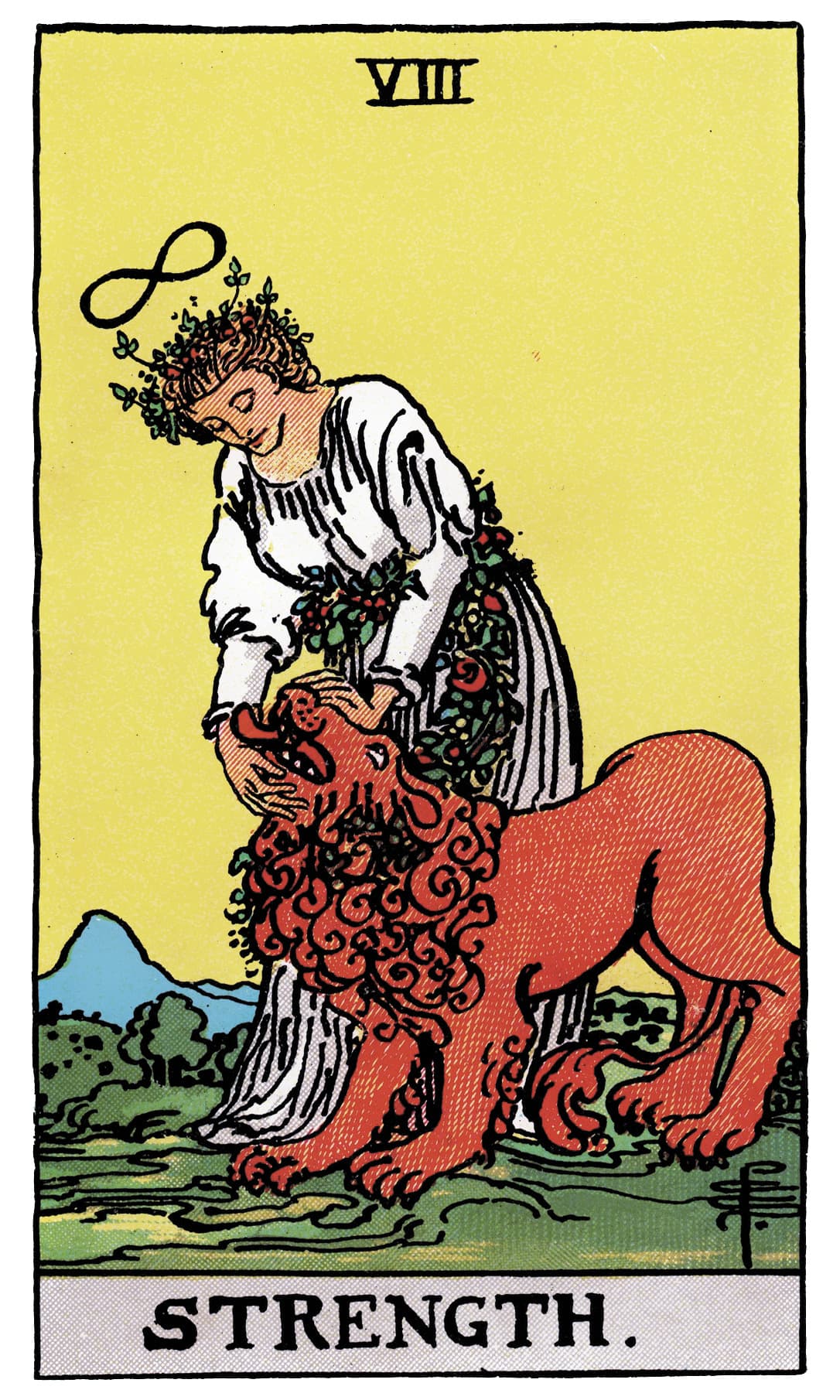
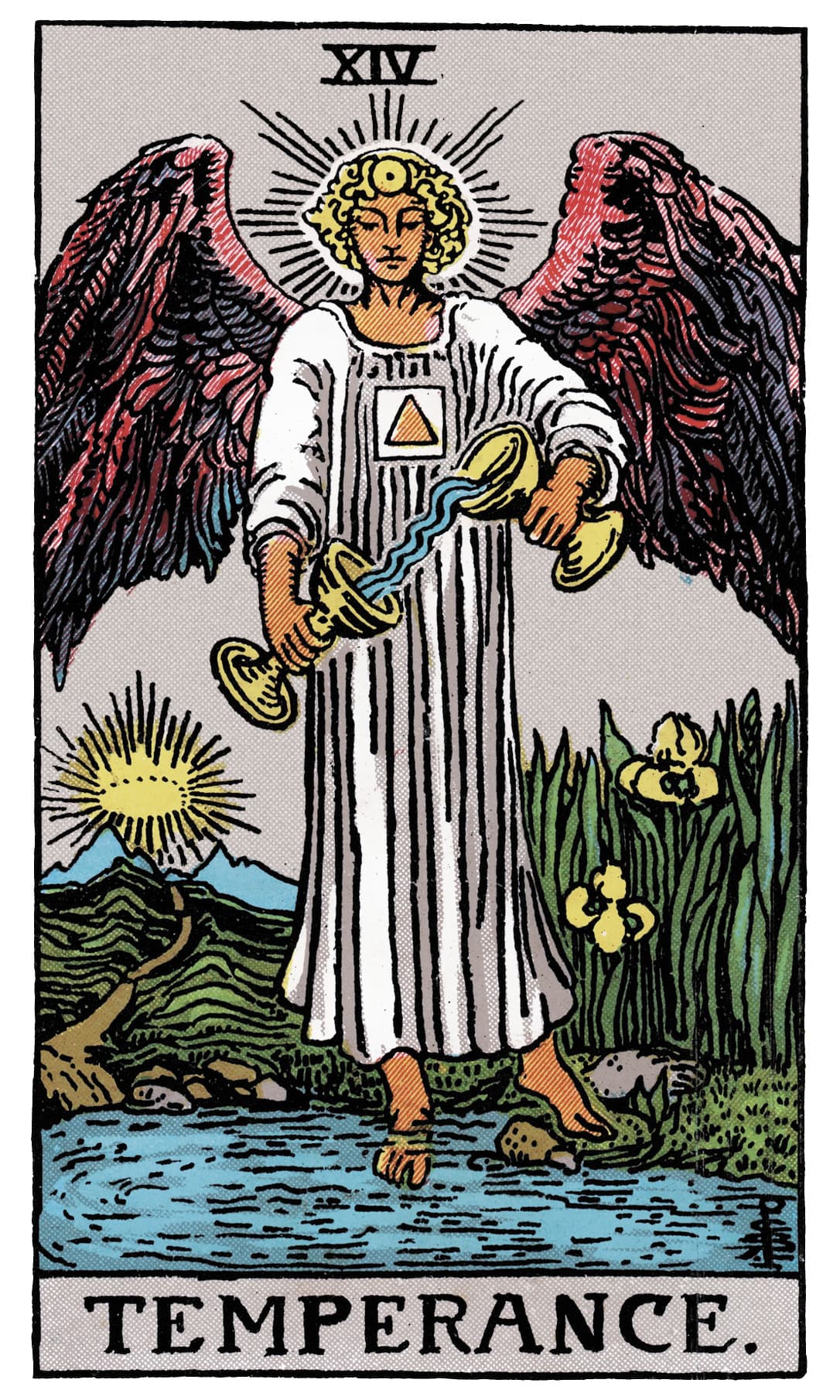
Among the Major Arcana, the closest allies of the Wands are the cards with fire attributions: the Emperor (Aries), Strength (Leo), Temperance (Sagittarius), the Sun as a planet and Judgement as the card of elemental fire. Their full meanings are in the guide to the Major Arcana.
- Wands and Cups: passion meets feeling. In love a lovely pairing (desire plus tenderness), at work a clash between heart and ambition.
- Wands and Swords: fire fanned by wind. Quick decisions, sharp words, a lot of mental energy.
- Wands and Pentacles: the idea gets a body. The best mix for business and any project meant to make money.
- Wands with the Sun, Emperor or Strength: the suit’s message amplified. The Ace of Wands next to the Sun is one of the loudest yeses in the deck.
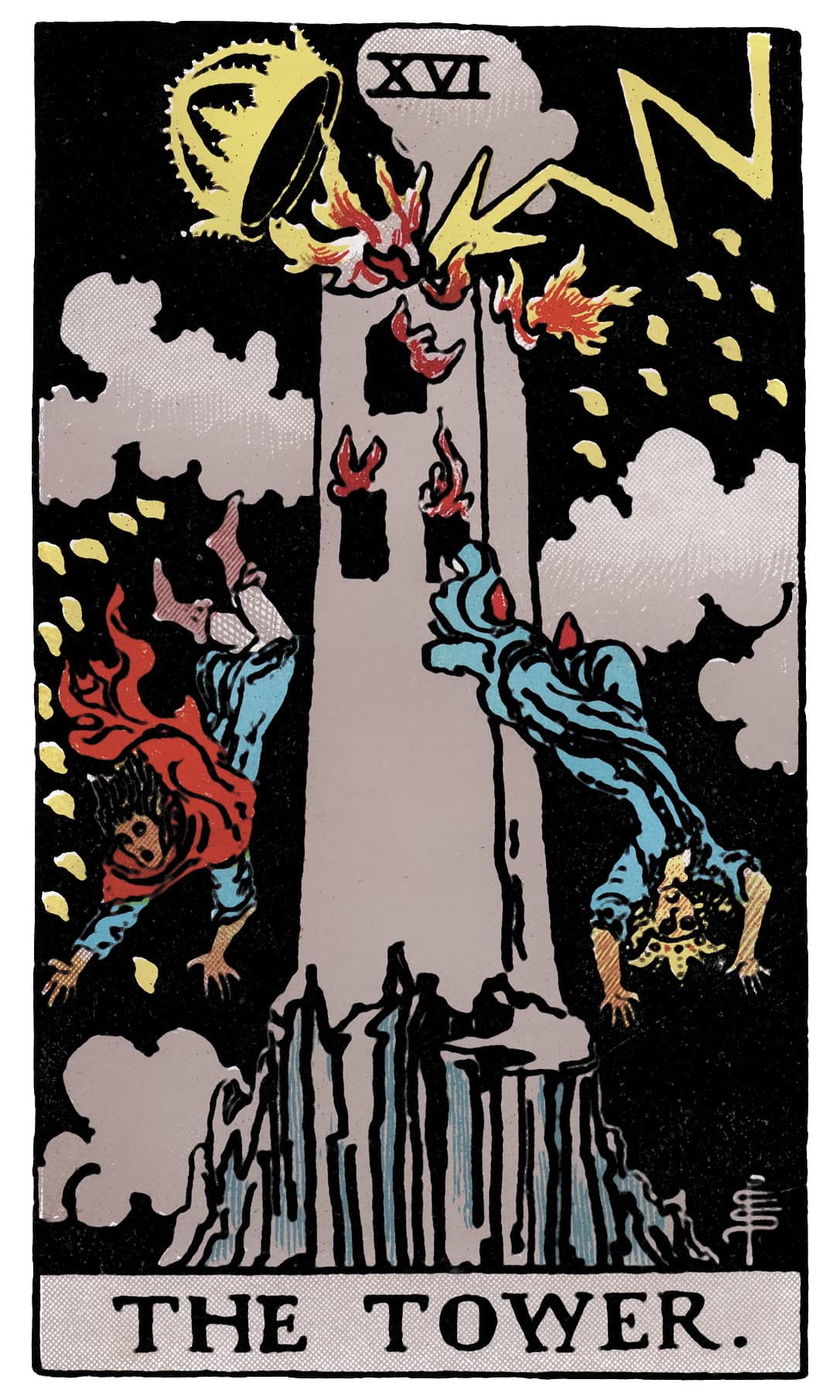
- Wands with the Tower: fire out of control. A blow-up, burnout, a sudden change of plans.
- Wands with Temperance or the Hermit: slow down. These cards ask the fire to burn steadily instead of flaring. Temperance, itself ruled by Sagittarius, shows how to turn fire into alchemy rather than a blaze.
Frequently asked questions
What does the Suit of Wands represent in tarot?
Wands are the suit of fire. They represent energy, will, ambition, creativity, passion and action. When they dominate a spread, the situation is moving fast and depends mostly on your own initiative.
Which zodiac signs are the Wands?
Wands correspond to the fire signs Aries, Leo and Sagittarius. The decans of these signs are assigned to the Two through Ten, and the Wands court cards are often used as significators for people born under them.
What does the Ace of Wands mean in love?
In love the Ace of Wands is a new spark: attraction, chemistry, the start of a romance or passion returning to an existing relationship. It speaks more of desire and initiative than deep feeling, so read it together with the cards around it.
What does the Ten of Wands mean?
The Ten of Wands is a burden: too many obligations, overwork, responsibility taken on beyond your strength. The goal is close, but you will only reach it by putting some of the staves down. Reversed, it often signals relief or the need to delegate.
Are Wands yes or no in tarot?
Most Wands lean toward yes, especially the Ace, Three, Four, Six and Eight, because fire means movement. The Five, Seven, Nine and Ten tend toward yes with effort or struggle attached. For a full list, see the guide to yes or no tarot meanings.
Personal reading
Wands showing up in your spread?
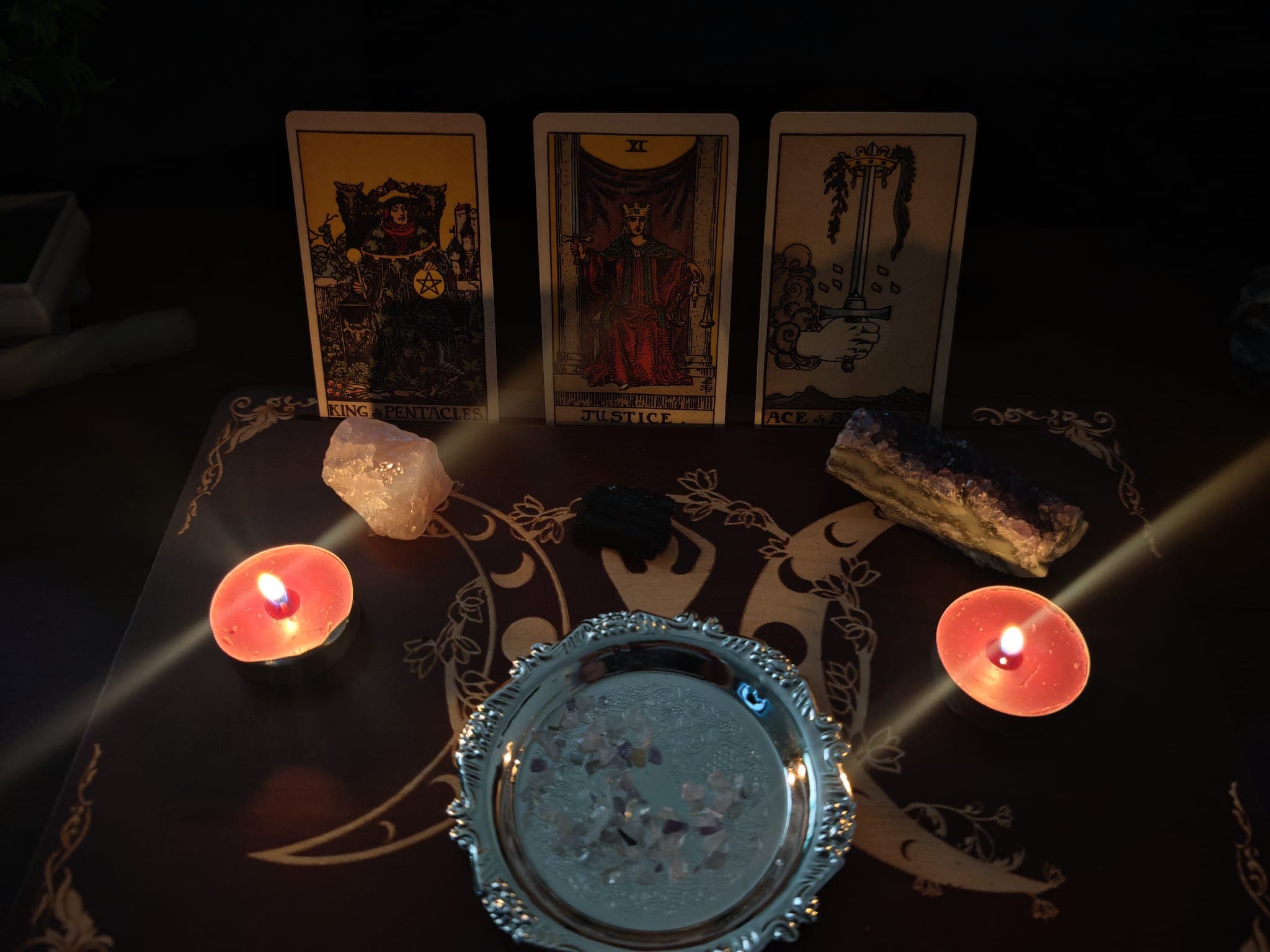
A new project, a career move, a relationship burning too hot or cooling too fast? Bartłomiej will lay out three cards for you on a physical Rider-Waite-Smith deck. You receive a photo of the real spread and a written interpretation on a private link, plus one free follow-up question within 48 hours.
Order a 3-Card Reading (22 EUR) →