What the Celtic Cross is
It is the best-known tarot spread there is. Arthur Edward Waite popularised it in The Pictorial Key to the Tarot, the companion book to the deck Pamela Colman Smith painted. It has since spawned dozens of variants, but the skeleton stays the same: six cards form a cross that describes the situation, and four cards stacked in a column on the right describe you and where things are heading.
The positions in the layout most readers use today:
- 1. The heart of the matter, what covers you.
- 2. The challenge, what crosses you.
- 3. The foundation: the roots of the issue, the subconscious.
- 4. The recent past, what is behind you.
- 5. The crown: your conscious aim, the best possible outcome.
- 6. The near future, what is before you.
- 7. You: your attitude toward the situation.
- 8. Environment: other people and circumstances.
- 9. Hopes and fears.
- 10. Outcome: the direction things are moving in.
Example spread: a job offer in another city
Tap a thumbnail to jump to a card
1
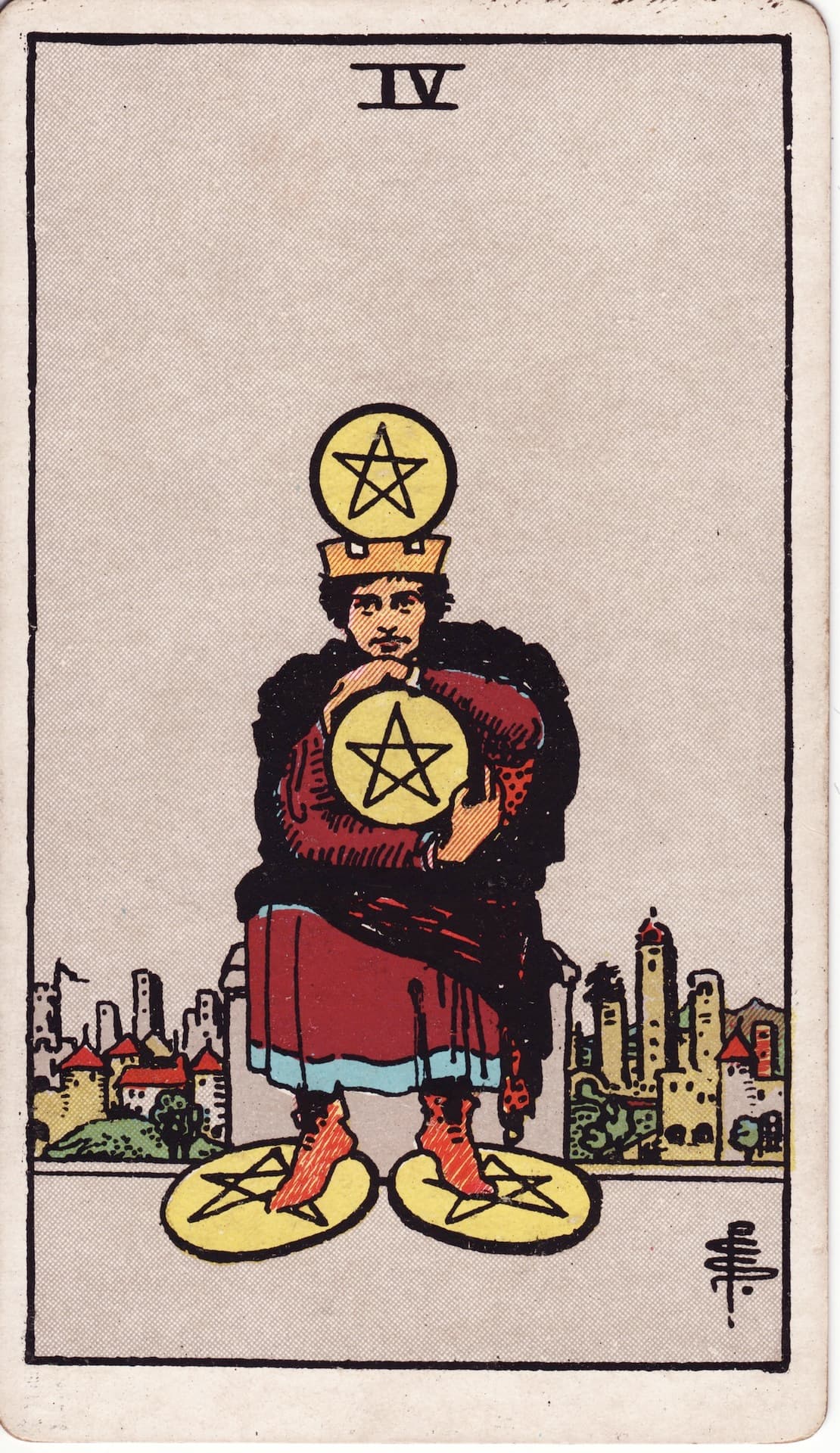
Four of Pentacles
The heart of the matter. A figure clutches one coin to his chest, balances one on his head and plants his feet on two more, with a city behind him. The current situation is stability held in a tight grip: a safe salary, a familiar place, the Sun in Capricorn.
2
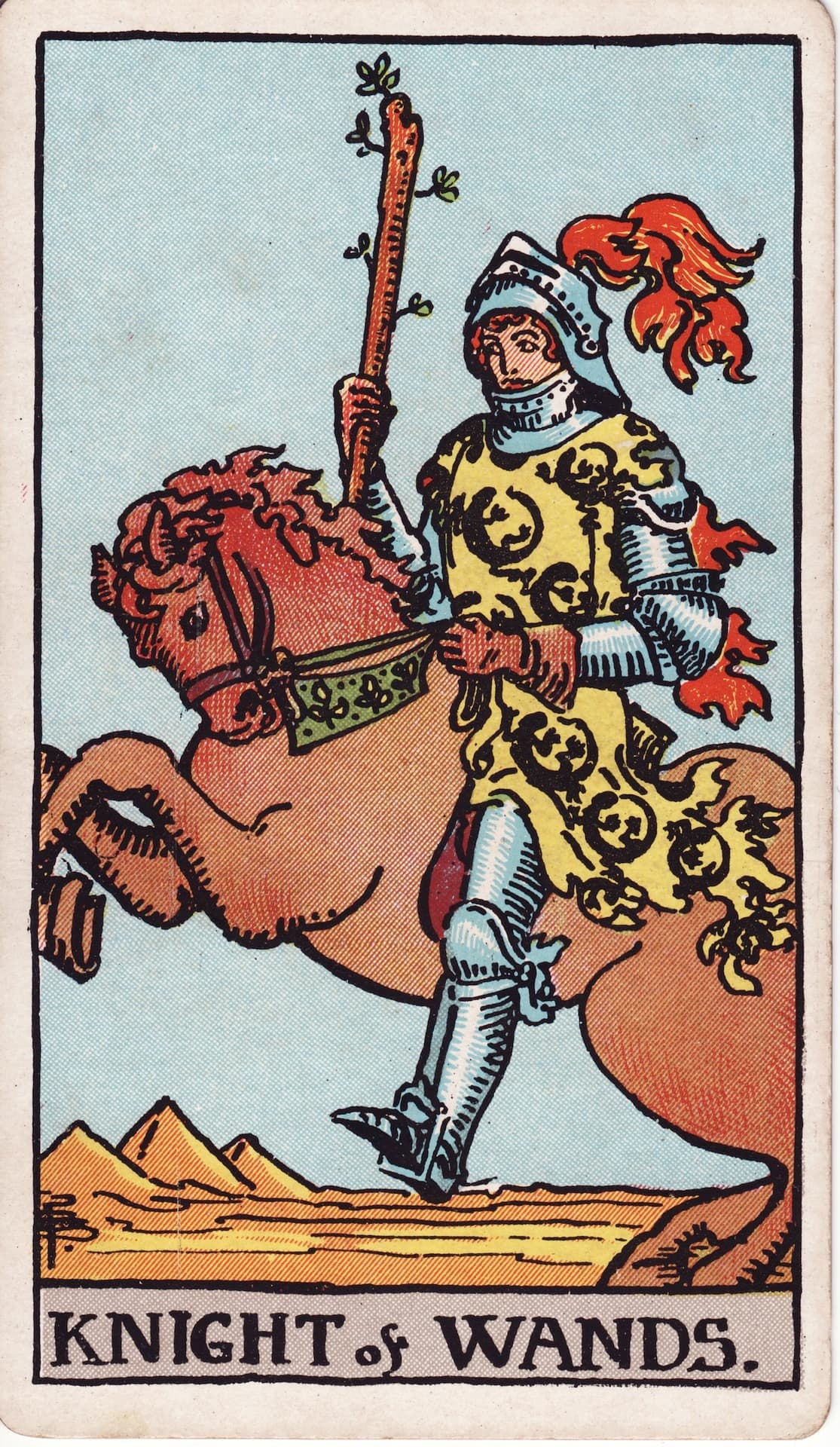
Knight of Wands
The challenge. A rearing horse, a tunic patterned with salamanders, pyramids on the horizon. The offer came out of nowhere and pulls toward movement and relocation. What crosses the heart is an impulse that shatters the calm.
3
Nine of Swords
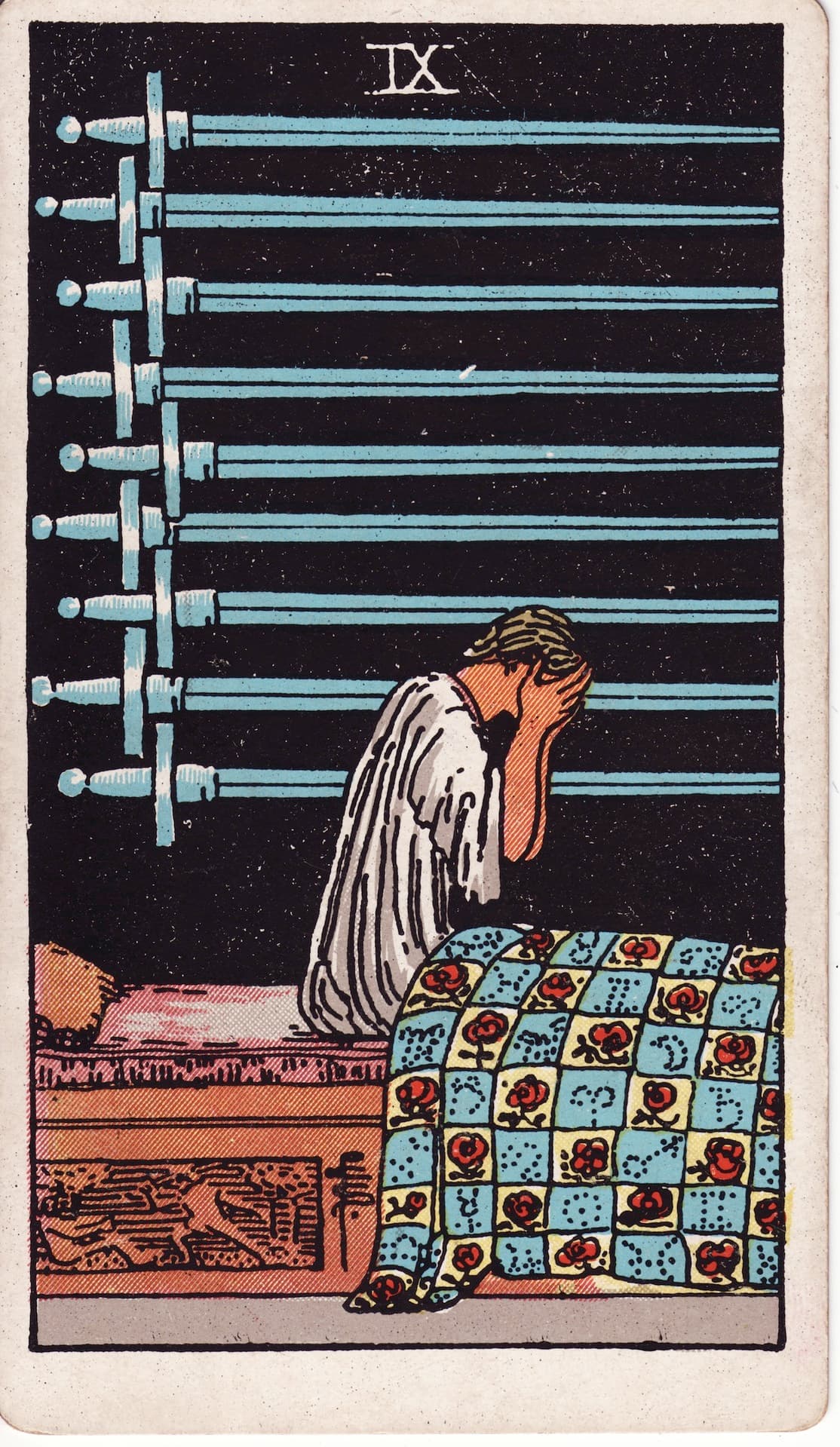
The foundation. A figure sits up in bed with her face in her hands, the quilt covered in roses and zodiac signs. At the root is nighttime anxiety and worst-case scenarios that look overblown by day. Mars in Gemini: a mind that won't switch off.
4
Six of Cups
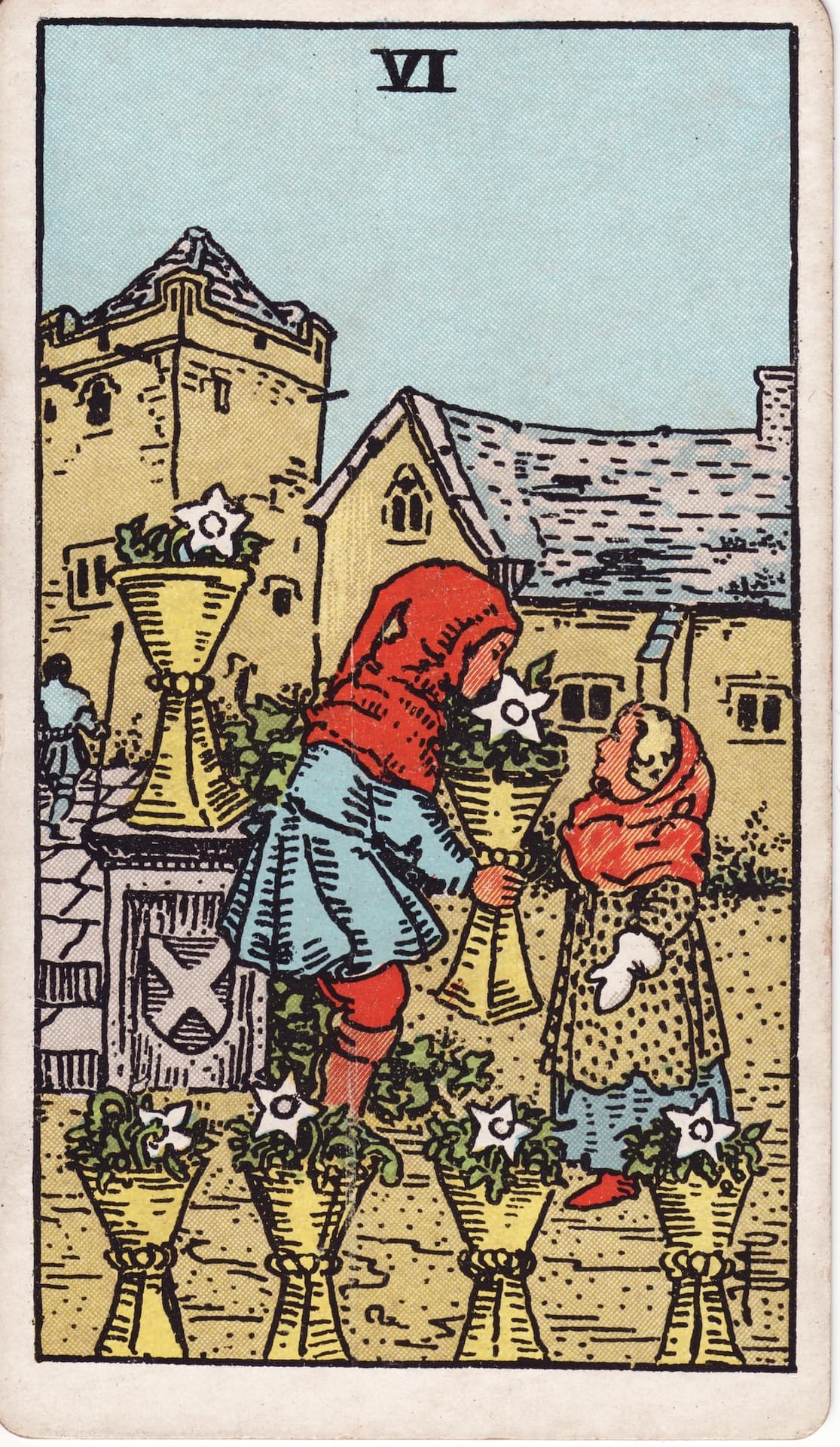
The recent past. A boy hands a girl a cup filled with white flowers in the courtyard of an old house. The last few months have been coloured by nostalgia, family and the familiar.
5
The Star
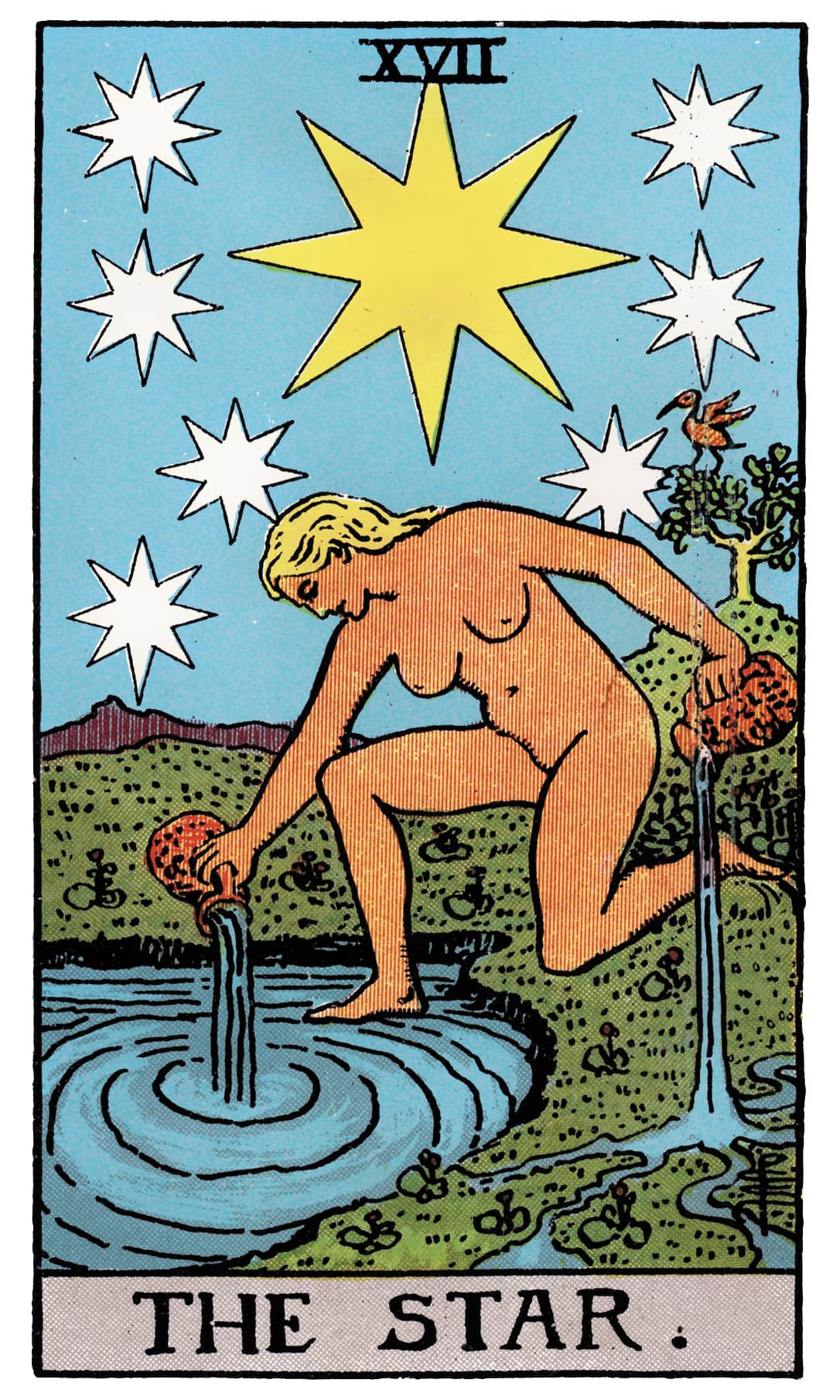
The crown. The conscious aim and the best possible scenario: hope, renewal, a fresh start from clear water. This change is about more than money.
6
Eight of Cups
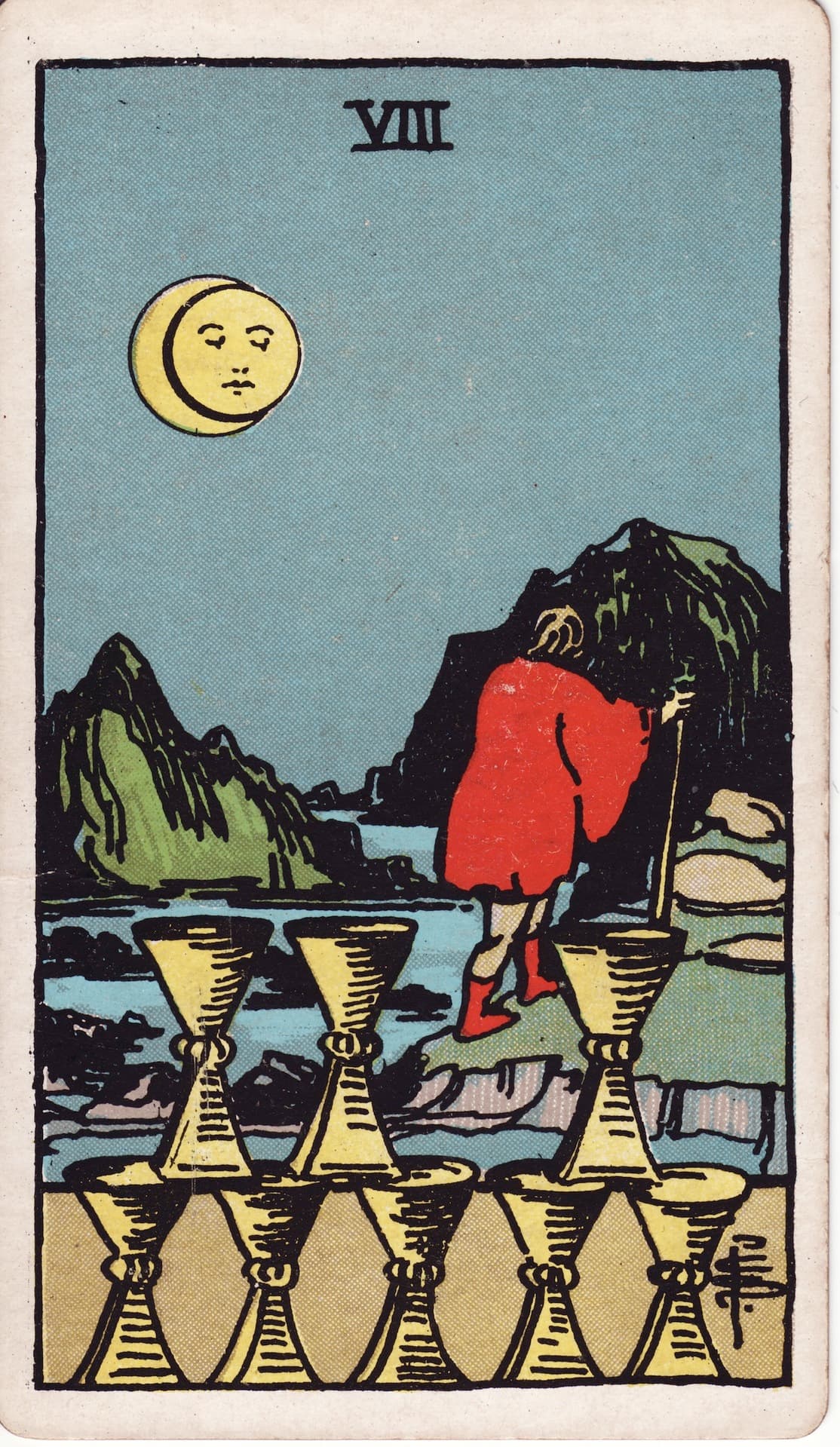
The near future. A figure in a red cloak walks away from eight stacked cups toward the mountains, under a moon with a face. The coming weeks bring an emotional farewell to something that stopped nourishing. Saturn in Pisces.
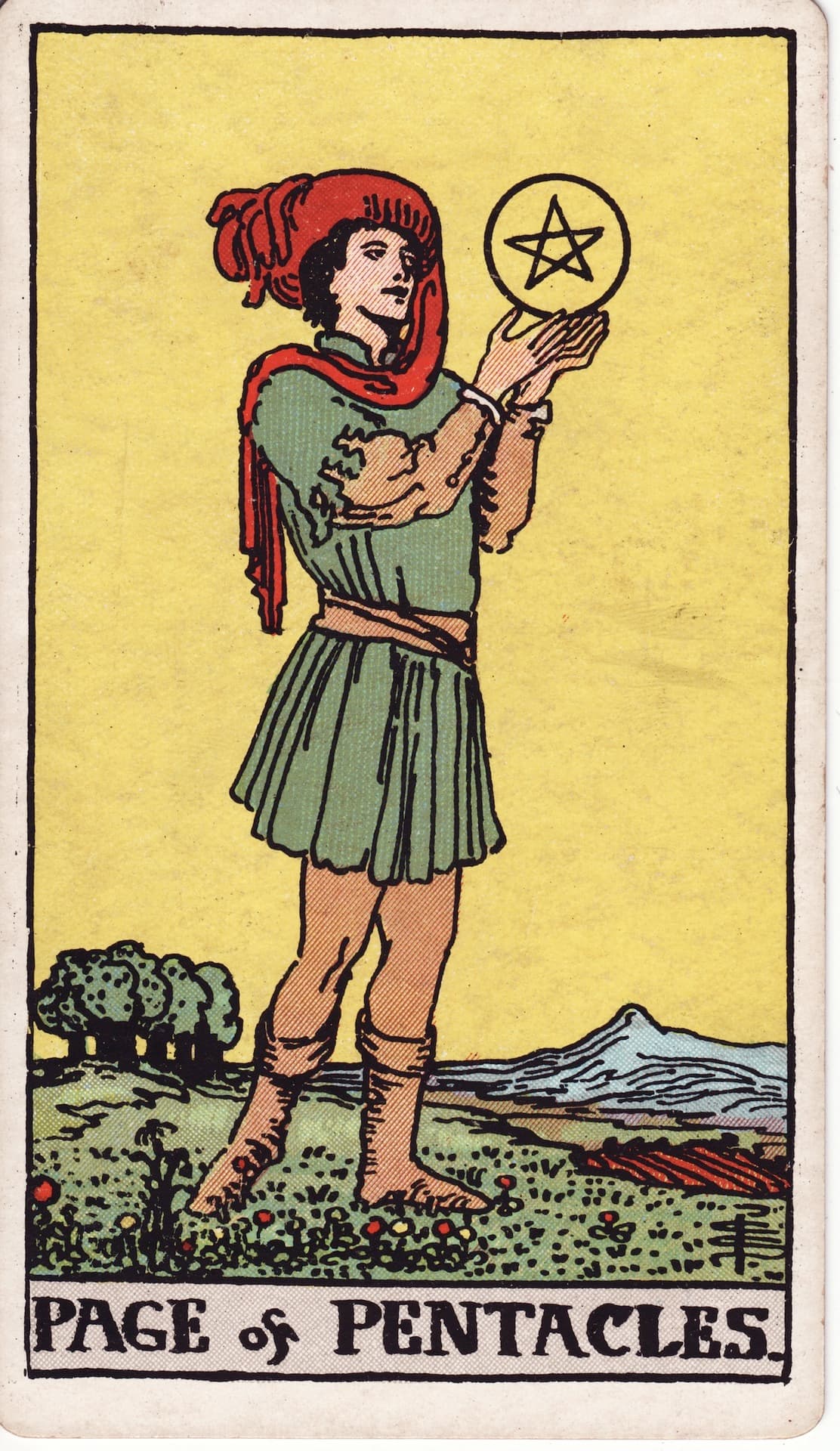
7
Page of Pentacles
You. A young man in a green field gazes at his coin as if it were something entirely new. The attitude of a student: careful, attentive, eager to learn, but not yet confident.

8
Three of Pentacles
Environment. A stonemason in a cathedral shows his work to a monk and an architect holding plans. The people around you see your skill and are ready to collaborate. Mars in Capricorn.
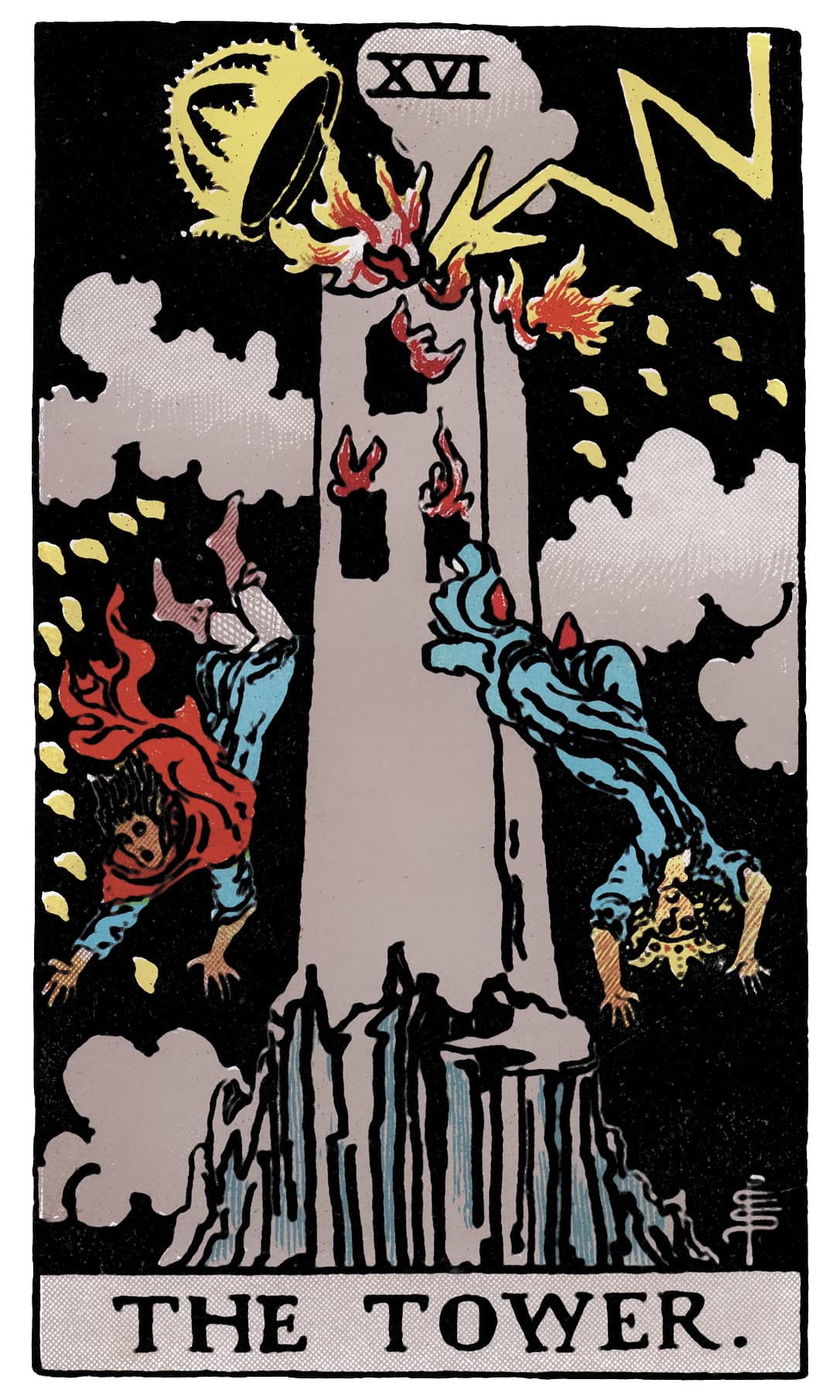
9
The Tower
Hopes and fears. Lightning, a falling crown, two falling figures. Here hope and fear are one: you long for an upheaval that will shake you loose, and you dread everything collapsing.
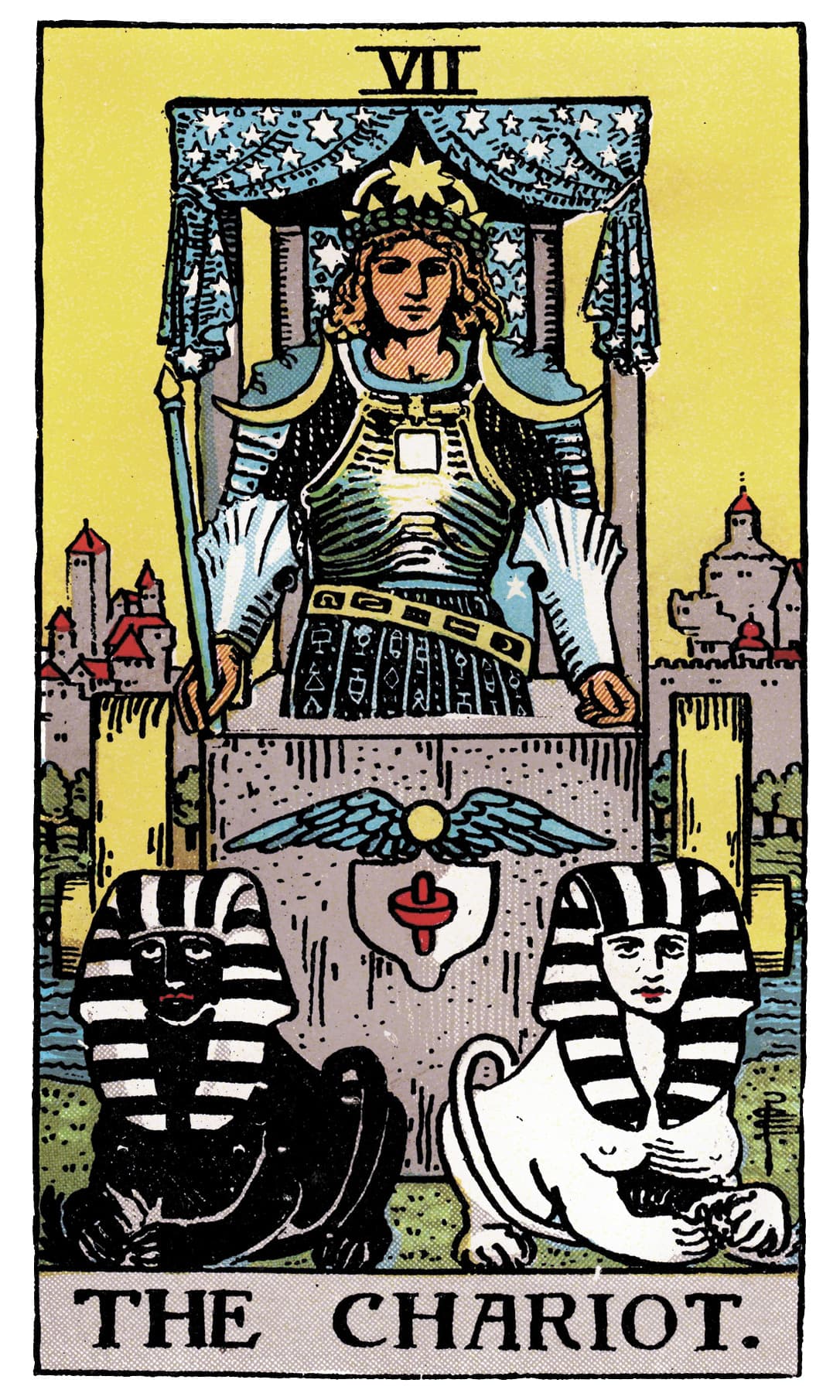
10
The Chariot
Outcome. A charioteer without reins drives a black and a white sphinx, leaving the city behind. Forward motion and the victory of will. Cancer, this card's sign, says leaving doesn't have to mean cutting your roots.
How to lay the cards, step by step
Start with the question, because the Celtic Cross magnifies every bit of fog. Then shuffle until the deck feels ready, cut it, and deal from the top.
Card 1 goes in the centre. Card 2 lies across it sideways, forming a small cross. Card 3 goes below, card 4 to the left, card 5 above the centre, card 6 to the right. That completes the cross. The staff is built on the right-hand side from the bottom up: card 7 at the base, card 10 at the top.
Waite began with a significator, a court card chosen to represent the querent, and laid card 1 directly on top of it. Many readers skip this now and leave the significator in the deck so it can turn up wherever it has something to say. In Waite's original description the crown is the third card and the foundation the fourth. Both orders work, as long as you choose one before shuffling and stick to it for the whole reading.
The ten positions and how to read them
The name of each position is only the start. Each has its own character and its own traps.
- 1. The heart of the matter. The climate of the situation right now. Treat it as the theme of the whole reading; everything else will relate back to it.
- 2. The challenge. The force cutting across the heart. It isn't always negative: a positive card here is often something good arriving at the wrong moment, or something that demands change.
- 3. The foundation. What sits underneath and rarely gets named: an old fear, a family pattern, the real motive. Major Arcana here say the issue has deep roots.
- 4. The recent past. Events that are just passing but still have force. They explain how the heart of the matter came to be.
- 5. The crown. What you consciously want, or the best that could grow from this. Compare it with card 10: do the aim and the direction match?
- 6. The near future. The next development, usually weeks away. It isn't the outcome, just the next bend in the road.
- 7. You. Your attitude and how you are approaching things. This is often the card that shows what would need to change for the outcome to change.
- 8. Environment. Waite called it the querent's house: family, partner, colleagues, the atmosphere around the issue. A court card here usually points to a specific person.
- 9. Hopes and fears. One card for two things, because what we hope for and what we dread are often the same thing.
- 10. Outcome. Where things are heading if nothing shifts. Always read it together with card 7, because your stance is what leads there.
Reading in pairs: how the positions talk to each other
The Celtic Cross comes alive when you stop reading the cards in sequence and start setting them side by side. Five pairings give you the skeleton of an interpretation.
- 1 and 2: heart versus challenge. The two forces at the centre. Do they reinforce each other or clash? The same suit means a conflict inside one area of life; different suits mean two areas colliding.
- 3 and 5: subconscious versus conscious. The vertical axis. What lies beneath and what sits in the crown. If they disagree, the querent wants one thing and is pulled toward another.
- 4 and 6: past versus future. The horizontal axis. It shows movement through time: is what lies ahead a continuation of what is behind, or a turn?
- 7 and 10: attitude versus outcome. The most important pair in the staff. The outcome grows out of the attitude, so shift card 7 and card 10 shifts with it.
- 9 against the whole. The hopes and fears card often explains why the heart of the matter looks the way it does. Hold it up against the crown: are what you want and what you fear standing side by side?
Worked example: ten cards, one story
Let's go back to the example spread in the gallery. The question: “Should I accept a job offer in another city?”
Heart and challenge are the Four of Pentacles and the Knight of Wands. Earth and Fire, holding on and leaping. The querent is gripping a steady salary and a familiar place, while the offer arrived suddenly and pulls toward movement. The conflict isn't external; it lives inside.
The vertical axis is the most telling. Beneath lies the Nine of Swords, in the crown the Star. Both are night cards, but one is starless and the other shines under a great eight-pointed star. Underneath runs a nighttime dread of failing; on the surface there is hope for renewal. The horizontal axis runs from the Six of Cups to the Eight of Cups: from nostalgia for home and old friends to walking away from cups that no longer nourish. The whole emotional line of the spread is heading toward a goodbye.
In the staff, the Page of Pentacles as attitude and the Chariot as outcome. From a student carefully studying a coin, the querent is asked to become a charioteer steering two sphinxes without reins. The Three of Pentacles in the environment says people around them see their skill and are ready to work with them. The Tower in hopes and fears pulls everything together: the longing for an upheaval and the fear that everything will fall apart.
A detail for the trained eye: Mars rules the Nine of Swords (Mars in Gemini), the Three of Pentacles (Mars in Capricorn) and the Tower. The same planet three times, an energy for action that turns into sleeplessness when it becomes fear and into solid effort when it goes into work. Pentacles dominate, so what is really at stake is security and material footing. The spread's answer: yes, take it, knowing that it asks for a goodbye and for working through those 3am scenarios before the move.
Look at the whole table before the details
Before you read position one, scan the spread like a map. A few things jump out straight away and set the tone.
- How many Major Arcana. Three or more means forces bigger than everyday choices are at work. One or none, and the matter is largely in your hands.
- The dominant suit. Mostly Swords, it is being fought out in the head. Cups, in the feelings. Wands, in ambition and drive. Pentacles, in money, the body and work.
- Repeating numbers. Three fives signal a conflict running through every layer. Several aces mean a fresh start, several tens the end of a cycle.
- Court cards. Each may be a person around you or a part of you. Several at once means a lot depends on other people.
- Where the figures look. On the Rider-Waite-Smith deck, figures face definite directions. A card in position 6 whose figure looks left, toward the past, suggests the future is still glancing over its shoulder.
Common Celtic Cross mistakes
Most readings of this spread that fall flat trip over the same things.
- Reading ten cards as ten separate answers with no links between them.
- Treating card 10 as a verdict. It is the direction that follows from the current attitude, not fate carved in stone.
- Skipping card 7. The “you” position most often holds the hint about what can change.
- Reading position 9 as only a hope or only a fear, when the card usually shows both at once.
- Switching position systems mid-reading, for example treating the crown as card 3 one moment and card 5 the next.
- Pulling clarifiers for every position until the table becomes unreadable. One or two is plenty.
- Asking too broad a question. “What's coming for me?” across ten cards gives you ten times the fog.
Celtic Cross or a three-card spread?
The Celtic Cross earns its place when a situation has layers: the past is still active, someone around you has influence, and what you want doesn't line up with what you fear. It gives you the full picture, but it takes time and a well-built question. The article on how to ask tarot a question covers how to build one.
A three-card spread is the better tool when you face a single decision and need focus rather than a panorama. Three cards means less information, but each card gets more room to speak. For one closed question, a single card is enough, as the guide to yes or no tarot card meanings explains. Plenty of readers work this way: three cards first, and only if that reading opens more questions than it closes, the Celtic Cross.
Frequently asked questions
How many cards are in the Celtic Cross spread?
Ten. Six form the cross that describes the situation, and four form the staff on the right that describes the querent and the direction of events. Waite's version adds a significator, a card representing the querent, which card 1 is laid on.
What order do you lay the Celtic Cross in?
Card 1 in the centre, card 2 across it, card 3 below, 4 to the left, 5 above the centre, 6 to the right. Cards 7 to 10 form a column on the right, laid from the bottom up. In Waite's original description the crown is card 3 and the foundation card 4.
What does position 10 mean in the Celtic Cross?
It is the outcome: the direction things are heading given the current balance of forces. Read it with card 7, because the outcome grows out of your attitude. It also pays to compare it with the crown in position 5 to see whether aim and direction line up.
Is the Celtic Cross good for beginners?
Yes, once you know the basic card meanings and have a well-formed question. Start by reading each position on its own, then move to the pairs 1 and 2, 3 and 5, 4 and 6, 7 and 10. After a dozen or so spreads, the connections start to jump out at you.
Personal reading
Not every question needs ten cards
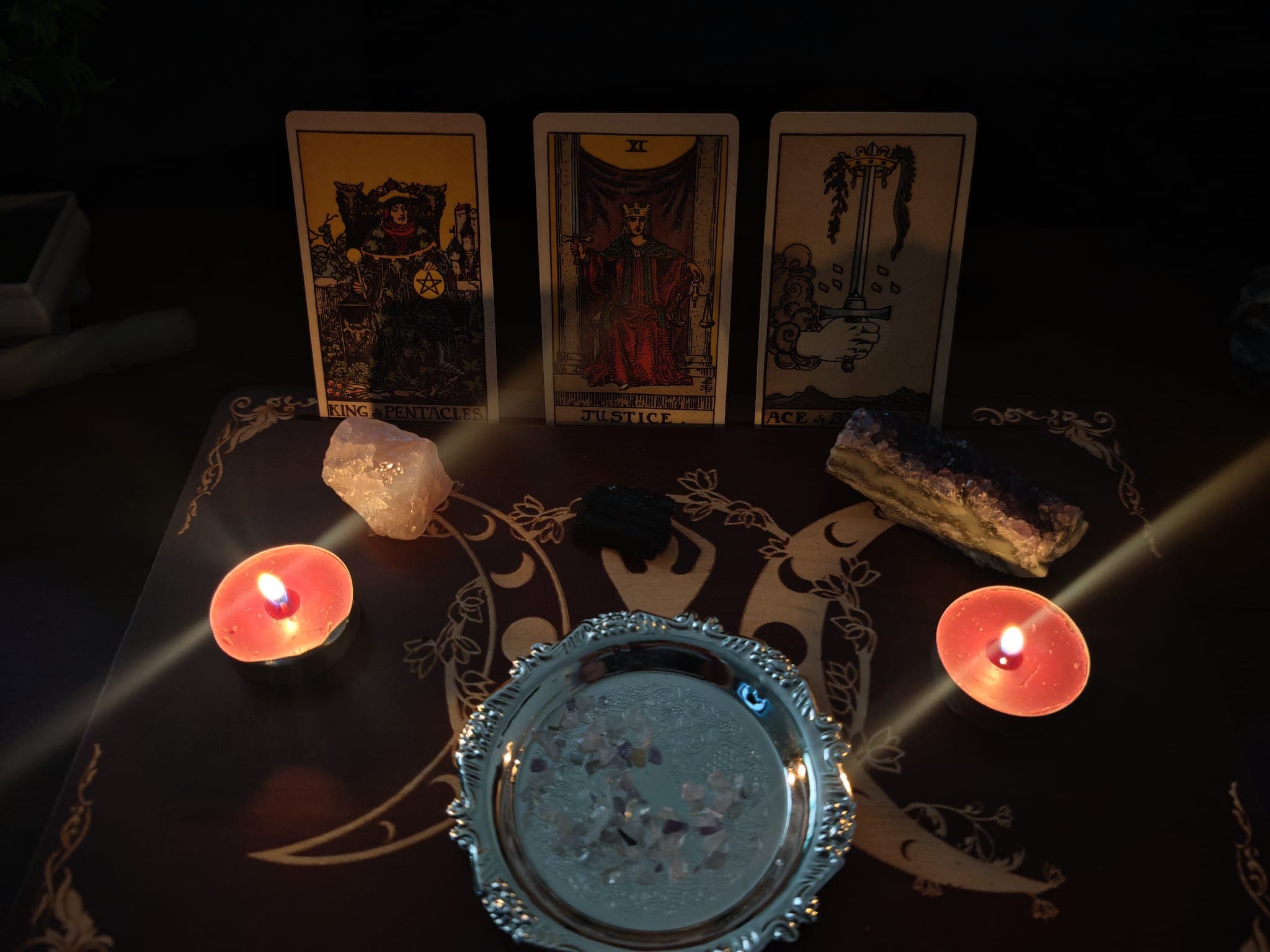
If you are facing one decision, a 3-Card Reading gives you focus without an overwhelming panorama. The cards are laid on a physical Rider-Waite-Smith deck, and you receive a photo of the real spread, a written interpretation on a private link and one free follow-up question within 48 hours. Price: 22 EUR.
Order a 3-Card Reading →