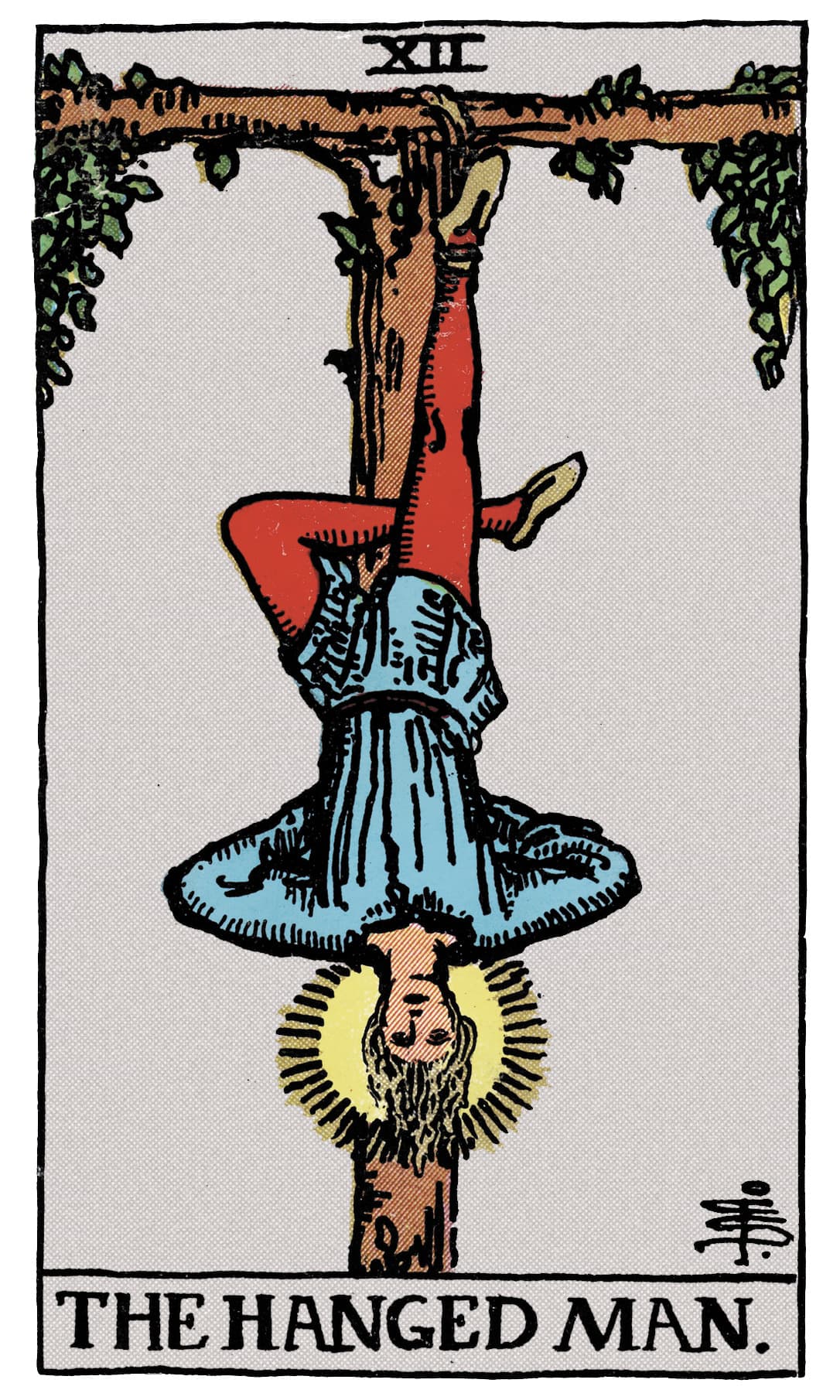
Where reversals come from, and whether to read them
Reversals have a longer history than most people assume. In the eighteenth century the French cartomancer Etteilla printed two keywords on each of his cards, one for upright and one for reversed. When Arthur Edward Waite published The Pictorial Key to the Tarot in 1910, he gave all 78 cards a separate 'Reversed' paragraph, though many of them are brief and a little arbitrary.
The Golden Dawn, Waite's own order, did not use reversals in its divination methods at all. It read elemental dignities instead: the way neighbouring cards strengthen or weaken each other. The modern approach owes a great deal to Mary K. Greer, whose Complete Book of Tarot Reversals argued that a reversed card is not a list of bad news but the same energy in a different state. Most contemporary practice builds on that idea.
Readers split into two camps, and both have solid tradition behind them. The first reads every card upright and draws nuance from neighbouring cards, spread position and the balance of elements. Many Marseille readers work this way, as do plenty of readers in the Golden Dawn line. Their argument is simple: 78 cards already give 78 shades, and a hard card next to a supportive one softens on its own.
The second camp reads reversals because they add precision at a glance. A reversed Ace of Cups tells you straight away that the feeling exists but is not flowing. With 78 cards in two orientations, the reader has 156 states of energy to work with.
Both approaches are coherent as long as you stay consistent. Decide your rule before you shuffle, not after you see the cards. Quietly turning a card the right way up because it 'doesn't fit' throws away the very thing the spread was trying to tell you. Plenty of readers learn the upright meanings first and bring in reversals once the deck feels familiar.
Five ways to read a reversed card
You do not need to memorise 78 extra meanings. A handful of keys will cover almost every situation; pick the one that fits the question and the surrounding cards.
- Blocked energy. The card wants to act but something stops it. The Magician reversed: the talent and the plan are there, but the first move or the self-belief is missing. This is the key most readers reach for first.
- Inner energy. What normally happens out in the world plays out inside the psyche instead. The Four of Wands reversed can be a celebration nobody else sees, or a home that feels very different from how it looks from outside. The Hermit reversed can be loneliness felt in the middle of a crowd.
- Excess or deficiency. The card's energy runs past healthy limits, in one direction or the other. Strength reversed may be suppressed rage or a collapse of confidence. Temperance reversed points to overdoing food, spending or emotion.
- Delay. The card has not fully arrived yet, or is on its way out. Wheel of Fortune reversed: change is coming, only slower than you would like. In a future position this is one of the most practical keys there is.
- Opposite meaning. The oldest method, used sparingly today. It works best with difficult cards: the Nine of Swords reversed often means the three-in-the-morning fears are finally loosening their hold.
Choosing the right key
Look at the neighbours. A reversed card surrounded by movement cards (the Knights, the Eight of Wands, the Chariot) usually reads as delay. Surrounded by emotional and intuitive cards (Cups, the Moon, the High Priestess), it more often points inward. In the company of conflict cards like the Five of Wands or the Five of Swords, you are usually looking at a block or an excess.
The suit is the second clue. Reversed Swords often lighten, because thoughts that were cutting lose their edge. Reversed Cups close the heart, reversed Wands dampen the fire, and reversed Pentacles show trouble with the body, money or a sense of security. The Major Arcana never lose their weight when reversed; they simply work differently: slower, from within, or in excess.
How to shuffle for reversals
A new deck comes out of the box all facing one way, so ordinary shuffling will not produce reversals on its own. The same goes for the end of every reading: cards gathered up from the last spread can leave whole runs of reversals in the pack, and those runs mean nothing except noise for the next question. Orientation is always judged from the reader's side of the table. Turn cards over sideways, like the page of a book, because flipping a card end over end turns an upright card into a reversed one.
To get reversals flowing naturally, use one of these methods:
- The table wash. Spread the cards face down and swirl them around with both hands, the way you would mix dominoes. It is the most reliable method and gentle on the cardstock.
- Turn half the deck. Split the deck in two, rotate one half 180 degrees, bring them together and shuffle as usual. Repeat two or three times.
- The querent's cut. Traditionally the querent cuts the deck into three piles with the left hand. If one pile is turned as they are restacked, reversals appear naturally.
- Jumping cards. A card that flies out during shuffling is often treated as an extra message, and it is read in whatever orientation it lands.
How position changes a reversal
The same reversed card says different things depending on where it lies. A few working rules:
- Past. A reversed card here often marks unfinished business, or an energy that is already fading. The Five of Cups reversed in the past is grief that is ending, though it may not have been fully felt.
- Present. Here a reversal most often means a block or something being processed internally. It is a good moment to ask what is being held down.
- Future. A reversal in the future rarely means 'this will not happen'. More often it means 'not yet', or 'in a different form than you expect'.
- Obstacle. A difficult card reversed in the challenge position can work as a double negative. The Tower reversed as an obstacle is the fear of change, which blocks more than the change itself would. A positive card reversed here shows a resource you are not using.
- Advice. A reversed card in the advice position usually tells you what to release, or what to work through inside, before acting outside.
- Yes or no questions. A reversal tilts the answer toward no, or not yet. Our guide to yes or no tarot goes through the whole deck.
Major Arcana reversed: five examples
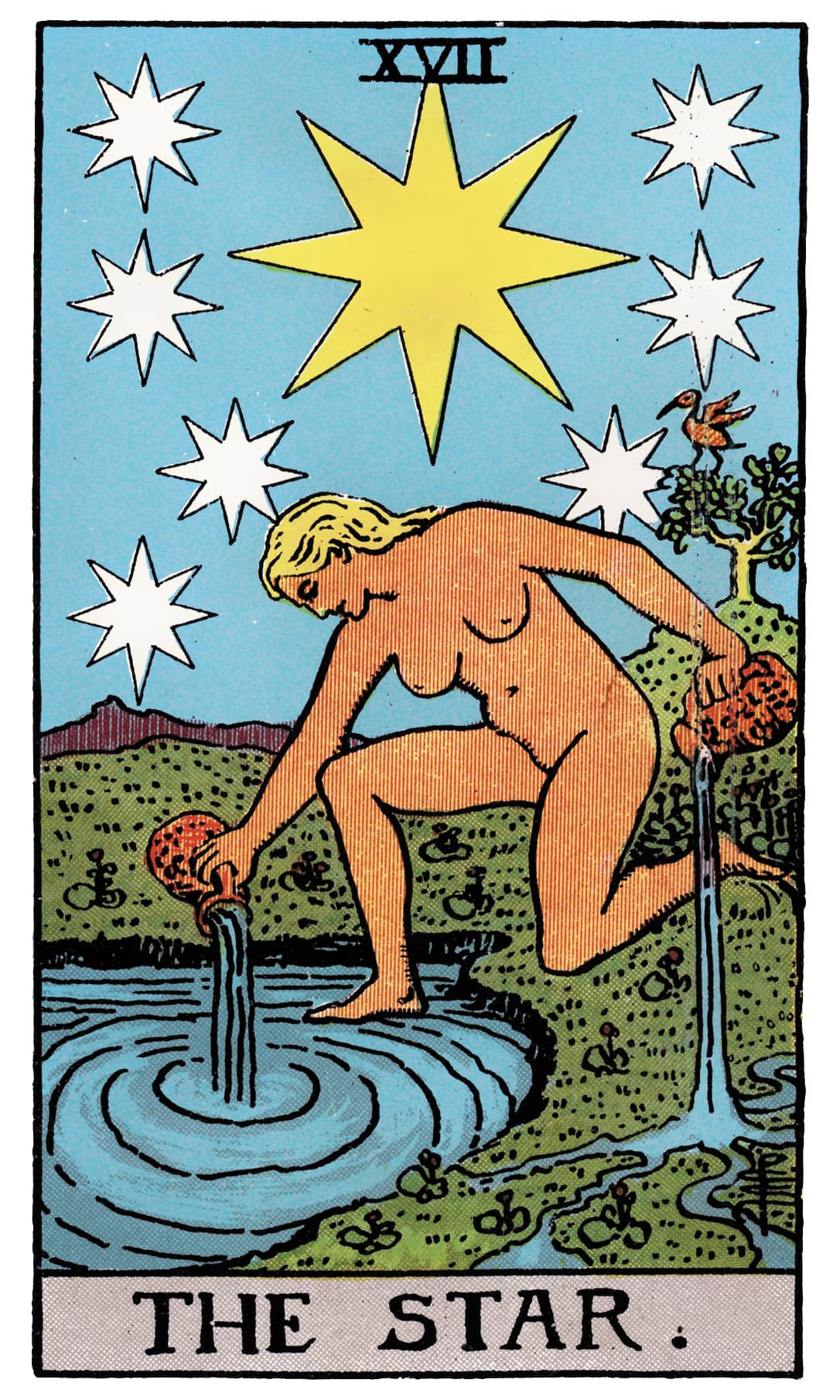
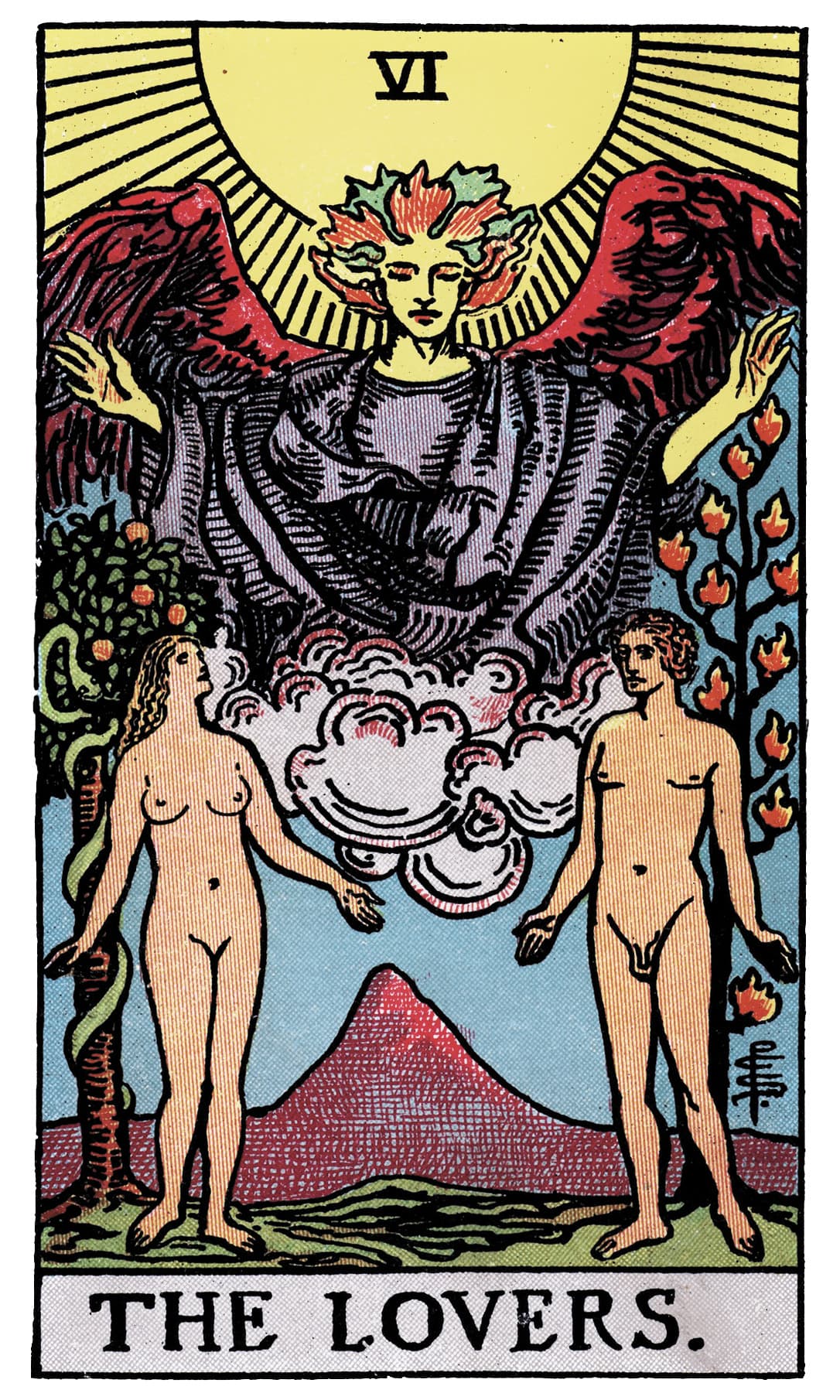
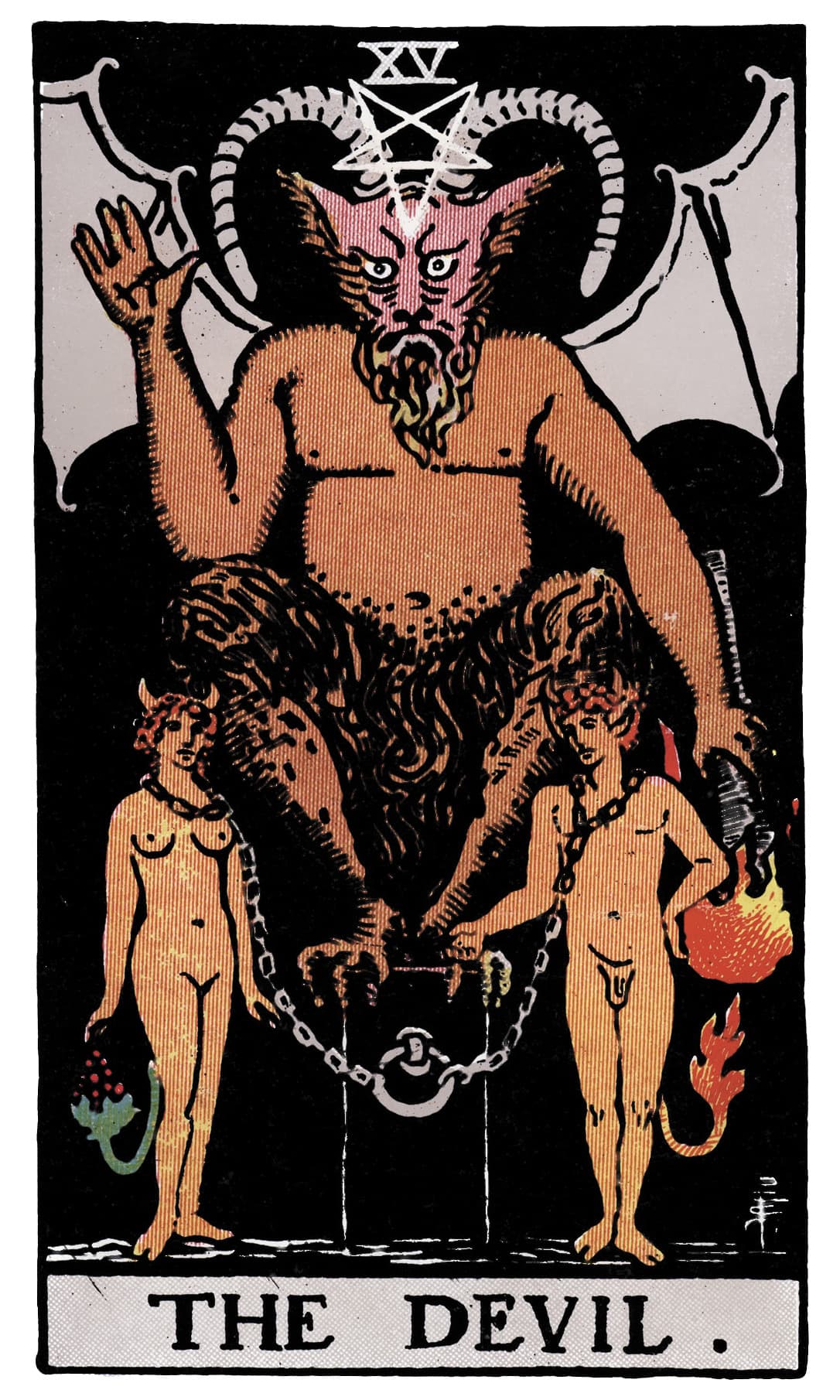
A reversed trump keeps its weight. Here is how the most searched-for ones read (for the full upright and reversed meanings of all 22, see our guide to the Major Arcana):
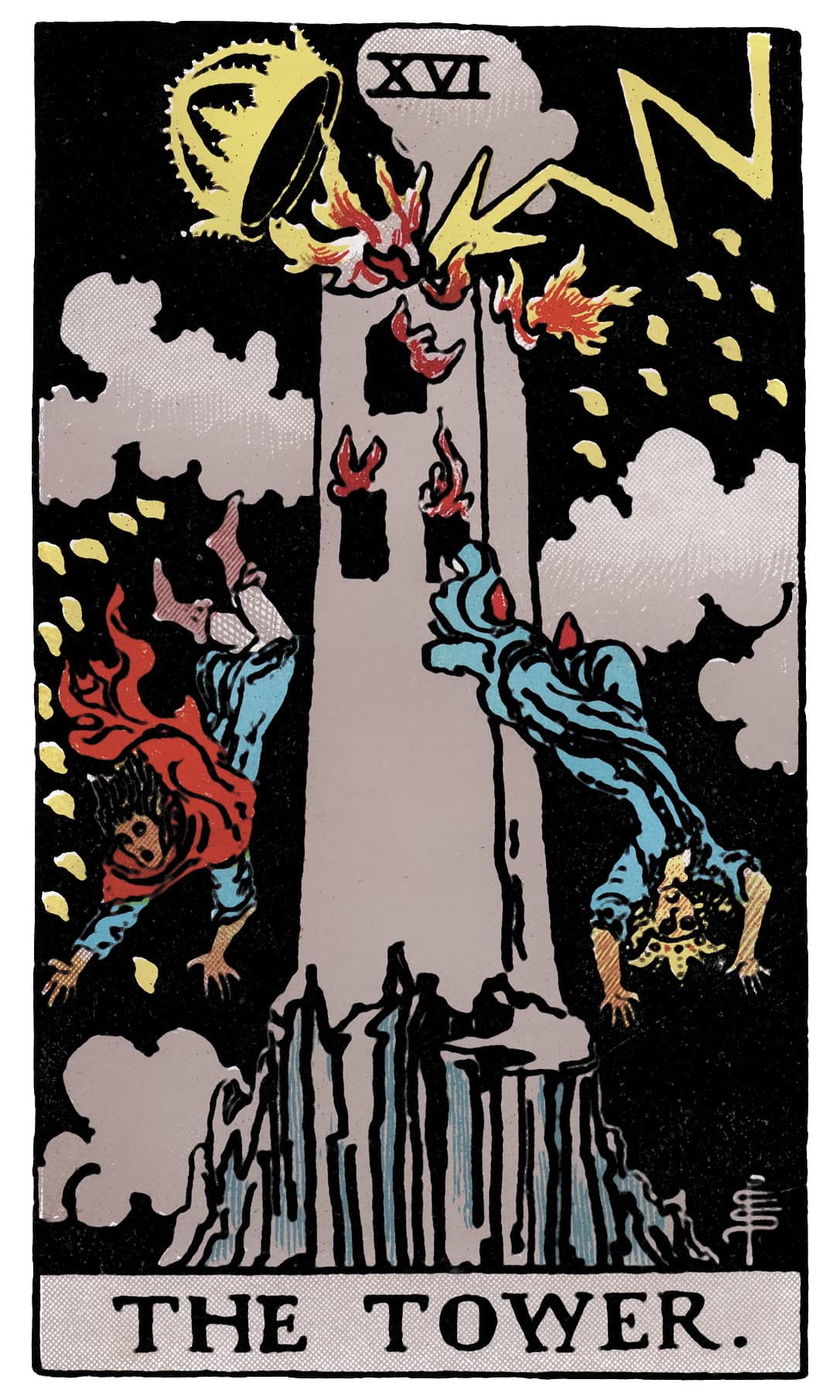
- The Tower reversed. Disaster postponed, or upheaval happening on the inside. Instead of lightning from outside, beliefs crumble slowly. It can also mean the shock was avoided but the foundations still need repair. In love: a crisis swallowed instead of spoken.
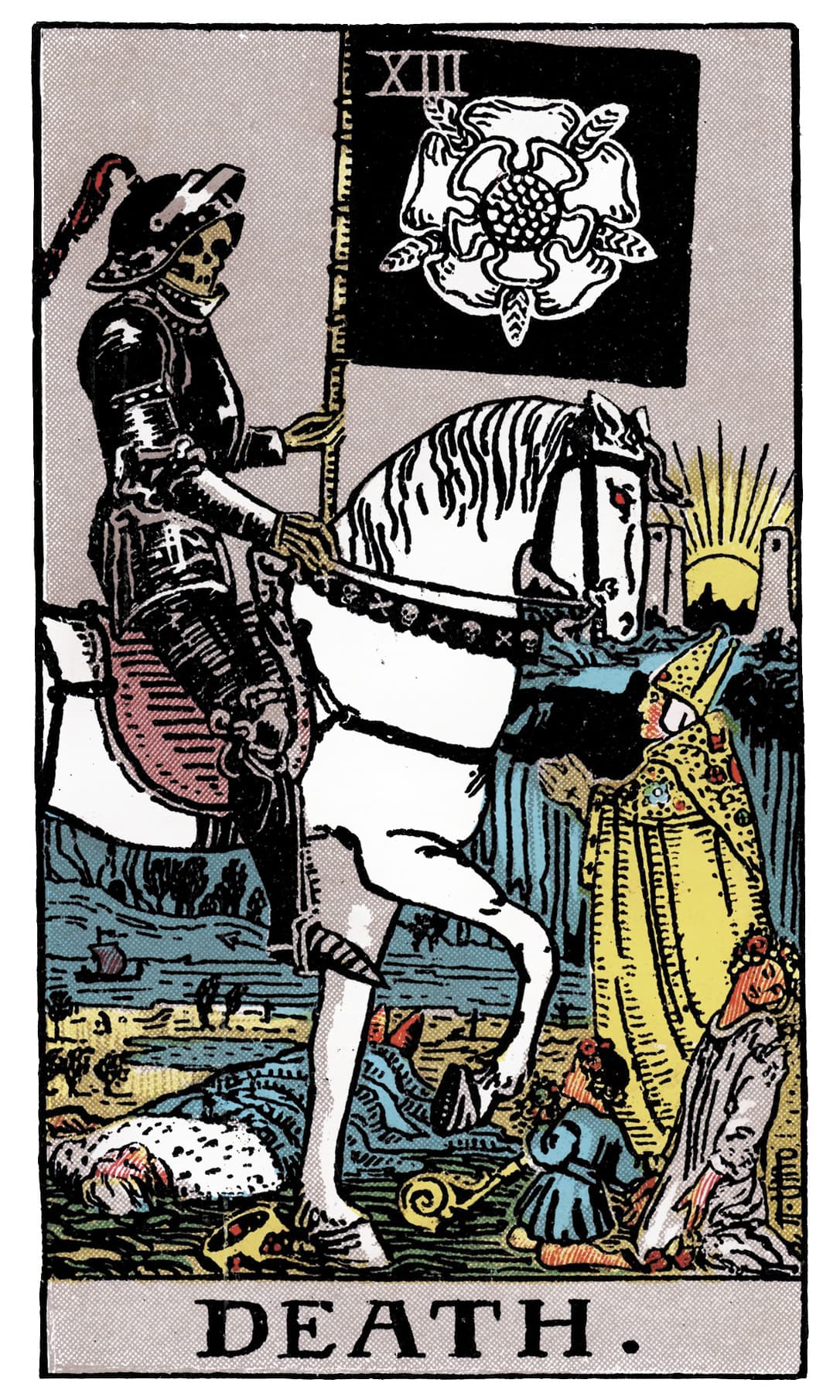
- Death reversed. An ending that drags on. Something has already died but nobody will admit it: a relationship kept going out of habit, a job long outgrown. The card's advice is plain: let what is ending, end.
- The Star reversed. Dimmed hope, exhaustion after a long hard stretch, doubt about whether any of it means anything. The water still pours from the jugs; nobody is drinking. In an advice position: go back to whatever once gave you faith, even in a small dose.
- The Lovers reversed. Clashing values, inner division, a choice put off indefinitely. In a relationship reading it does not automatically mean a breakup; more often the couple has stopped talking about what each of them really wants.
- The Devil reversed. One of the few trumps that often brings relief when reversed: the chains slip off, a habit loses its grip, sobriety returns. Beside heavy cards, though, it can mean sinking further into the shadow, so always check the neighbours.
Minor Arcana reversed: five examples
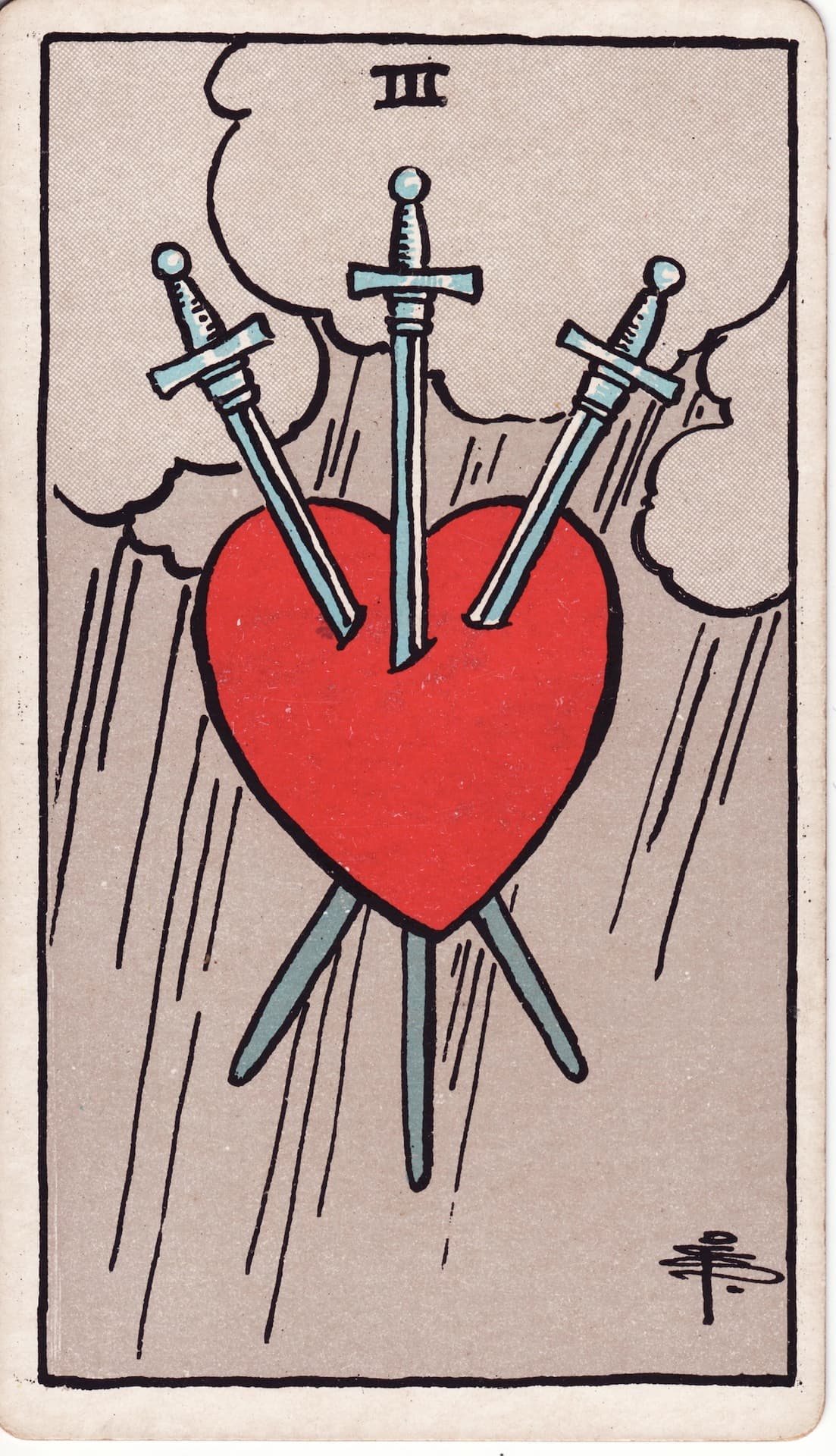
In the minors, a reversal often changes the temperature of a card more than its subject. Some popular examples:
- Three of Swords reversed. The heart pierced by three blades under grey rain. Reversed, it usually says the pain is starting to heal, though the scar remains. It can also point to sorrow pushed down and never spoken, the kind that comes back in dreams and in the body.
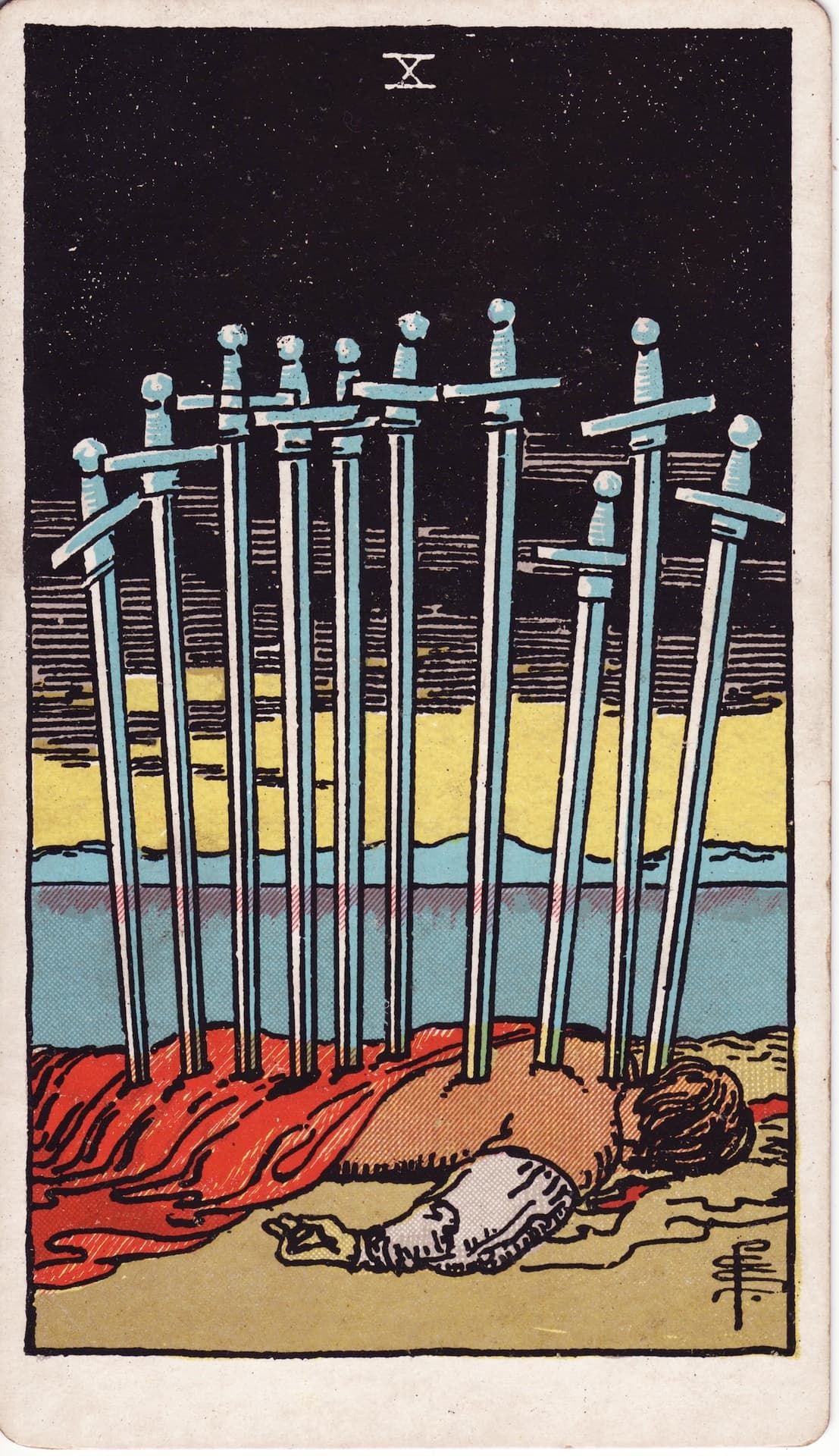
- Ten of Swords reversed. The worst is over. Upright, a thin band of dawn already shows on the black horizon; the reversal brings it closer. This is getting up after the fall. Sometimes, though, it shows someone holding on to the victim role longer than they need to.
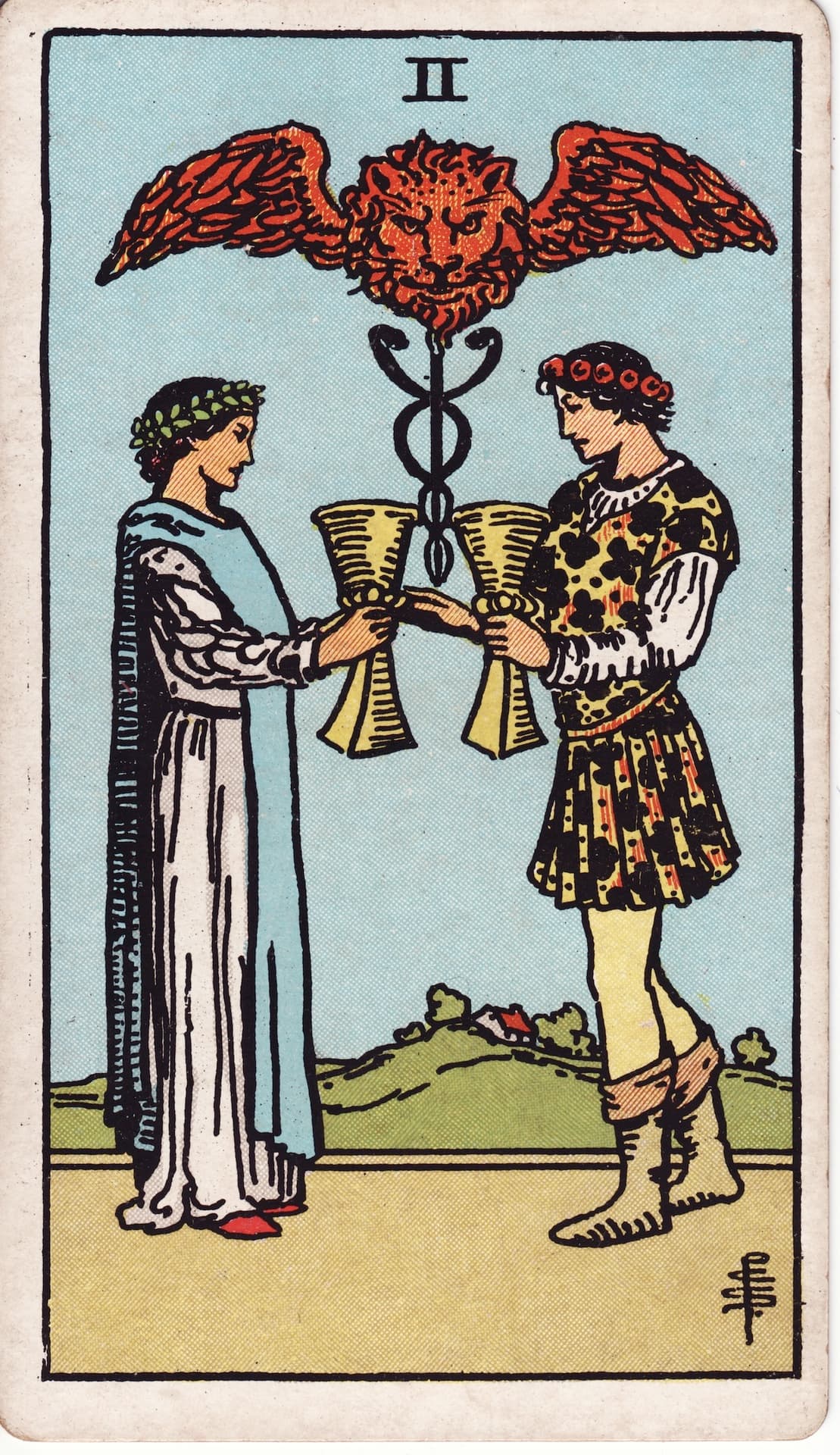
- Two of Cups reversed. The caduceus with the lion's head, floating above the couple exchanging cups, tips out of balance. Uneven commitment, misunderstanding, cooling feelings. In a relationship it is an invitation to talk honestly before distance becomes a habit.
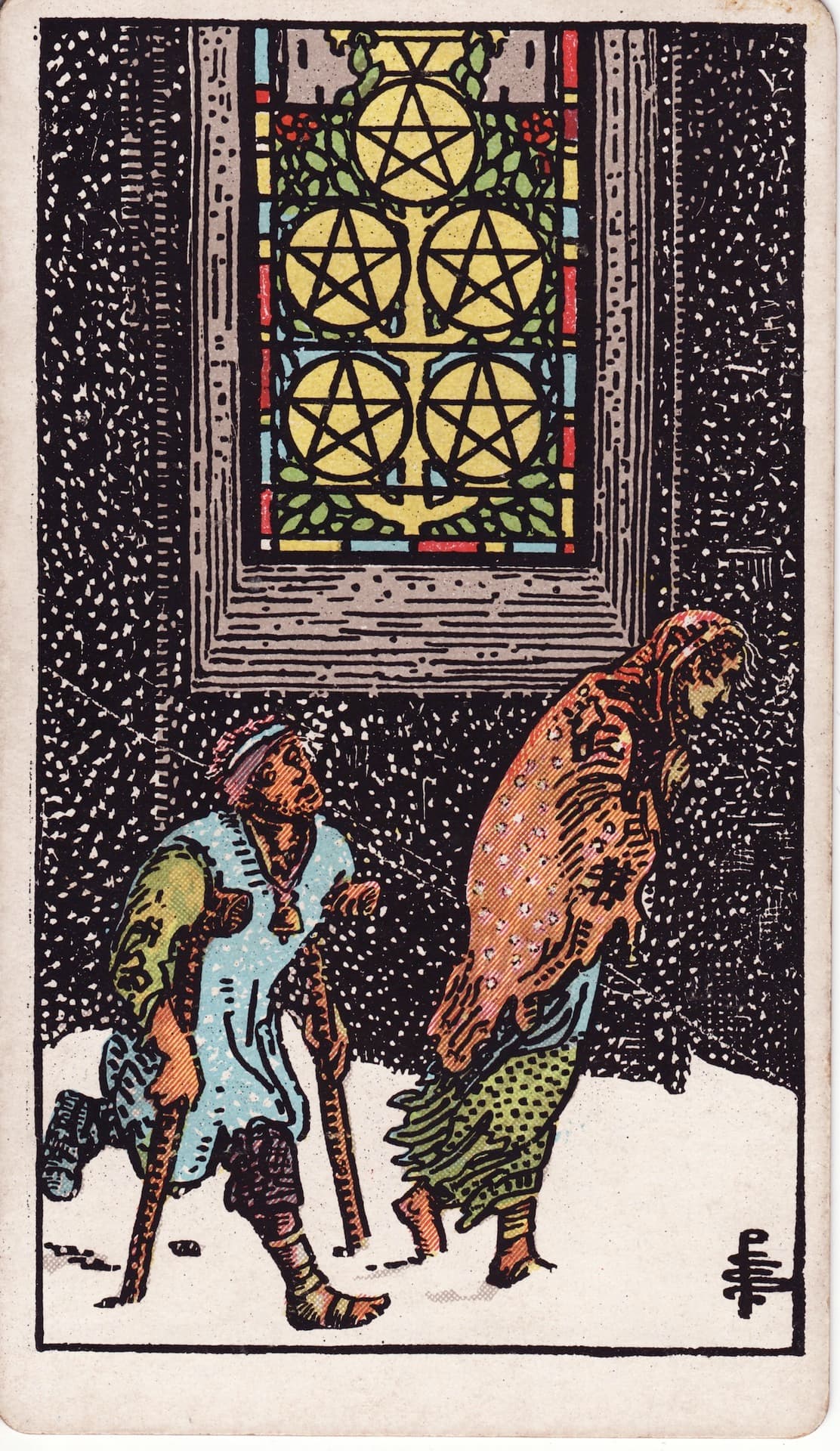
- Five of Pentacles reversed. Two figures trudge through snow beneath a lit stained-glass window. Reversed, it often means climbing out of hardship and finally accepting help that was refused before. In a money question: improvement, though not yet stability.
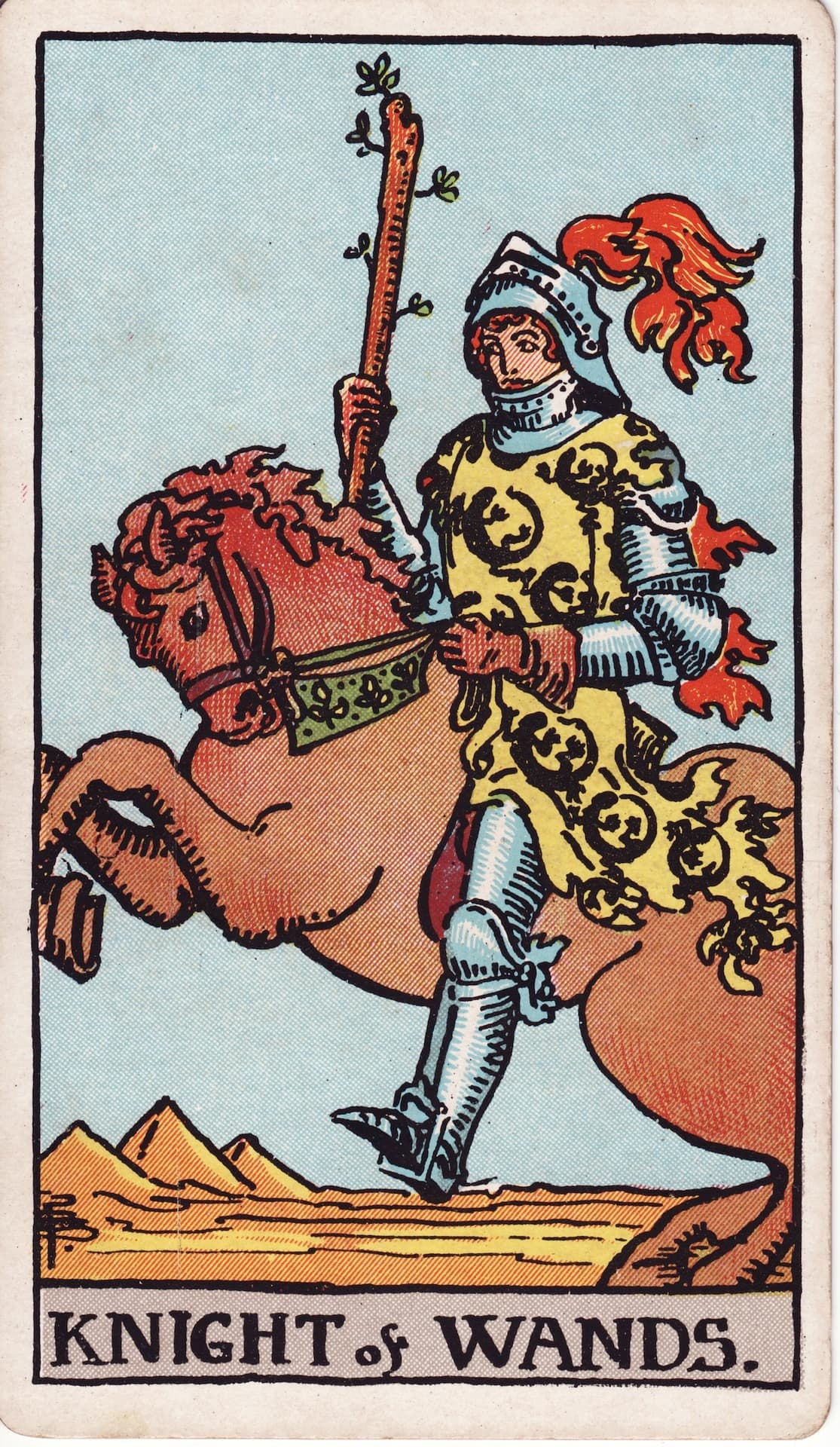
- Knight of Wands reversed. Salamanders on his tunic, the horse rearing. Reversed, it is enthusiasm that burns out as fast as it flared, haste without a plan, cancelled trips. In love: someone very intense at the start who vanishes a few weeks later.
When a spread is full of reversals
If you shuffle for reversals, roughly half the cards will land upside down, so two reversed cards out of five is nothing unusual. What matters is a clear majority: seven out of ten, or all three in a small spread. Readers interpret that in a few ways:
- An inward season. The matter is mostly unfolding inside, and outward action will not get much traction right now.
- Resistance. The querent is fighting something that is coming anyway, and the fight is draining them.
- The wrong moment to ask. The situation is still in motion and the answer has not formed. Come back in a few weeks, or reframe the question; our guide on how to ask tarot a question helps with that.
- Fatigue. Lots of reversed Cups and Wands often means emotional burnout and an empty tank.
What the upright cards are telling you
In a spread crowded with reversals, the cards that stayed upright often speak loudest. If the only upright card is the Star or an Ace, that is where the way out lies. In a Celtic Cross, pay particular attention to the hopes and fears position: a reversed card there points to fear more often than hope, even when the upright card would be a positive one.
Reversed court cards deserve their own attention. They often describe people acting out of character, or qualities the querent is suppressing. The Queen of Cups reversed might be someone who looks after everyone but herself; the King of Swords reversed, someone who uses logic as a weapon.
Frequently asked questions
What does a reversed tarot card mean?
A reversed card carries the same energy as the upright card, but in a different state: blocked, turned inward, delayed or in excess. It rarely means the exact opposite. The meaning depends on the card's position in the spread and on the cards around it.
Do you have to read reversed tarot cards?
No. Many readers read every card upright and take nuance from the surrounding cards, as the Golden Dawn tradition does. What matters is deciding before you shuffle and sticking to that rule consistently.
Does a reversed card mean no?
In yes or no questions a reversal usually tilts the answer toward no, or not yet. A reversed Sun or Star is still a kindly card, though, so it more often signals delay than refusal.
How do you shuffle tarot cards so some come out reversed?
The simplest way is to spread the deck face down on the table and swirl the cards around with both hands. You can also split the deck, turn one half around 180 degrees and then shuffle. Turn cards over sideways, like a book page, so you do not change their orientation when revealing them.
What does it mean if most cards in a reading are reversed?
A clear majority of reversals usually points to a period of inner work, resistance to change, or a situation that has not settled yet. Look closely at the cards that stayed upright, because they often show the way out.
Personal reading
Want someone to read the whole spread, not just one card?
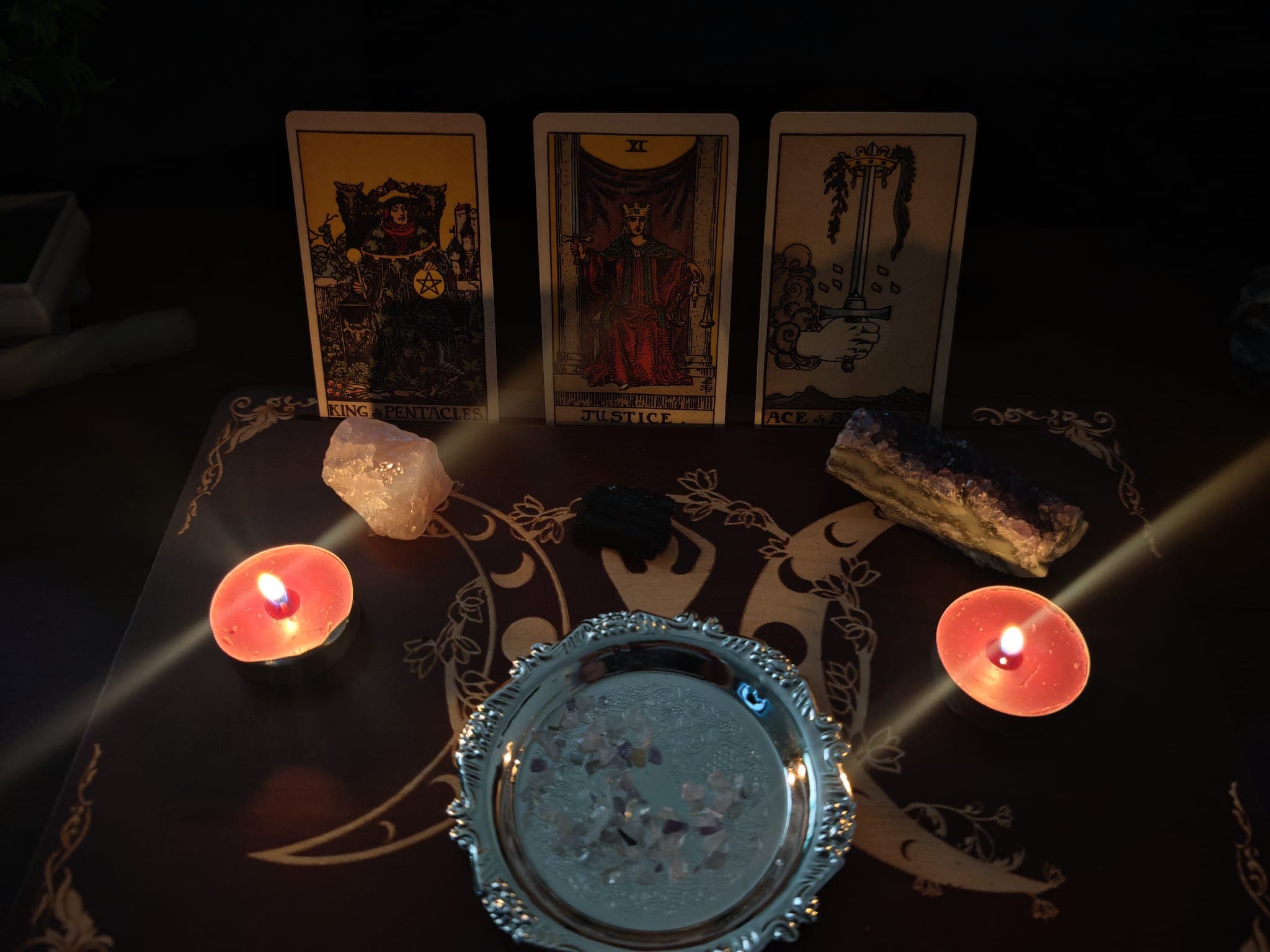
The 3-Card Reading (22 EUR) is laid out on a real Rider-Waite-Smith deck. You receive a photo of your actual spread and a written interpretation that reads each card in its position and in relation to its neighbours, plus one free follow-up question within 48 hours.
Order a 3-Card Reading →