When exactly to begin a ritual
Check the exact time of the new moon, full moon and quarters in your time zone in the Moon calendar. Begin your ritual within a day of the exact phase, while its energy is strongest.
The lunar cards of the Rider-Waite-Smith deck
Tap a thumbnail to jump to a card
II
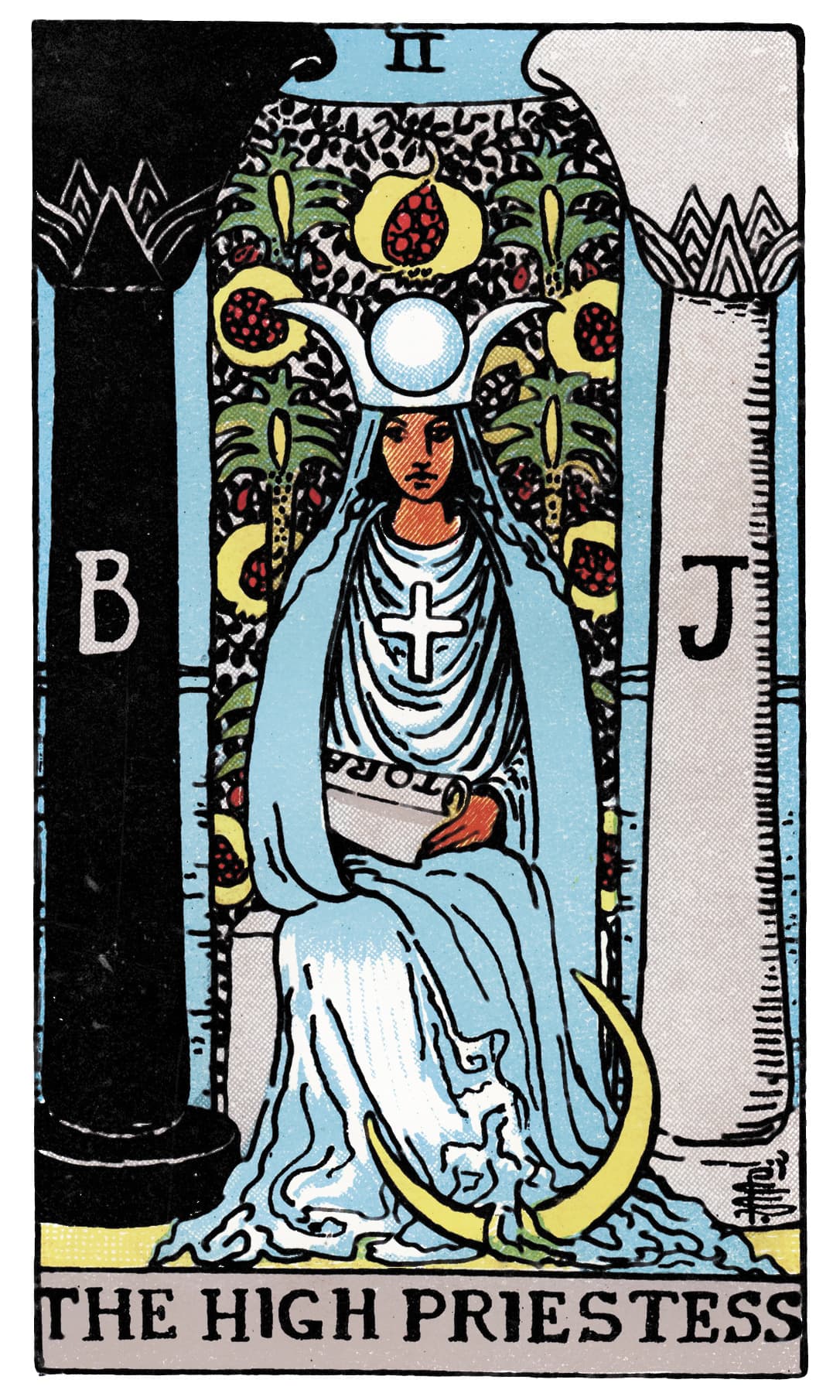
The High Priestess
The Moon as a planet. Intuition, mystery, knowledge that arrives in silence. A good significator for a new moon ritual.
XVIII
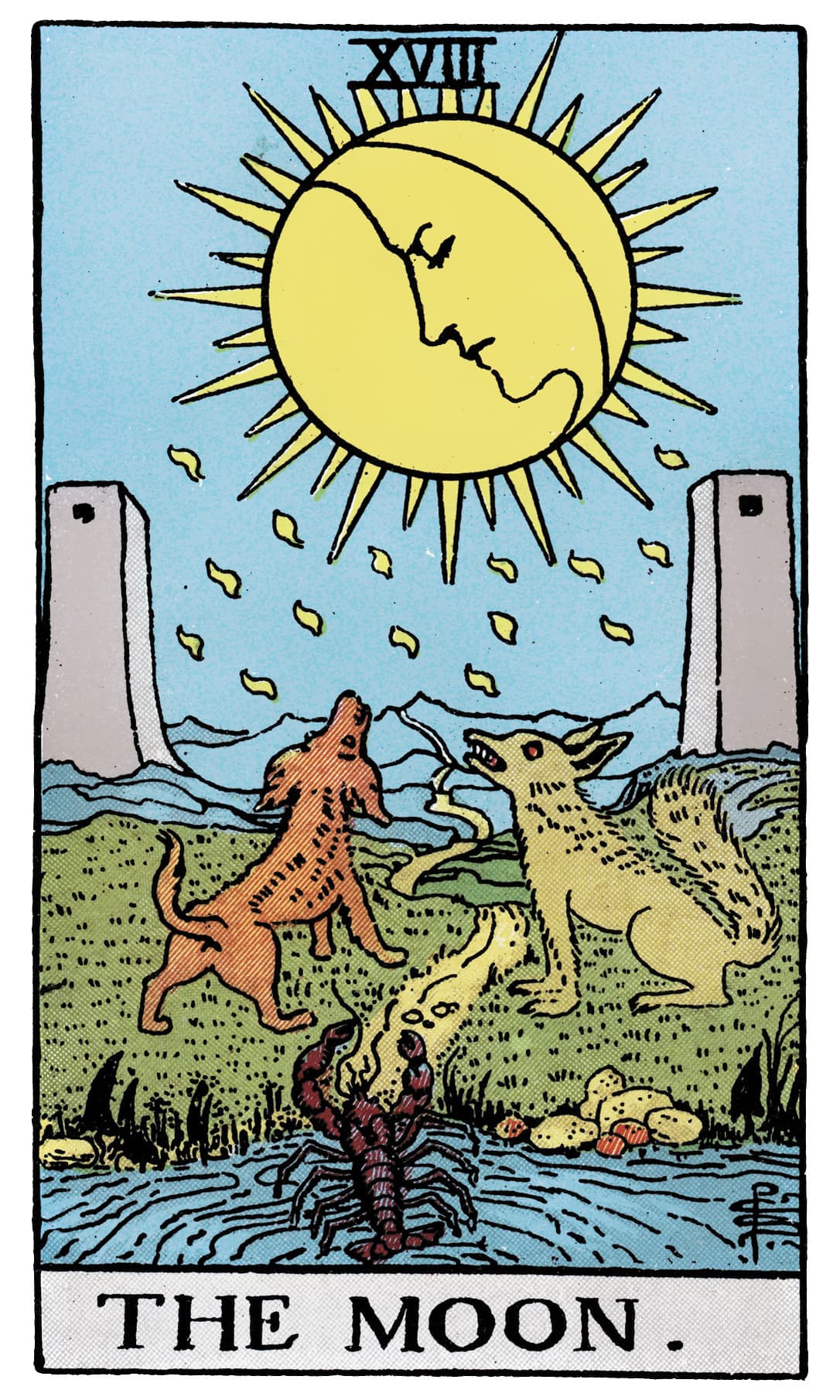
The Moon
Pisces, dreams, fear and illusion. The path between the towers runs through uncertainty, but it does lead somewhere. In a full moon spread it says something has not surfaced yet.
VII
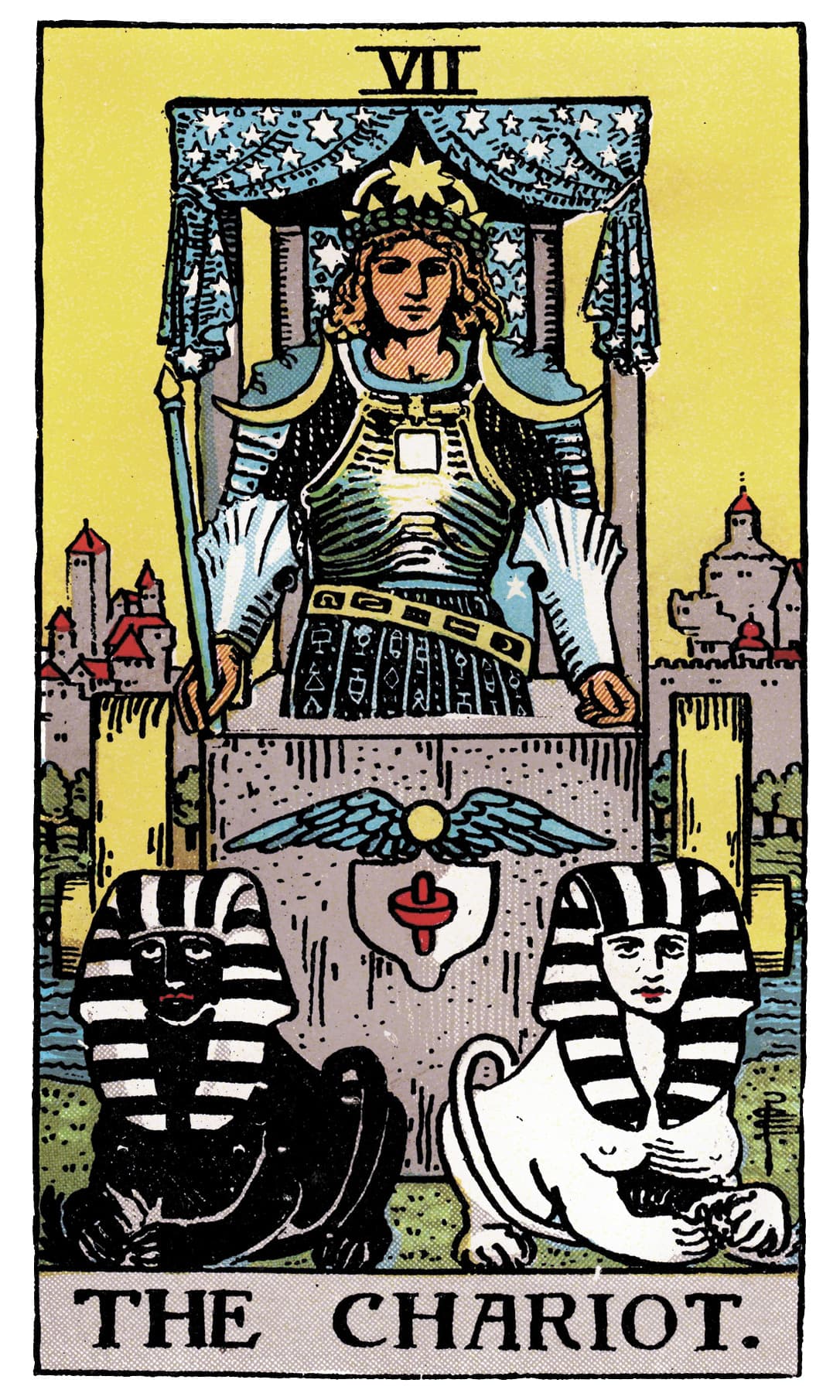
The Chariot
Cancer, the sign ruled by the Moon. The charioteer wears two lunar faces on his shoulders. Mastery of feeling and forward motion despite two sphinxes pulling different ways.
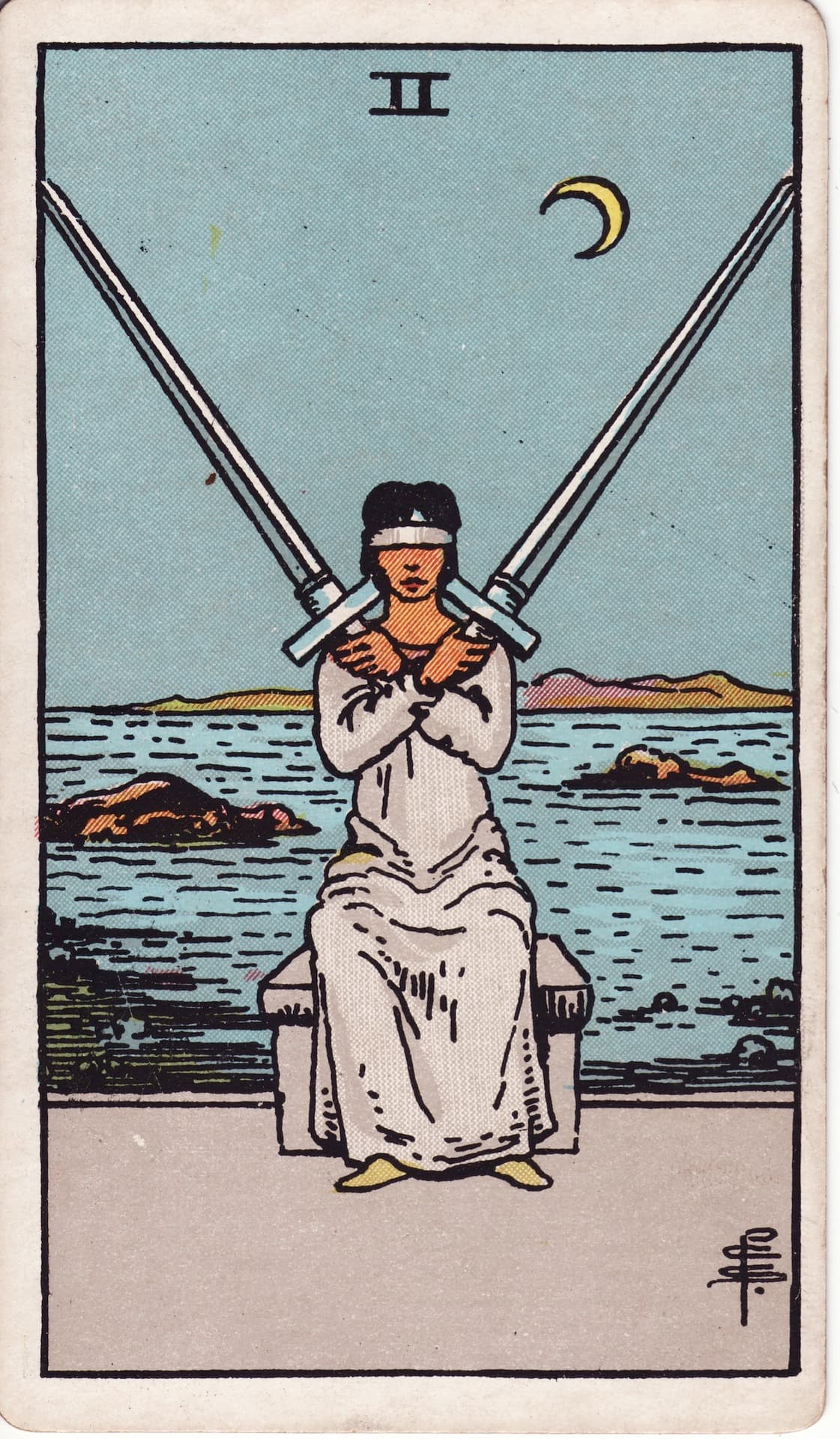
II
Two of Swords
Moon in Libra. A blindfolded woman sits by the sea under a crescent moon. A decision on hold, the stillness before choosing.
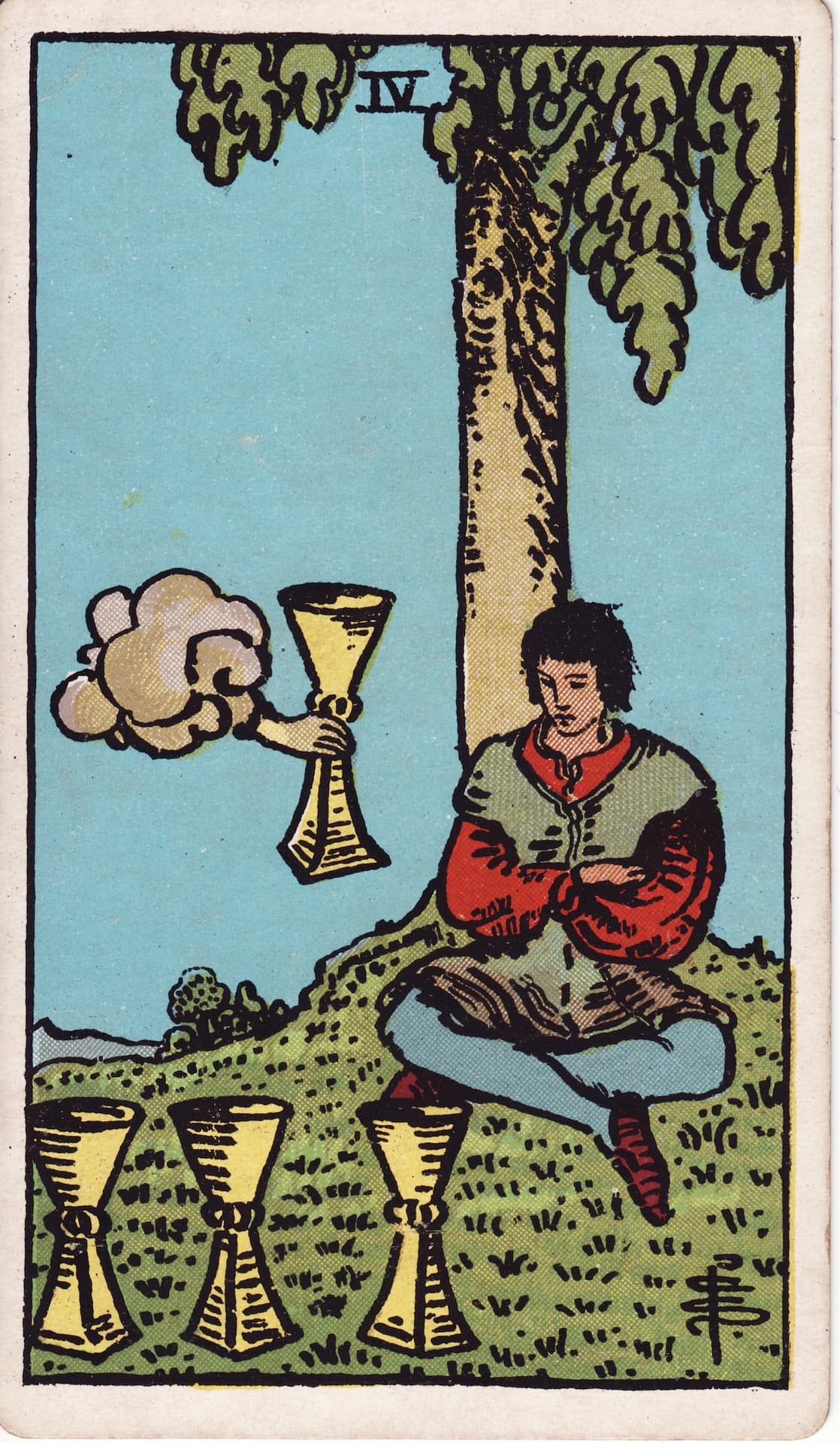
IV
Four of Cups
Moon in Cancer. The figure under the tree ignores the cup offered from a cloud. Emotional saturation and withdrawal, very much the balsamic phase.
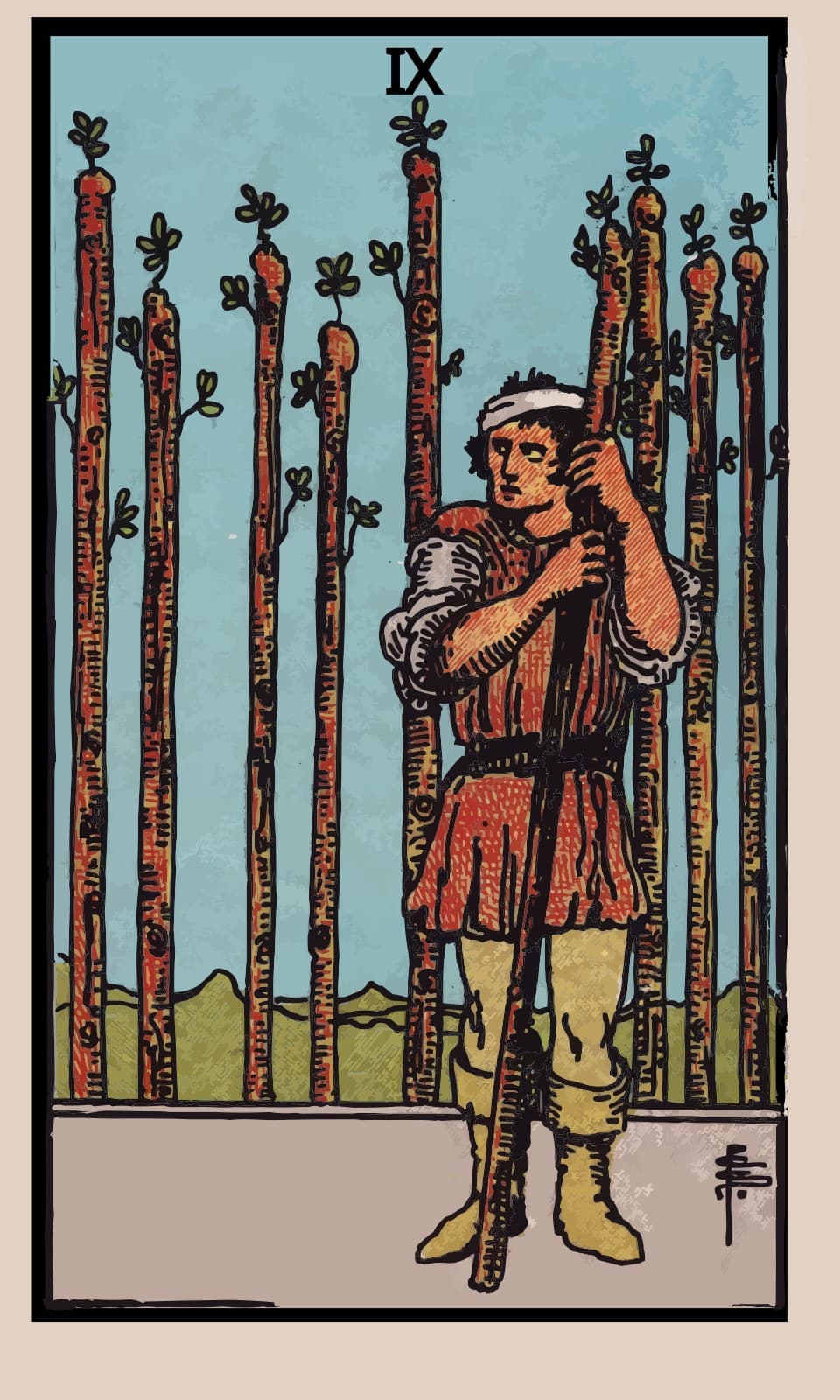
IX
Nine of Wands
Moon in Sagittarius. A tired guard with a bandaged head watches over his palisade. The last stretch before the goal, strength regained despite the wounds.
The eight moon phases and what each one is for
A synodic month, new moon to new moon, lasts about 29.5 days. Practitioners split it in two. The waxing half, as the light grows, is for drawing in, building and strengthening. The waning half, as it shrinks, is for cleansing, finishing and cutting away. Each of the eight phases runs for roughly three and a half days.
One distinction that often gets lost: the dark moon is the day and a half before the astronomical new moon, when no disc is visible at all. Older practice keeps it for rest, protection and shadow work. New things begin at the new moon itself, or when the first sliver shows in the evening sky.
- New moon: sowing. Quiet, inward energy for setting intentions, planning the month and reading for the cycle ahead.
- Waxing crescent: the first thin sliver in the west just after sunset. First steps, gathering materials, writing the plan down. Folk custom says to show the young moon a coin so your money grows along with it.
- First quarter: the right half lit (in the northern hemisphere). Obstacles show up, so this is a time for courage, decisions and determination magic. Pure Wands energy.
- Waxing gibbous: refining and patience. Boost the spells you started, charge amulets, adjust what is not working.
- Full moon: culmination and clarity. The strongest night for divination, charging crystals and cards, moon water, gratitude and release.
- Waning gibbous: harvest. Share what came in, write down what you learned, give thanks. Good for study and teaching.
- Last quarter: the left half lit. Cutting ties, breaking habits, cord cutting, deep cleaning the house.
- Waning crescent: the last sliver before dawn, also called the balsamic moon. Rest, cleansing, dreams, ancestor work and protection. Nothing new gets started now.
New moon ritual step by step: planting an intention
Do this in the evening, within about 48 hours of the exact new moon. You need a white or silver candle in a stable holder, paper and a pen, herbs for smoke cleansing (rosemary, mugwort or garden sage), your tarot deck and, if you have one, a moonstone or amethyst.
- Clear the space. Open a window, carry the herb smoke from the farthest corner toward the door, and scatter a pinch of salt at the corner of your altar.
- Ground. Feet flat on the floor, three slow breaths, and picture roots running from your soles into the earth.
- Light the candle with purpose. Say out loud why you are lighting it: “I light this flame for what I am beginning.”
- Write no more than three intentions. Present tense, specific. Not “I want more money” but “I am taking on new clients and raising my rates next month.”
- Pull one card for each intention. Ask: “What will support this intention during this cycle?” Write the card beside it.
- Read everything aloud. Your voice gives the intention a body.
- Fold the paper toward you, since folding inward draws things in. Tuck it under the candle holder or on your altar, with a bay leaf inside if you like.
- Snuff the candle rather than blowing it out. Tradition says blowing scatters the intention. You can relight it for ten or fifteen minutes each evening until the first quarter, always putting it out before you leave the room.
- Take one real step within 48 hours. Magic moves best through working hands.
Full moon ritual: release and gratitude
The full moon works across three nights: the one before, the night itself and the one after. Feelings run higher, sleep gets lighter, and whatever has been ripening since the new moon comes into view. That makes it the night to gather your harvest and consciously hand back what no longer serves. Set out a white candle, a fireproof bowl with a little sand in it, paper, salt and a glass jar of water.
- Stand in the moonlight, outside or at a window. Look at the moon until your breathing slows on its own.
- Light the candle and read your new moon paper. Notice what moved, what arrived and what stalled.
- Write three things you are grateful for from this cycle, small ones included.
- On a separate sheet, write what you are releasing: a habit, a fear, a belief about yourself, a relationship in its current shape. Do not edit yourself.
- Read the release list aloud, then tear up the paper. A symbolic ending does not require fire.
- Rinse your hands in salted water and say: “What is not mine, leaves.”
- Put the jar of water on the windowsill so it becomes moon water overnight.
- Put out the candle, and carry the ash outside the next day, ideally to the foot of a tree or straight into the soil.
Moon water: how to make it and how to use it
Moon water is usually made on the full moon. Fill a clean glass jar with spring or boiled water, hold it for a moment and speak your intention. Leave it on a windowsill, balcony or in the garden where the moonlight reaches it, then close and label it with the date and the moon's sign before sunrise. If you plan to drink it, start with drinking water and use a jar with a lid.
Place crystals beside the jar. Do not put minerals into water intended for drinking. Selenite dissolves in water and malachite should never sit in water you drink. Many practitioners keep Cancer full moon water for home and family work, Scorpio for protection and Taurus for money.
- Misting your room and altar after smoke cleansing.
- A few spoonfuls in a cleansing bath or in the water you wash the floors with.
- Washing your face and hands before a reading.
- Watering plants you want to grow alongside your intention.
- Dressing candles before a ritual (wipe the sides, keep the wick dry).
The moon in the signs, briefly
The moon spends about two and a half days in each sign, so the flavour of your work shifts several times a week. The new moon always falls in the Sun's sign, the full moon in the opposite one. Check a lunar calendar and match the ritual to the sign.
- Aries: courage, fast starts, fire magic.
- Taurus: money, the body, the garden, things meant to last. The moon is exalted here.
- Gemini: conversations, writing, study, news.
- Cancer: home, family, ancestors. The moon's own sign and the strongest moon water of the year.
- Leo: confidence, visibility, creative work.
- Virgo: tidying, health, herbs, cleansing.
- Libra: relationships, beauty, peace-making.
- Scorpio: protection, shadow work, cord cutting. The moon is in its fall, so feelings run deep.
- Sagittarius: learning, teachers, travel, meaning.
- Capricorn: career, structure, long-term goals.
- Aquarius: friendship, community, sudden insight.
- Pisces: dreams, intuition, divination. The same sign given to the Moon card.
New moon tarot spread: five cards for sowing
Lay this one on the night of the new moon, before you write your intentions. Place the cards in an arc like a growing crescent, left to right, and keep a photo of it until the full moon so you can compare.
Say the Eight of Swords lands in position three. The obstacle is not the world, it is the belief that there is no way out. The woman on the card is blindfolded, but the swords never close into a full ring. Position four will show you where the gap is.
- Position 1, the seed: what I actually want this cycle, beneath what I say I want.
- Position 2, the soil: what I already have that supports it.
- Position 3, the stone: what stands in the way, outside me or inside.
- Position 4, the first step: what to do before the first quarter.
- Position 5, the sprout: what can grow by the full moon if I tend the seed.
Full moon tarot spread: five cards for the harvest
Lay the full moon spread in a circle, with the first card in the centre like the lunar disc. Do it by candlelight, after reading your new moon paper. Cards tend to speak very plainly on this night, and Major Arcana often turn up more than usual. If you want a deeper layout for a big question, the Celtic Cross works well on a full moon too.
If your deck feels tired or readings have been muddy, this is the night to cleanse it in the moonlight. The method is in the guide on how to cleanse tarot cards.
- Position 1, the light (centre): what this full moon reveals or brings to a peak.
- Position 2, the harvest: what this cycle brought, and what to give thanks for.
- Position 3, release: what to hand back as the moon wanes.
- Position 4, the grip: what is holding me and keeping me from letting go.
- Position 5, the message: guidance for the waning half, until the next new moon.
The Moon card and the High Priestess: tarot's two lunar faces
The moon wears two faces in tarot. The High Priestess (II) is the Moon as a planet in the Golden Dawn attributions, the path of Gimel. She sits between the pillars Boaz and Jachin, a crescent at her feet, and her crown, a full disc between two horns, is the same triple moon sign: waxing, full and waning. Behind her hangs a veil of pomegranates. She is knowledge that comes in silence, new moon intuition and dreams.
The Moon (XVIII) belongs to Pisces. This is the full moon at its wildest: a dog and a wolf howl at the disc, a crayfish crawls out of the pool, a path runs between two towers toward the mountains, and yods fall from the sky. The card speaks of fear, illusion, dreams and what is not yet visible in full light. The towers echo the Priestess's pillars: the same gateway, only at night and without a guide.
When both cards show up in one spread, readers take it as a call to work through intuition and dreams rather than logic. Read more in the Major Arcana guide, and for keeping a dream journal, see how to interpret dreams.
Eclipses: when the moon goes dark
A solar eclipse always happens at a new moon and a lunar eclipse at a full moon, whenever those phases fall close to the lunar nodes. They arrive in seasons roughly every six months, usually in pairs two weeks apart. Astrologers treat them as accelerators: things end or begin faster than planned, and the effects play out over the following months.
Many witches do not cast or plant intentions on the day of an eclipse. The light is interrupted, so the energy is unpredictable. They watch, meditate and journal instead. At a solar eclipse, rather than setting an intention, ask the cards: “What is opening?” At a lunar eclipse: “What is leaving on its own?” There is no need to push it with a ritual. Readings from these days often turn up the Tower and the Wheel of Fortune, which sums up eclipse season well.
Frequently asked questions
What should I do on a full moon?
The full moon is for harvest and release. Reread your new moon intentions, write down what you are grateful for, tear up a list of what you want to let go, and leave a jar of water out to make moon water. It is also the best night for divination and charging crystals.
When is the best time for a new moon ritual?
In the evening, within about 48 hours of the exact new moon, or on the evening the first thin crescent appears after sunset. The day and a half before the new moon, the dark moon, is better for rest and cleansing than for beginnings.
How do you make moon water?
Fill a clean glass jar with spring or boiled water, speak your intention, and leave it out on the night of the full moon where moonlight reaches it. Bring it in before sunrise, close it and label it with the date and the moon's sign.
Can you do rituals during an eclipse?
Most practitioners avoid casting or setting intentions on the day of an eclipse because the energy is unpredictable. Watching, meditating and journaling are the usual approach, with ritual work saved for the next regular phase.
What is a good new moon tarot spread?
Five cards in a crescent work well: the seed (what I really want), the soil (what supports me), the stone (what is in the way), the first step and the sprout (what can grow by the full moon). Photograph it and compare it with your full moon spread.
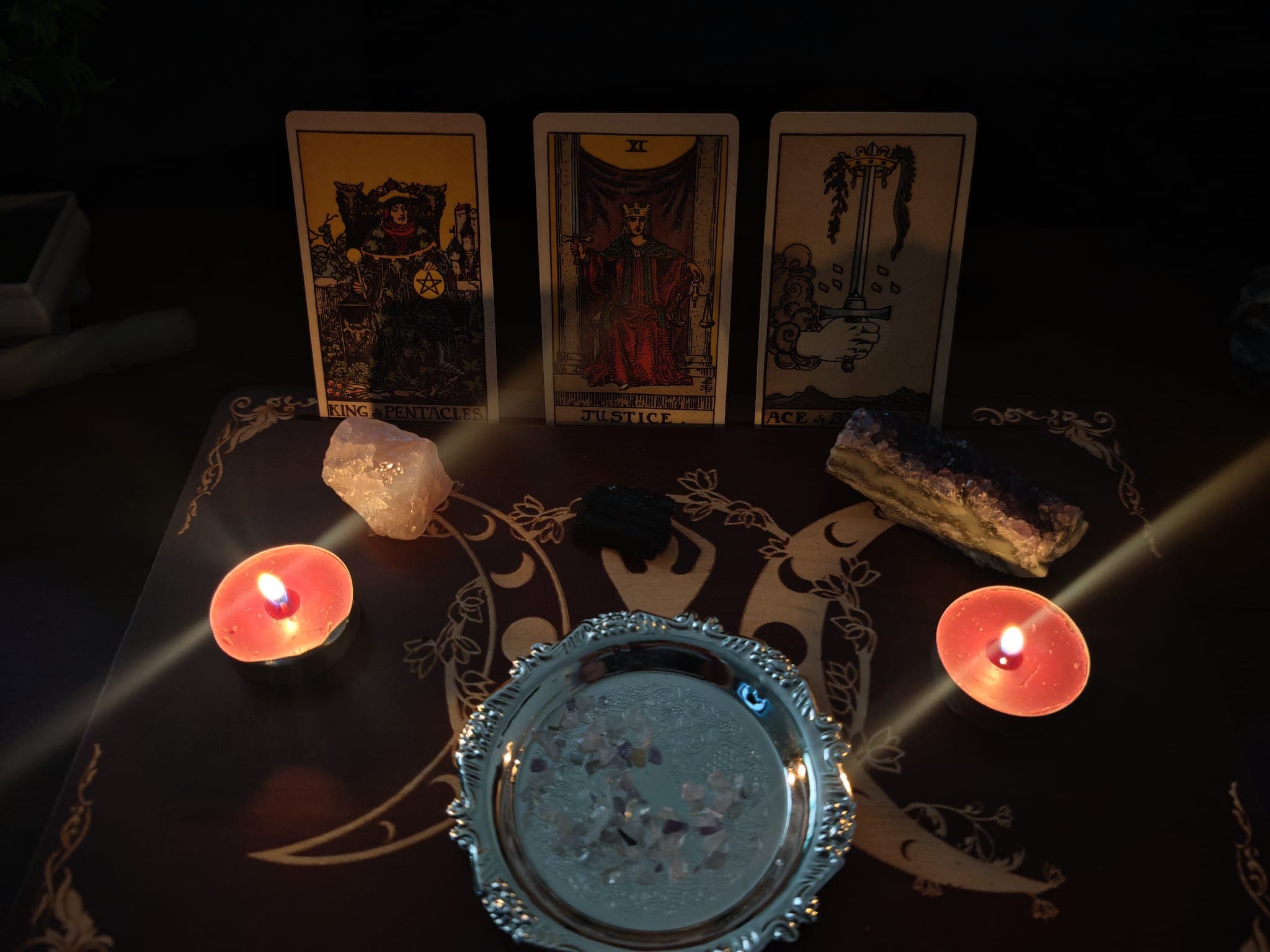
Personal reading
Want to start the new cycle with a clear direction?
Before a new moon it helps to know where to put your energy. A 3-Card Reading (22 EUR) shows the background, the core energy and your next step. You receive a photo of the real spread on the triple moon board, a written interpretation, and one free follow-up question within 48 hours.
Order a 3-Card Reading →